The Polite Face of Inequality

A decade ago, I left my home and moved to Germany. I came from a place where inequality, in many forms, including gender, was visible. People argued about it openly. Activism was everywhere. It was exhausting, yes, but it was also honest. You knew what you were up against.
When I arrived in Germany, I assumed the struggle would be different. Smaller, perhaps. And quieter.
I was told repeatedly, often in polished and sophisticated language, that gender equality was no longer a serious issue here. I was reminded that, compared to “where I come from,” women’s rights in Germany were secure. The comparison was not neutral. It carried an assumption: that I should recognize this place as progressive and adjust my expectations accordingly.
And legally, much of that is true.
The legal framework is impressive. Article 3(2) of the German Basic Law states: “Men and women shall have equal rights. The state shall promote the actual implementation of equal rights for women and men and take steps to eliminate disadvantages that now exist.” Equality is not framed as an aspiration, but as a constitutional obligation.
Public institutions appoint equality officers. Anti-discrimination laws are clear. Pay transparency regulations exist. Gender equality plans are mandatory. The topic is structured at its foundation, and challenges and gaps appear already addressed.
At first, this structure felt reassuring. But what I observed did not fully align with it.
In the research institute where I worked, most decision-making positions were held by men. Informally, colleagues and friends spoke about earning less than their male counterparts in roles with comparable responsibilities. The imbalance was there, but the open, heated debates I was used to were missing.
I began to look beyond my immediate environment.
The numbers reflected a similar pattern. The gender pay gap remains around 18 percent, above the EU average of roughly 12 percent. In academia, women earn about half of all doctoral degrees, yet they hold fewer than one third of professorships. In corporate leadership, women make up only around a quarter of executive board members in DAX-listed companies.
The question was no longer whether inequality existed. It was how comfortably it coexisted with the belief that equality had already been secured by law. The higher the level of decision-making, the less impact the law seemed to have.
It was in this context that I decided to take on the role of gender equality officer at my institute. The position was legally mandated. Together with the leadership, I was responsible for drafting a gender equality plan and proposing measures to improve the existing structures. I believed that if the framework was already in place, meaningful change should be possible within it.
Many ideas were welcomed immediately: support for early-career researchers, mentoring programs, networking opportunities, and greater transparency in hiring PhD students, postdocs, and junior group leaders. These were considered reasonable, constructive, and non-threatening. Measures related to work-life balance were especially popular, particularly those connected to maternity.
The support was real, until proposals touched power.
When quotas, setting a required percentage of women in senior roles, were brought up, they were described as too rigid. Some worried they might compromise academic excellence. Stronger accountability in promotion processes was referred to as complicated. Suddenly, everything required more time, more caution, more discussion.
Over time, a pattern became clear. Supporting women around maternity was acceptable. Questioning what maternity does to careers was not. Extending leave options was progressive. Ensuring that women returned without losing momentum, visibility, or access to leadership spaces was much harder to secure. Career slowdowns were treated as individual consequences rather than structural outcomes. Inequality at senior levels was attributed to biology and personal choice.
I also began to see how easily inequality was reduced to maternity. Slower promotion? Family choices. Reduced visibility? A family-focus phase.
But women without children faced the same stagnation, the same exclusion from informal networks, the same unspoken ceilings. Maternity was not the cause. It was the cover.
What I encountered was not open hostility. It was something more subtle. Inequality here does not look dramatic. It does not openly exclude. It operates through procedures. The law is respected. Reports are written. Plans are submitted. Requirements are fulfilled.
Here, equality is something you document. And once documented, it becomes harder to question. If the framework exists, the system must be working. If progress is slow, it is described as complexity, something beyond the ordinary understanding.
As an immigrant woman, and at the same time the gender equality officer, I realized that speaking up was no longer enough; speaking up in the “right” way was what mattered. So I adjusted my vocabulary. I learned how to “westernize” the way I presented my arguments. Otherwise, there was a risk of not fitting in, and when you do not fit in, your proposals are easier to dismiss.
However, with that comes the risk of focusing too much on fitting and losing sight of your original purpose and core values.
I was careful to treat adaptation as an addition to who I am, not a replacement. Adapting did not mean abandoning my perspective; it meant learning how this system operates. Here, change rarely comes from confrontation alone; it moves through the legal framework. The framework is not the problem. The way it is (mis)used is.
Legal commitments are not enough. Supporting maternity is not the same as protecting careers. Mentoring is not a substitute for redistributing decision-making power. Networking alone does not create real access to leadership. If equality remains concentrated in documents rather than reflected in leadership structures, it remains incomplete.
The law matters. It creates a foundation. But without accountability and a real diversification of authority, equality becomes procedural. And procedural (in)equality can stay with us, untouched, for generations.
To those like me who arrive in the West believing the fight here is over or is less intense: it is not, it is simply more subtle. Here, inequality does not announce itself. It hides in processes, in routines, in what is considered normal.
That is why adaptation must be strategic, not about erasing your origin, values, or purpose, but a conscious way of navigating the system.
We carry something valuable: the ability to recognize inequality quickly and to name it. And in places where it is subtle, that skill matters, because what feels ordinary is rarely questioned.
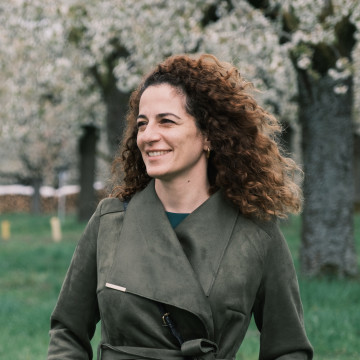
Dr. Shada Hofemeier Abuhattum
A scientist at the Max Planck Institute for the Science of Light, co-founder of Rivercyte, and dedicated to advancing women’s representation in scientific leadership.
Related Articles