When a Degree Becomes an Obstacle

In the West Bank, education is not simply a personal choice, it is a family strategy for survival. It is a declaration of belief in a future that often feels politically and economically uncertain.
Families invest in their daughters’ education with the hope that knowledge will secure stability, dignity, and independence.
For many of us, a university degree is more than an academic milestone, it is a protection in a fragile reality.
I grew up believing that academic excellence was the safest path toward a meaningful professional life. I studied with discipline and purpose, earning my Bachelor’s degree from Birzeit University and later completing my Master’s at Al-Quds University. These institutions are widely respected in the West Bank, and graduating from them carries social and intellectual weight.
My education was not symbolic, it required years of effort, financial sacrifice, and emotional investment, not only from me, but from my family.
When I graduated, I did not expect privilege. I expected fairness. I believed that qualifications, hard work, and competence would naturally translate into opportunity. Instead, the job market revealed a quiet contradiction: education is praised in theory yet sometimes resisted in practice.
During interviews, I began noticing subtle shifts in tone when my academic background was discussed. My specialization was described as “impressive” but not always “market oriented.”
In other cases, I was labeled “overqualified.” At first glance, this sounds flattering. Over time, I realized it often means something else. It can mean that an employer assumes you will not tolerate low wages.
It can mean you might question unclear contracts or demand professional rights. It can mean you are perceived as someone who will not easily accept instability.
The most revealing moment often came with a familiar question: “Where do you see yourself in five years?” In many professional contexts, this is a standard inquiry about ambition and planning. In the West Bank, for women, it can carry layered meanings. It can quietly probe whether you plan to marry, have children, or eventually prioritize family over work.
Men are rarely asked how fatherhood might affect their professional continuity. Their ambition is interpreted as loyalty. A woman’s ambition is sometimes treated as conditional.
What I gradually understood is that the issue is not only about limited job opportunities, though scarcity is real. The issue is also about how masculinity functions within the workplace.
In many institutions, leadership and authority remain predominantly male. Professional spaces are shaped by longstanding hierarchies where decision-making power is associated with male presence.
When a woman enters the room with strong academic credentials, clarity of thought, and confidence in her expertise, it can disrupt those hierarchies.
A highly educated man is often seen as an investment in growth. A highly educated woman can be perceived, consciously or unconsciously, as a challenge. Her competence may unsettle assumptions about authority. Her confidence may be interpreted as assertiveness, and assertiveness in women is still frequently misunderstood.
When she negotiates, she is “difficult.” When she questions procedures, she is “complicated.” When she seeks advancement, she is “too ambitious.”
In an economy strained by political restrictions and limited private sector expansion, financial authority is deeply tied to masculine identity.
Employment is not only income, it is status, control, and social standing. A woman who enters that space with strong education and clear expectations can be perceived as shifting a balance that some are not prepared to renegotiate.
The discomfort rarely appears openly. Instead, it is expressed through coded language, phrases like “we need someone more flexible” or “this role might not match your long term plans.”
The result is that education, which should expand opportunity, sometimes narrows it.
Many educated women find themselves accepting positions below their qualifications. Others soften their ambitions to appear less threatening. Some eventually withdraw from the labor market altogether. This is not a matter of individual weakness, it is a structural pattern shaped by economic fragility and social expectations.
The consequences extend beyond personal disappointment. When families invest years of resources into educating their daughters and those daughters face barriers unrelated to competence, it weakens collective faith in meritocracy.
Education begins to feel uncertain as a guarantee of fairness. The psychological toll is subtle but real: one begins to question whether intellectual growth is truly welcomed or merely tolerated.
This is not a story of resentment. It is a reflection on contradiction. The West Bank celebrates educated women. Universities are filled with high-achieving female students.
Yet the labor market has not fully adjusted to accommodate their presence as equals in authority and decision-making. The gap between academic achievement and professional integration reveals more about institutional structures than about women’s readiness.
Education should not threaten anyone. Knowledge should not destabilize identity. When a woman’s degree is perceived as intimidating, the problem is not her qualification but the fragility of the system receiving it. A society cannot invest in educating its daughters while remaining uncomfortable with their empowerment.
An academic degree should be a bridge to contribution, to innovation, to shared progress. When it becomes an obstacle instead, it exposes deeper tensions about gender, power, and control.
The true test of a labor market is not how it rewards compliance, but how it embraces competence regardless of who embodies it.
Until professional spaces in the West Bank fully reconcile education with equality, many women will continue to navigate a careful balance: proving their worth without appearing to challenge the structures that should have welcomed them in the first place.
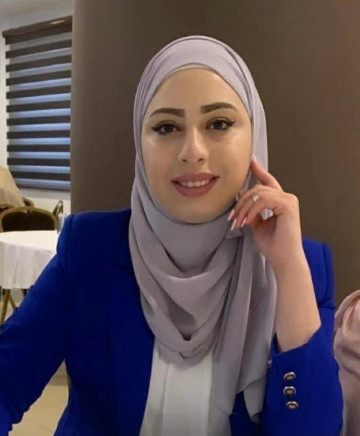
Sanaa Yasin
A Palestinian university graduate from the West Bank who received her academic training at leading Palestinian institutions. Her work explores women’s labor, gendered employment structures, and questions of social justice within politically and economically constrained environments. Grounded in feminist economics, labor sociology, and lived experience, her writing interrogates the structural disconnect between academic achievement and equitable employment opportunities for educated women in Palestine.
Related Articles