Why I Refuse to Shrink: Belonging, Identity, and the Cost of Staying Whole
I was born a minority. I grew up with it in my bones. Being a minority was not a label I picked up along the way. It was the air I breathed, the lens through which I learned to read people, rooms, and systems.
When you grow up as part of a minority, you develop a kind of emotional intelligence that others may never need to foster. You learn to scan spaces quickly, you learn when to speak, when to soften your voice, and when to prove yourself twice. You learn how to anticipate stereotypes before they land, and you learn how to carry pride and fear in the same breath, pride of your culture, your heritage, your background, and fear of the exact same components.
This understanding shaped not only who I am today, but what I chose to do.
During my law studies, I became deeply involved in supporting women from lower socio-economic backgrounds, women who were not just navigating personal challenges, but systemic ones. I assisted them in accessing courts, often in situations where the law technically existed, but justice felt out of reach. I saw, up close, how legal systems can intimidate, exclude, and silence people, not because they are wrong, but because they lack resources, education, and support.
It was one of my first real encounters with the uncomfortable truth that equality is often promised in theory but limited in practice.
That experience didn’t just teach me about the law. It taught me about power.
I learned how easily dignity can be stripped away when someone doesn’t know their rights, doesn’t speak the right language, or doesn’t have the right connections. I also learned something else: how resilient women are, even when the world is designed to keep them small.
Later, I carried that lesson into my professional work, where I became involved in development projects aimed at strengthening women’s socio-economic backgrounds as a strategy. Empowering women is not simply a moral act. It is an economic and a social one, and it is one of the most powerful investments any country can make.
I worked on initiatives focused on creating real access, access to training, employment opportunities, confidence-building, and long-term financial independence. The goal was clear: not only to support women individually, but to ensure they are present in the economic strength and growth of communities and economies worldwide.
It was never about “helping women.” It was about refusing to accept a world where women remain an untapped resource.
Years later, I moved to a new country.
Suddenly, everything I had already known about being “different” took on a new form. This time, it wasn’t only my background. It was my accent, my vocabulary, my confidence, and my achievements that are being compromised.
My ability to express my personality. My ability to argue, to persuade, to advocate, the very skills I had spent years mastering.
In my mother tongue(s), I was articulate. Sharp. I could negotiate, debate, and mainly speak with authority. But in a new language, I became quieter, not because I had less to say, but because it took longer to say it. There is a unique loneliness in being intelligent in your mind but limited in your expression. You begin to feel like the world is meeting a smaller version of you. And the worst part is, you start believing it too.
The challenges of belonging don’t disappear when you move countries. They simply change costumes.
In my new life, I wasn’t just navigating a new society and culture. I was negotiating my identity daily. I asked myself questions I had never needed to ask before. How much of myself should I explain? How much should I hide?
And through all this there’s motherhood. It demands everything, your body, your time, your emotional bandwidth, your sense of control. It is love in its most wild form. But it is also identity disruption. And for a woman, motherhood comes with a thousand unspoken rules that we all know we can never follow, and we will be misjudged either way.
I believe in gender equality, not as a trendy phrase, but as a way of existing. I believe women should not have to earn the right to be taken seriously. We are born with this right just like men are. I believe motherhood should not be treated like a professional death sentence and at the same time compromise should never require self-betrayal. There’s a gray line in between. It isn’t black or white.
Of course, life demands flexibility. I have changed countries, languages, environments, identities. I have learned to start over, and I’m learning to build myself from scratch.
I refuse to compromise on my worth. Still, the world tests that refusal constantly.
There are moments, significant moments, when you feel the pressure to become more “digestible.” To speak less. To smile more. To accept unfairness for the sake of peace. To let things go because you’re tired, because you’re busy, because you’re new here.
That’s when the question rises again, the same question that has followed me across borders and across versions of myself:
Why? Why do minorities still have to prove their worth in ways others never have to? Why does belonging feel like a prize instead of a right? Why do I sometimes feel like I must earn the space I take up? And perhaps the hardest question of all: Why am I still expected to shrink?
I don’t have perfect answers. But I know this: I no longer feel I need to apologize for existing fully.
I’m done defending my ambition as if it needs permission. And I’m done explaining why equality, representation, diversity, and inclusion matter.
They are not negotiable.
Because for people like me, these things were never theoretical.
They were life.
And maybe that is the gift and the burden of my journey: I have seen the opposite of diversity from the inside. I have lived the complexity of “not” belonging. I have fought for women’s access to justice and later worked to strengthen women economically, because I have always believed that real equality must be structural, not symbolic.
I am amid my journey to reinvent myself across languages, across cultures, across motherhood. And I have learned that identity is not something you find once. It is something you choose, again and again.
So, when I ask myself “why,” I am no longer asking it in despair.
I am asking it as a reminder. A reminder that I did not come this far to become silent.
I came this far to become more.
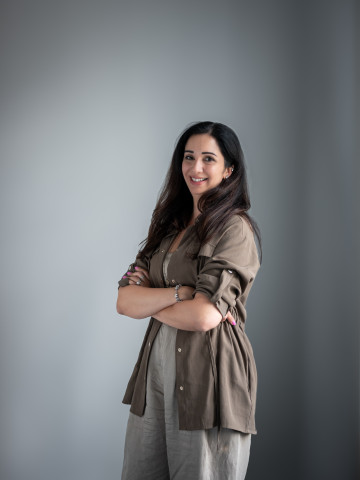
Rana Nahhas
A legally qualified lawyer with over a decade of experience in legal consulting, compliance, and governance, supporting organizations working across domestic and international frameworks. Also a human rights activist passionate about gender equality, sustainable development, and capacity building, with a strong commitment to integrity, good governance, and social impact.
Related Articles