A Heart Swell
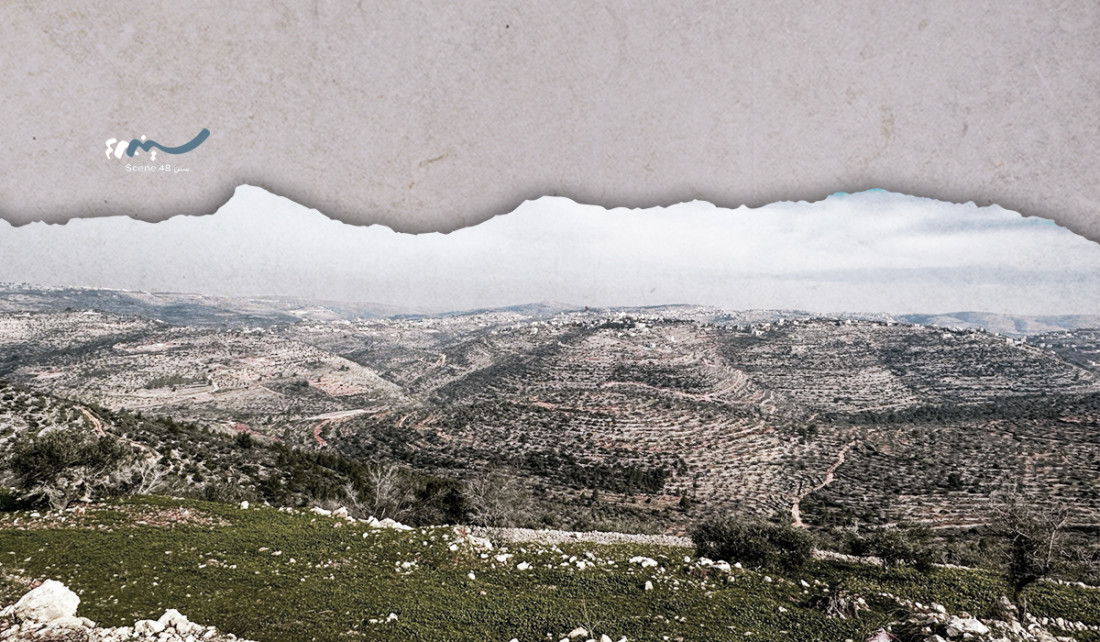
Every time I come back to Ramallah after a work-related trip or a vacation, there is a specific point where the taxi passes, and suddenly my heart swells. Just as we climb from al-Mu‘arrajaat to reach Taybeh village, the air suddenly changes and in my mind I say, “This is home, welcome back.”
Being a Gazawiyya, this is not where I was born. I was born in Shati’ refugee camp and for sure my first breath of air was mixed with sea salt and the humidity of the air near the sea. My younger self always loved the smell of Gaza, a combination of the intensity of people’s aroma, humidity, and saltness of the sea, with a vague smell of fish. This is my first and eternal home. But this moment between the lowest and highest point on the way back to Ramallah continues to be special. It reminds me that I am back and fills a hole in my heart that I always feel when I am abroad.
I always thought I held Palestine and specially Gaza in my heart and this is what it really means to be Falastiniyya. The stories of my grandmother and my mother-in-law, the smell of my mother’s food and the laughter of my sisters, the chatter of the young children, and the hot weather with heavy warm air.
Living abroad made me realize that it is not enough to carry these memories, to see a place that looks like Jericho or a mountain similar to a village near Ramallah. Being here and actually smelling the air, and watching a tree grow or a fruit ripen means the world to me.
As a Gazawiyya living in Ramallah, I always longed to cross the 85 km and hug my mother, a wish that required long and demanding permit process, and was not always possible. On the one hand, it meant being nostalgic to Gaza all the time. On the other hand, it seems my affection for Ramallah and the West Bank grows slowly in me, and my mind recognizes home from this change of air and the beautiful green hills of the West Bank.
Palestine is not only a location divided by colonization and politics, with or without a geographical connection. It is also not just a place where I belong. Without romanticizing Palestine, it is a place where all faces look familiar, like an uncle, a distant aunt, a cousin that you did not see for a long time. It is when you walk the streets and feel like saying hello to everyone and they reply with a smile, and a faint glimpse of recognition, because you are the sister they knew for a long time.
When many Palestinian symbols are commercialized and used to show loyalty, this Palestine is not the computerized cross-stitch but the hard work of a neighbor who spends days and nights stitching something so beautiful and precise that makes you gasp. It is the woman selling her na‘na‘ (mint) and meramiyya (sage) next to a market filled with exported fruits and vegetables, and in your heart you know that it will taste much better in the next morning tea. It is the Palestine where people do not wish to be known for their resilience or victimhood, but just for living and raising children who know how to tell Palestinian stories and songs. The Palestine that believes it is so special to be the center of the world and so ordinary where every day’s tales reflect the struggles and achievements of any person around the world.
In Ramallah, with the spread of modern glass buildings that are foreign in style and image, and with the increasing number of western-style cafés and restaurants, my Palestine is the old stone buildings with a pink color that cannot be quarried any more, with their narrow windows that kept the warmth in winter and brought in a refreshing breeze in summer. The old trees in the streets and the beautiful smell of jasmine.
Walking in the busy markets and crowded streets reminds me of the reality that Ramallah, like all other Palestinian towns and cities, could have spread wide with the increasing population. Instead, with restrictions of movements and hundreds of gates and letter naming of regions, people are forced to build high buildings and move in an ever-narrowing space. A space that is shrinking for the peaceful demonstration that used to emerge spontaneously whenever there is a need.
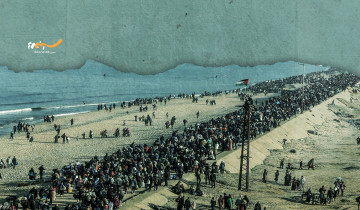
Watching my childhood-Gaza destroyed, and longing for the humid breath of air, I still hold on to this fresh breath of air at the outskirts of Ramallah and think of all the people who have the same swell of heart when they come back. All the people who will never leave Palestine, the real and the imagined, and will always hold on to a fresh breath of air filled with the smell of earth and jasmine.
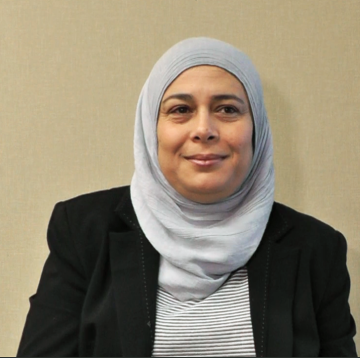
Dr. Hadeel Qazzaz
A pioneering Palestinian feminist activist born in Gaza’s Shati refugee camp, holds an MA in gender and development (1993) and EdD (1997) from the University of Leeds. With over 30 years in international development and gender justice across the Middle East, Africa, Central Asia, and Canada, she advanced gender democracy, poverty alleviation, and women's inclusion in decision-making. She taught at Birzeit University’s Institute of Women's Studies, contributed to PCBS gender statistics, and published on Palestinian development with the IPS.
مقالات متعلقة