Fifty Percent, Conditional: Women and the Politics of Voice

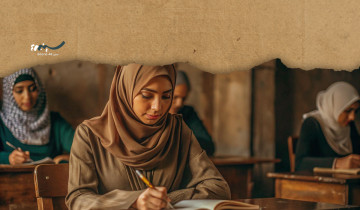
Women are often counted as half, yet heard on conditions. This essay examines how women’s voices are shaped, constrained, and managed in political and conflict-affected contexts, where speech is rarely neutral. Moving beyond heroic narratives, it explores representation, control, and strategic silence as forms of agency, particularly where visibility carries risk and speaking is never free.
Women make up fifty percent of every society, yet their voices are rarely permitted to occupy half the space. They are present in conflict, politics, and public life, but rarely on equal terms. Their speech is encouraged when it reassures, moderated when it unsettles, and constrained when it disrupts established orders. This does not erase women’s voices; it reshapes them. Over time, many women learn not whether to speak, but how much, where, and at what cost.
In conversations about gender, participation is often treated as an endpoint rather than a process shaped by power. Visibility is mistaken for influence, and presence is used as shorthand for progress. Women’s inclusion in media platforms, policy spaces, and civic forums is cited as evidence of balance, while the conditions governing that inclusion remain largely unexamined. Who decides which women are amplified, which messages are acceptable, and which forms of expression are deemed excessive, emotional, or disruptive?
When voice is conditional, representation becomes a managed space. Women are welcomed as long as they remain legible, reasonable, and aligned with prevailing narratives. Dissent is tolerated only when it can be contained. This produces a narrow corridor of speech, wide enough to claim inclusion, but too limited to challenge underlying structures. Within this corridor, women are expected to embody composure and moral clarity, often at the expense of complexity, contradiction, or political sharpness.
Across contexts shaped by conflict and political tension, women develop a heightened awareness that speech is never neutral. Words are assessed not only for meaning, but for consequence. Speaking can invite backlash, misinterpretation, or exposure that is unevenly distributed along lines of gender, class, and political affiliation. Silence, in such environments, is rarely accidental. It is frequently deliberate.
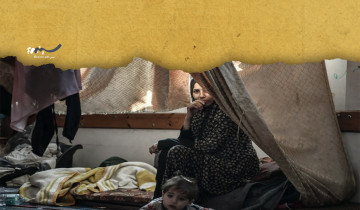
In Palestine, these dynamics are intensified by the convergence of military occupation, internal political fragmentation, and tightly enforced social norms. Women’s voices are pulled in multiple directions at once: expected to carry collective narratives, uphold national coherence, and navigate polarized public space. Speech is scrutinized not only for content, but for tone, intent, and perceived loyalty. Under these conditions, strategic silence becomes a way to remain present without becoming vulnerable to erasure or instrumentalization.
This silence is often misunderstood. From the outside, it may appear as withdrawal or passivity. From within, it is a calculated response to environments where speech can be extracted, reframed, or turned against the speaker. Choosing when not to speak can be a form of resistance to simplification. It can preserve long-term agency in spaces where constant exposure demands performance rather than substance.
Such dynamics complicate dominant narratives of empowerment that equate agency with constant expression. They also challenge the expectation that women must always articulate their experiences publicly in order for them to count. Not all forms of political participation are audible, and not all acts of defiance are visible. In many contexts, restraint is not the absence of power, but evidence of political literacy and situational awareness.
Media and political platforms play a central role in shaping these conditions. Women are invited to speak, but within carefully curated frames. Their contributions are filtered for clarity, inspiration, or emotional resonance, while structural critique is softened or displaced. Complexity is reduced in favor of coherence; anger is reframed as vulnerability; systemic violence becomes individualized struggle. In this process, women’s voices are not silenced outright, but narrowed.
This narrowing has consequences. When women are repeatedly asked to translate their experiences into acceptable language, the space for genuine articulation contracts. Participation becomes performative, and the burden of adjustment falls disproportionately on the speaker. The question then shifts: not why women are silent, but why the terms of speech remain so fragile. What forms of knowledge are lost when women are present, yet never fully heard?
Recognizing strategic silence as a form of agency does not mean celebrating constraint or accepting injustice. It requires acknowledging context. It means seeing women not only as voices to be amplified, but as political actors who read power carefully and make informed decisions about visibility, timing, and risk. It also demands scrutiny of the structures, media, institutions, and social expectations, that claim to support women while quietly disciplining their speech.
If women truly embody fifty percent, then balance cannot remain symbolic. It cannot stop at visibility, curated representation, or controlled participation. It must extend to who defines the limits of speech, how dissent is received, and which forms of expression are deemed legitimate. Inclusion that demands constant self-editing is not balance; it is regulation.
Until women are allowed to speak without negotiating their safety, credibility, or belonging, silence will remain a rational response. Not as absence, not as retreat, but as strategy, shaped by intelligence, restraint, and a clear reading of power. In a world that counts women as half, but listens to far less, the conditions of voice matter as much as voice itself.
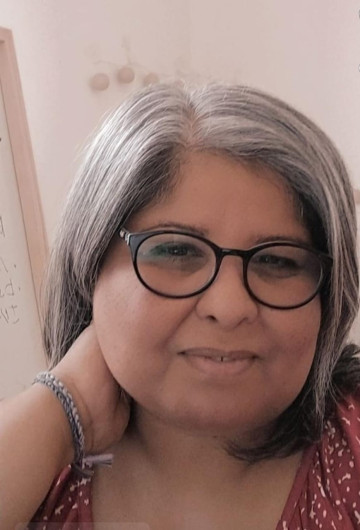
Siham Fayyad
A Palestinian peacebuilder and development practitioner with over two decades of experience working with women and youth under conditions of occupation and political fragmentation. Her work focuses on advocacy, narrative representation, program design, and organizational development, with an emphasis on amplifying grassroots Palestinian voices in public and policy spaces.
Related Articles