Who has the right to tell the other’s story? Men writing the feminine

This paper examines the question of “men writing the feminine” through a critical analysis of two consecutive novels by the Francophone Moroccan author Tahar Ben Jelloun: The Sand Child (1985) and its sequel, The Sacred Night (1987). It interrogates the appropriation of female voices both within the fictional society represented in the novels and at the level of authorship, where the male author assumes and constructs the feminine voice. The former narrates the story of a traditional Moroccan man who fathers seven daughters. Knowing that his wife is pregnant with an eighth child, he resolves that the newborn will be raised as a boy, irrespective of its biological sex, a decision that entails profound physical, emotional, and psychological consequences. The latter, by contrast, opens with the process of emancipation undertaken by the masculinized protagonist, Ahmad/Zahra, and explores the manifold challenges that this transformation and self-reclamation involve.
While The Sand Child unfolds through multiple narrators, partial and unreliable intermediaries who impose divergent trajectories and endings upon “Ahmad,” thereby underscoring the protagonist’s dispossession of agency and self-determination, The Sacred Night marks a narrative shift. In this sequel, the protagonist, Zahra, reclaims her voice and assumes control of her own story as its primary narrator. Zahra’s narrative, through which she aims to release herself from the trauma of a masculinized female, is told in an important public site, Jemaa el Fna Square, in Marrakech, which has contributed to the conservation of oral tradition, and which serves as a space for marginalized people attracting many local and foreign audiences. Hamil states that “the choice of the famous square in Marrakech is not accidental: Jama’ al-Fna represents a popular space where ordinary people use storytelling as an everyday tactic of resistance to the hegemony and authority of official discourses.”
Despite the regained female identity, this emancipation is mediated by a male author. He is the one who stands for Zahra through the character of Zahra. Although Ben Jelloun is known for being an “engaged writer” in the issues concerning marginalized communities, including women, one still wonders who has the right to speak for women, let alone the fact that Ben Jelloun had lived the largest part of his life in France and not in Morocco. Van Oostrum maintains that “an examination with the gender of the author as starting point often influences the discussion about gender representation in the text.” Showalter, quoted in Oostrum, “underscores a contemporary danger of men speaking for women…The implication is that women must be taught by men how to win their rights.”
Having lived the greater part of his life outside Morocco, Ben Jelloun was denied by Moroccan and North African critics the legitimacy to advocate on behalf of marginalized communities, including women. His defence of human rights in his novels was even interpreted as a deformation of the image of Moroccans; and he was accused of hypocrisy to the French reader. Al-Baqqali accuses Ben Jelloun of having exaggeratedly highlighted the repressive attitude of Arab Muslim men towards women. He claims Ben Jelloun benefits from the fact that women’s issues are sensitive to the French people and Westerners, and that a nation’s level of civilization is measured according to the men’s attitude towards women. A similar argument is advanced by Laila Abu-Lughod in the Afghan context, where she critiques Laura Bush’s justification of the American invasion of Afghanistan, which framed the fight against terrorism as simultaneously a struggle for the rights and dignity of Afghan women. In a different instance in the same article, Abu-Lughod refers to Gayatri Spivak’s criticism of how British colonialism used the “woman question” in South Asia to justify its rule.
On the opposite side, there lies the position that justifies or that attempts to provide a logical explanation for men writing the feminine. Gallop argues that “it is easier for men to venture to the realm of body without being trapped there (as women seem to be).” Within the socio-political and religious context of the researched authors, Lionnet argues that “writers from a variety of colonial backgrounds are often moved by a sense of urgency and responsibility and by a need to take risks that help change the form of the genre as well as relations of power in society.
While Ben Jelloun’s attempts to write the feminine could be rationally justified by his desire to advocate for the most marginalized, namely women in the context of the analysed novels, he is still to be criticized for having silenced Ahmad/Zahra’s mother and seven sisters, even in their private sphere. The private sphere, traditionally constructed as “the woman’s realm” and the primary space in which the female body is visible, does not function as a site of empowerment or autonomy. Rather, it becomes another domain in which the female body is subjected to, and effectively erased by, patriarchal norms. Within this supposed “kingdom,” the mother and her seven daughters are systematically deprived of voice, physical visibility, personal names, and any markers of individuality. They are not represented as distinct subjects but as a burdensome collective presence perceived through the father’s oppressive gaze.
The domestic sphere, historically regarded in many traditional societies, including Arab-Muslim contexts, as a protective enclave for female solidarity and communal bonding, is here reconfigured as a space haunted by unrelenting silence. Even in the father’s absence, the narrative withholds speech from the female characters. They are denied the opportunity to articulate their emotions, thoughts, or responses to the father’s crushing authority and his perverse decision to raise the eighth daughter as a boy. This narrative strategy intensifies their symbolic and discursive marginalization.
Ben Jelloun thus severs these women from both the external world and their own interiority. The novels offer no evidence of sisterly solidarity, nor does it construct a clearly defined maternal relationship that might mitigate their isolation. By exaggerating the daughters’ state of confinement and emotional estrangement, the author foregrounds a form of oppression so absolute that it transcends sociological realism. The domestic space becomes not merely patriarchal but ontologically voiding, producing a representation of female erasure that exceeds even the harshest patriarchal configurations.
If one were to draw an analogy with our contemporary reality, the issue of women’s representation, or more accurately, their persistent underrepresentation in decision-making positions and processes, would be particularly salient. Given the breadth and complexity of this phenomenon, the present discussion does not attempt to address it on a global scale. Instead, it focuses specifically on Palestinian women citizens of Israel.
Over the past two decades, Arab women and feminist organizations have invested significant efforts in advancing women’s representation across decision-making arenas in various spheres of life. Nevertheless, women continue to be substantially marginalized, even in discussions that directly concern women’s rights and lived experiences. Despite the ostensibly good intentions of a predominantly male leadership within our society, a fundamental question remains: how can men speak on behalf of women without ensuring their meaningful inclusion? How can women be excluded from deliberations on critical issues such as violence and crime, which pose an acute threat to the safety and well-being of the entire community? Moreover, can central domains of life such as health, education, welfare, and the economy, be effectively advanced without the active and substantive participation of women?
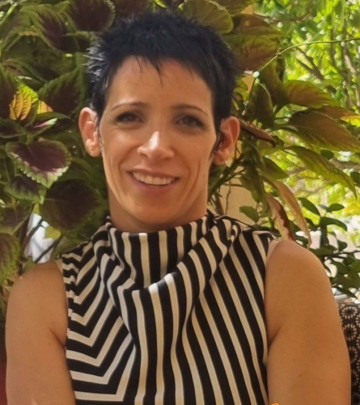
Dr. Ruba Simaan
Holds a PhD from the Hebrew University of Jerusalem. Her doctoral dissertation examined representations of female and male bodies in the novels of six Francophone North-African authors, both men and women. She previously served as a resource development coordinator at a Palestinian feminist organization in Nazareth, the Nazareth Nurseries Institute. Over the past fifteen years, she has developed a professional career in translation, with Arabic as her principal target language.
Related Articles