Palestinian Women and Political Imagination Beyond Genocide
Political imagination is the most fiercely contested ground in the Palestinian struggle. While international mediators package colonial frameworks as “realistic solutions,” Palestinian women practice something far more threatening: they envision futures that refuse genocide, occupation, and patriarchal violence as the starting point for negotiations. They are not asking whether liberation is imaginable, they are building it now. The question is whether global actors will stop blocking the futures Palestinian women are creating.
Through over 2,000 Palestinian women testimonies I collected over the past three years, what emerges is not a petition for inclusion in failed frameworks, but rather the articulation of fundamentally different possibilities, born from the daily work of survival under systems designed to eliminate it.
What passes for “realism” in peace negotiations is actually the successful naturalization of colonial logic as the only thinkable framework. When Oslo architects imagined Palestinian “autonomy” without sovereignty, when today’s analysts sketch post-genocide “solutions” that preserve Israeli military dominance, these are not imagination failures. They are exercises in controlling who gets to imagine, and therefore who gets to live. It is what I call realism as elimination.
Every political solution beginning with “what will existing powers accept?” rather than what does justice require?” reproduces the violence it claims to resolve. When genocide survivors are excluded from discussing their own futures, as Palestinian women were from recent ceasefire talks and international peace processes, this is not oversight. It is the deliberate management of imagination to ensure only certain futures remain possible.
These testimonies reveal interconnected scenarios that fundamentally challenge conventional peacemaking, and alternative futures already being built.
Women who organized neighborhood protection during infrastructure collapse envision security as guaranteed water, healthcare, education, food. Those who created trauma support for besieged children know bombardment does not produce safety. Their vision: What if security meant community accountability, not armed control, and safety, not domination?
Women who documented war crimes under bombardment envision survivor-led processes. They imagine reparations designed by those who lost everything, accountability that refuses compromise with perpetrators, truth-telling that names genocide without euphemism. They envision justice led by survivors.
Having sustained households with nearly nothing, Palestinian women envision cooperative production, community-controlled distribution, economic systems that cannot be starved through blockades. They imagine abundance without occupation’s permission, and economic life beyond weaponization.
Teachers who taught in rubble envision schools where children learn to imagine beyond occupation, where curriculum grows from community knowledge. Education as liberation practice rather than training for an occupied economy.
Palestinian women imagine governance beyond both nationalist frameworks and liberal peacebuilding models. Decision-making accountable to those most affected. Leadership that centers survival and care. Organization that does not reproduce patriarchal domination. They imagine governance centered on care.
These are not separate proposals but interwoven visions of what becomes possible when those who sustained life under systematic death are centered as knowers, not victims awaiting rescue.
These scenarios threaten Power because they refuse the game’s rules. They imagine beyond occupation entirely. They build new tables rather than begging for seats at failed ones. They do not wait for permission from those invested in their elimination. Thus, taking Palestinian women’s visions seriously means abandoning frameworks that treat liberation as technical problem-solving rather than confronting structures of domination. Real solidarity means materially supporting the alternatives being built, not advocating for inclusion in systems producing genocide.
These visions also expose the limits of feminisms that critique sexism but not imperialism, that name misogyny but not genocide. Palestinian women demonstrate that occupation, militarization, and gender violence share the same underlying logic: the violent control of bodies and land.
Political imagination is not speculation about possible futures, it is active practice happening now. Every informal school in Gaza enacts different education. Every survivor testimony demands different justice. Every survival network demonstrates different security. Palestinian women are not waiting for permission. They are building liberation in the present tense.
The question for those claiming solidarity is stark: Will you recognize these scenarios, not official frameworks, as viable futures? Will you materially support alternatives being built rather than advocating for inclusion in systems that produce erasure? Will you acknowledge that Palestinian women demand you stop blocking the futures they are creating?
Political imagination is power, the power to determine what becomes thinkable, possible, inevitable. Palestinian women exercise that power daily. Those claiming solidarity must decide whether to expand their impoverished imaginations or continue managing Palestinian women’s visions. The futures they are building will proceed either way.
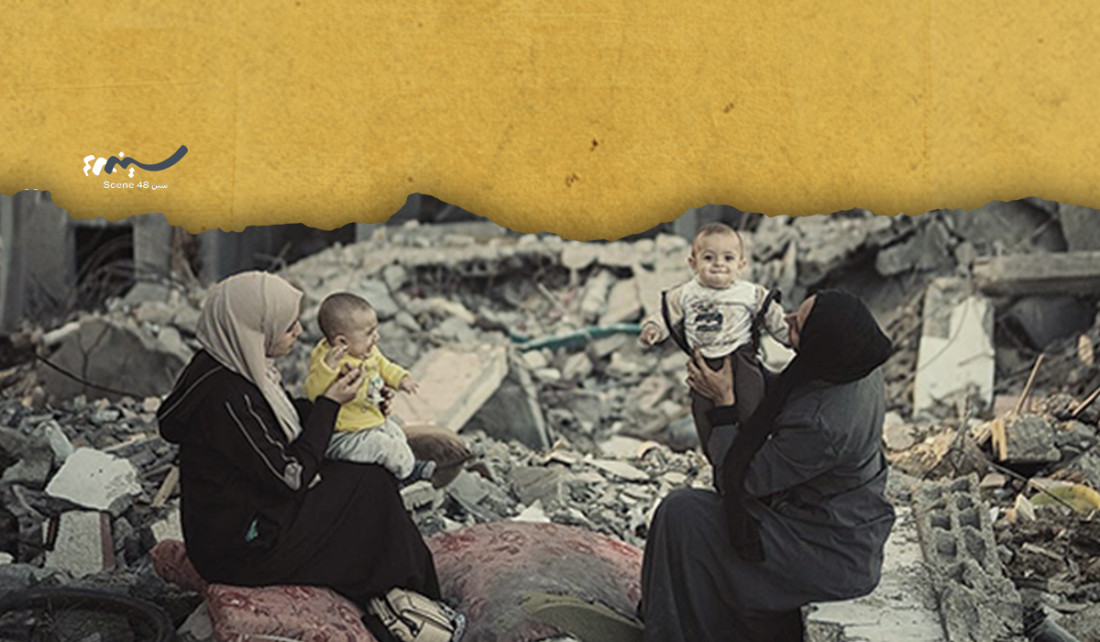
Photo courtesy of Motaz Azaiza.
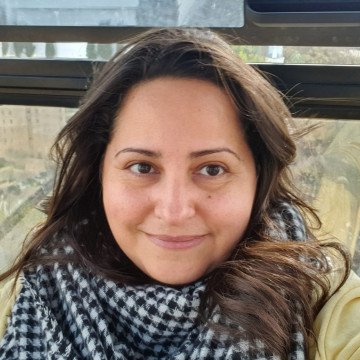
Dr. Nida Shoughry
A political analyst and multilingual researcher-activist specializing in feminist approaches to peace, conflict, and political mobilization, challenging dominant frameworks in international politics. She holds a PhD in International Politics and a Master’s in Broadcast Journalism.
Related Articles