Loud Enough to Be Punished, Quiet Enough to Survive
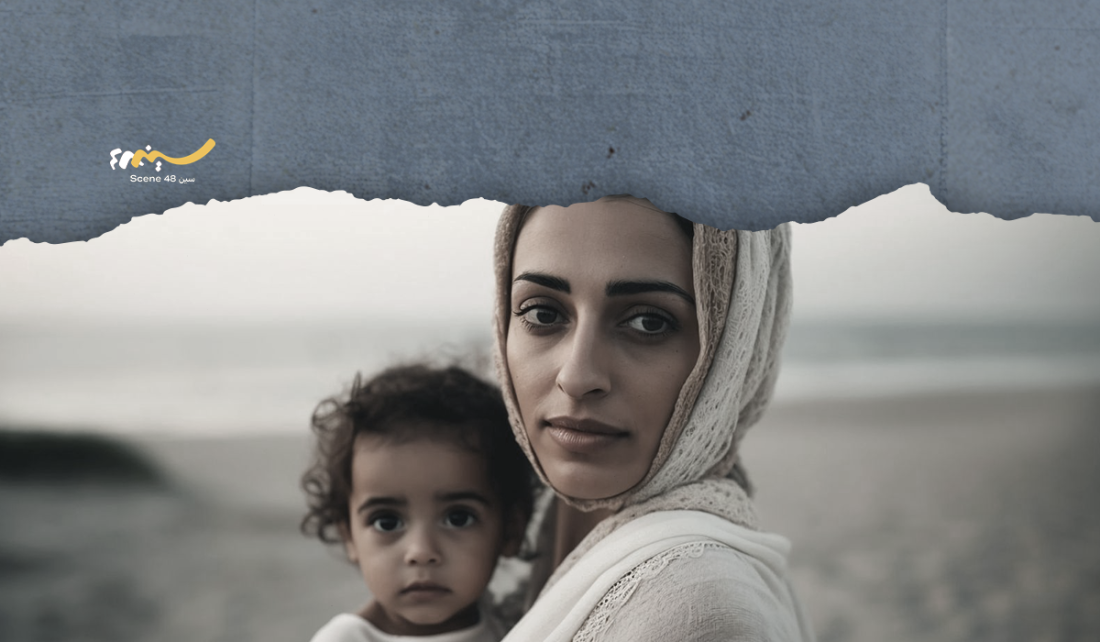
A voice is a form of power, and when it rises from the throat, it takes force to push it back down. When a woman uses her voice, she may, at most, clash with authority, and it may also undermine state security. Therefore, political, religious, and social authorities converge to choke women’s voices before they can break through the soil like a green shoot. After October 7, Palestinian voices were forcibly framed as security threats, as incriminating data, and as surveillance material subject to punishment, rather than being recognized as a political and humanitarian expression. Within this reality, Palestinian women are compelled to calculate their visibility and the volume of their voices.
While Israeli policies affect all segments of Palestinian society, they have a disproportionate impact on marginalized and vulnerable groups, such as women. In a recent study I conducted for 7amleh – Arab Center for Social Media Advancement, titled War and Digital Shadows: Palestinian Women Between Voice Confiscation and Body Exposure in Digital Space, I presented the multiple societal and political actors contributing to the gender-discriminatory censorship and exclusion of Palestinian women’s voices. The study also found that the occupation produces layered marginalization among Palestinian women, silencing their voices through different deterrent tools, as in the case of Palestinian women (from Gaza or the West Bank) who work inside the Green Line or are married to Palestinian men who hold Israeli citizenship. The fragile legal and social status of these women makes them more susceptible to oppression, as social and civil rights are transformed into tools of political control. These women are underrepresented in media, research, and human rights discourse, but their case is of particular significance because it exposes how gender, geography, and legal status intersect to erase a woman’s voice.
Following October 7, several cases have been documented by feminist organizations in which procedures for obtaining residence or stay permits for Palestinian women escaping domestic violence or seeking family unification were halted. In one case, a Gazan woman married to a man in the Naqab (Negev, in Hebrew) wrote a post expressing solidarity with her family after the outbreak of the genocide: “My heart is with you all. May God be our refuge and protector [...].” She was immediately deported to Hebron, without her husband and children. Although her post was personal and deeply human, it was invalidated by the occupation, illustrating how the political and personal spheres intersect, as civil and social rights are transformed into bargaining chips to suppress political rights. The main concern among mothers was being deprived of their children, and their children deprived of their care, love, and protection. Motherhood, then, became a political weapon and a blackmail tool.
In this context, Israel’s Citizenship and Entry into Israel Law prohibits Palestinian women (from the West Bank and Gaza) married to Palestinian citizens of Israel from obtaining civil rights, residency, health insurance, social security, a driver’s license, and access to government services. This situation creates a constant legal threat, increasing pressure not to express their opinions for fear of losing residency, since preserving family unity outweighs public participation. Women are placed before two choices: either to perform their maternal and caregiving role, or to risk having their motherhood nullified through separation from their children. Women’s voices are confined because crossing the invisible threshold of speech carries consequences.
On the other hand, Israeli authorities have imposed security bans on many women from the West Bank who worked inside the Green Line, specifically in the education and health sectors, revoking their work permits for publishing anti-genocide content on social media. In this way, Israel has transformed economic rights into tools to ensure the submission of women’s voices to Israel’s political ideologies, and government positions into a trap where women are directly subjected to the mercy of the state’s central authority, which can threaten their economic security and cut off their income. Economic punishment carries particularly severe harm to women, who already face structural economic inequalities, wage gaps, exclusion from senior positions, and male domination of key sectors. National and geographical divisions further intensify this vulnerability among Palestinian women from the West Bank. As of October 7, the occupation has imposed severe economic restrictions there, while unemployment among women reached 33.7 percent in the first quarter of 2025, making work inside the Green Line a precarious anchor in an unstable reality. Work permits, therefore, constitute a lifeline for many Palestinian families, especially since the occupation has systematically and arbitrarily canceled permits for Palestinian men as well. A woman’s voice and political expression become an existential risk and a gamble with livelihood and economic safety. What makes this even more alarming is that most of these cases occur without trial or conviction, while their circulation generates collective fear and preemptive silence across Palestinian society.
In conclusion, Israel uses fundamental human rights as tools of political taming and fear production, locking individuals into internal existential exile. Even when words are piling up in women’s throats, they can’t find their way to the light. Women choose to stay quiet on purpose as a strategy of managing risks, since the fear Israel has cultivated functions as an effective mechanism to suffocate thoughts and opinions regarding the genocide in Gaza, turning silence into a condition for survival, and the voice into a burden. The case of Palestinian women demonstrates that women don’t owe their voices; rather, their voices are owed by the oppressors, along with their freedoms, rights, and lives. The price for women to express the truth is unaffordable, as their daily lives hang by the thread of political obedience.
By rendering women voiceless, the world loses an ethical, human, and alternative force capable of challenging oppressive power regimes. Or, as Ursula Le Guin once remarked: “We are volcanoes. When we women offer our experience as our truth, as human truth, all the maps change. There are new mountains”, a reminder of women’s voices’ power to bring about radical and fundamental change.
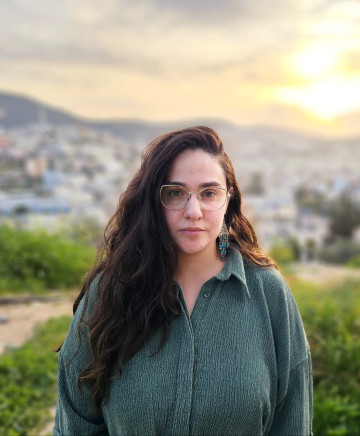
Afnan Kanaaneh
A master’s student in Communication Studies at the University of Haifa and a former teaching assistant in the department. Her research interests lie at the intersections of media, language, power, translation, gender, nationalism, technology, and globalization.
She seeks to bridge research and activism through collaboration with local Palestinian human rights organizations inside the Green Line, including Mada al-Carmel, Assiwar, 7amleh, I‘lam, and Adalah. Her work involves conducting, writing, and publishing field-based research, policy papers, materials, and campaigns addressing technology-facilitated gender-based violence, surveillance, online repression against Palestinians, visual violence, children’s and youth digital safety in conflict and humanitarian settings, and the conditions, practices, and suppression of Palestinian journalistic work under systems of control.
Related Articles