Palestinian Women’s Hidden Wounds: The Violence of Being Read as Resilient
They do not call it sadness
In many Palestinian women’s accounts, sadness feels too small, too contained for what lives in the body. They describe a sense of wear that settles into muscles, breath, and sleep. As one woman said in a qualitative study, “my body is always tired, even when nothing is happening.” Daily life unfolds under constant uncertainty: work that may vanish, routines shattered by uncontrollable forces, obligations dictated by unchosen rules. With or without children, the weight endures.
When women describe this state, they rarely start with emotion. They speak through the body: tightness in the chest, lingering pain, sleep that fractures night after night. In interviews and surveys, they report waking exhausted, bearing chronic back and joint pain, or feeling unrested even in calm moments. Asked how they are, many say briefly, “I’m fine ,” then return to duties.
This pattern is no accident. Under prolonged political domination, distress accumulates rather than tying to single events. With constant stress and limited control, the body becomes the main site of suffering . Somatic symptoms are not mere echoes of emotion; they are how psychological strain manifests when collapse is impossible.
Studies show women describing themselves as broken or worn down, signaling depleted morale and exhausted resources, not illness . This suffering hides behind continued functioning: they work, care, and manage life while feeling internally hollow. Feeling worn is often more common than diagnosable depression or PTSD. Here, functioning signals endurance, not well-being.
Suffering that settles into routine
Under colonial domination, distress becomes life’s condition, not a fleeting response. Palestinian women describe it as exhaustion, broken sleep, chronic pain, and tension, not emotional terms. This is adaptation to restriction, uncertainty, and disruption.
In interviews , they speak of bodies that no longer rest: shallow nights, causeless stomach pain, tightening breath in quiet. Women seek care for headaches, joint pain, or gut issues, only to hear nothing is “wrong .” These are the body’s record of endless pressure. Vigilance turns baseline when movement, work , or routines can halt without warning. There is no single trauma to heal from, just years of strain under imposed rule.
Yet women function: they work when possible, care for others, hold roles, not unaffected but because withdrawal is impossible. This distress spans locations; women under direct control or elsewhere report similar exhaustion and vigilance. Colonial stress travels in the body.
What is broken is not the woman, but the frame
Colonialism reorganizes inner life. Prolonged control, humiliation, and uncertainty erode morale, leaving women feeling broken or destroyed, a slow thinning of strength and futures. They reject depression or trauma labels, insisting they are worn by unrelenting conditions. Symptoms fall short of clinical thresholds; the are dismissed or misread because functioning reassures.
Diagnostic frames miss continuous, embodied, political distress. Women are labeled anxious or depressed, their reactions individualized while structural causes vanish. Resilience is misread as adjustment, masking endurance at its limit. The system stays intact; the woman becomes the problem.
Strength that is demanded, not chosen
Domination intersects patriarchy, making women absorb instability while maintaining family calm amid surveillance and loss. Shame curbs their anger and despair to avoid risks of seeming destabilizing. This suppression breeds exhaustion and guilt. Composure is labor, demanded yet unnamed.
Against the comfort of misreading
The literature demands rereading women’s sadness in context, through somatic language, not as isolated pathology. They seek recognition of their load, not illness labels. Misreading leads to reassurance, mismatched treatment, lost care.
Instead, attend to endurance’s costs and supports that address structures. Take somatic pain seriously, see restraint as strategy, root sadness in domination. Palestinian women endure because life demands it. Their sadness marks survival’s psychological toll, not weakness. Reading it right shifts focus from flawed women to a flawed world.
Reference:
Abu-Kaf, S. (2021.). Mental health issues among Arab Palestinian women in Israel. In Topics in Mental Health of the Palestinian in Israel.
AbuZarifa, M., Hamam, Y., Alnajjar, A. Z., Hamam, M., AbuZarifa, M. B., Zughbur, M. R., Alnajjar, M. A., & Veronese, G. (2026). A cross-sectional study of screened depression prevalence among Gaza war survivors who fled versus those who remained. Scientific Reports, 16, 1345. https://doi.org/10.1038/s41598-025-31757-w
Barber, B. K., McNeely, C. A., El Sarraj, E., Daher, M., Giacaman, R., Arafat, C., Barnes, W., & Abu Mallouh, M. (2016). Mental suffering in protracted political conflict: Feeling broken or destroyed. PLOS ONE, 11(5), e0156216. https://doi.org/10.1371/journal.pone.0156216
Douki, S., Ben Zineb, S., Nacef, F., & Halbreich, U. (2007). Women’s mental health in the Muslim world: Cultural, religious, and social issues. Journal of Affective Disorders, 102, 177–189. https://doi.org/10.1016/j.jad.2006.09.027
Eid, M., Abi Kheir, V., Bizri, M., Larnaout, A., & El Hayek, S. (2025). Somatic symptom and related disorders in the Arab world: A narrative review of clinical features and care implications. Frontiers in Psychiatry, 16, 1692267. https://doi.org/10.3389/fpsyt.2025.1692267
Gammoh, O., Sayaheen, B., Alsous, M., Al-Smadi, A., Al-Jaidi, B., & Aljabali, A. A. A. (2024). The prevalence and correlates of depression, anxiety, and insomnia among camp residing Palestinian women migrants during the outbreak of the war on Gaza: A cross-sectional study from Jordan. Medicina, 60, 1228. https://doi.org/10.3390/medicina60081228
Hanna, A. (2021). Shame and depression: Psychological and cultural factors in a sample of Middle Eastern women (Doctoral dissertation, Long Island University). Digital Commons @ LIU.
Jaber, D., Basheer, H. A., Elsalem, L., Dweib, M., Khadra, M., Abduljabbar, R., Ghazwi, R., & Alhamad, H. (2022). Prevalence and predictive factors of masked depression and anxiety among Jordanian and Palestinian couples: A cross-sectional study. Healthcare, 10, 1679. https://doi.org/10.3390/healthcare10091679
Lindheimer, N., Karnouk, C., Hahn, E., Churbaji, D., Schilz, L., Rayes, D., Bajbouj, M., & Böge, K. (2020). Exploring the representation of depressive symptoms and the influence of stigma in Arabic-speaking refugee outpatients. Frontiers in Psychiatry, 11, 579057. https://doi.org/10.3389/fpsyt.2020.579057
Nazzal, Z., Maraqa, B., Abu Zant, M., Qaddoumi, L., & Abdallah, R. (2021). Somatic symptom disorders and utilization of health services among Palestinian primary health care attendees: A cross-sectional study. BMC Health Services Research, 21, 615. https://doi.org/10.1186/s12913-021-06671-2
Rahmadi, M. A., Nasution, H., Mawar, L., & Sihombing, N. (2025). Psychological impact of conflict on women and girls in Middle Eastern war zones: A gender-specific analysis. Jurnal Anestesi: Jurnal Ilmu Kesehatan dan Kedokteran, 3(2), 149–167. https://doi.org/10.59680/anestesi.v3i2.1808
Shearer, D. (2004). The humanitarian crisis in the occupied Palestinian territory: An overview. Humanitarian Exchange, 28, 2–4. Overseas Development Institute.
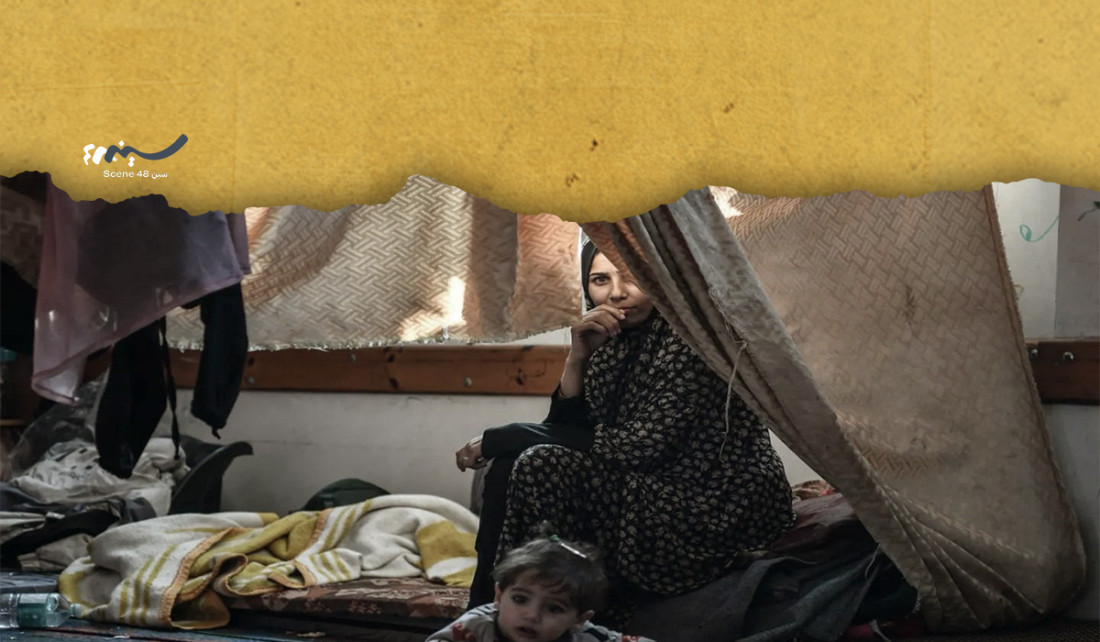
Photo courtesy of Abed Zagout.
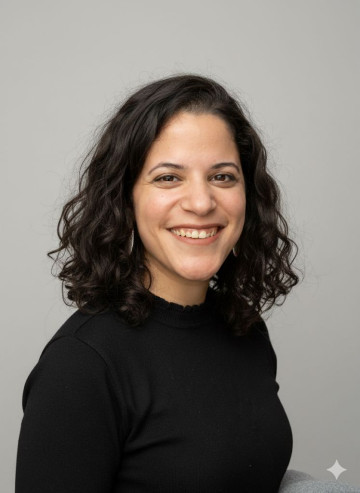
Ola Watad
A psychologist, with a Master's degree in Clinical Psychology. She specializes in studying trauma and attachment relationships within Arab communities.
Related Articles