Stolen Nature and Preached Protection: Rethinking Climate Injustice in Palestine
Climate justice cannot be approached as a purely environmental concept, detached from the political, economic, and social structures that produce and reproduce inequality. To speak of climate is, at its core, to speak of power relations, modes of production and consumption, and the distribution of resources and risks among social groups, states, and peoples. From this perspective, the absence of climate justice does not merely reflect a failure in environmental policy; but rather, it reveals a deeper imbalance within the structure of the global system, where climate justice intersects with economic, social, and political justice. This issue becomes even more complex in colonial contexts, such as in the Palestinian case, where class and economic inequality are compounded by racial discrimination, exploitation, and control over land and natural resources. Food systems provide one of the clearest entry points for understanding climate injustice, because they connect land, production, trade, consumption, corporate power, and environmental degradation within a single global structure.
To understand climate justice, it must be linked to the history and development of food and agricultural production within the global capitalist system. The global food crisis that coincided with the financial crisis of 2007–2008 exposed the fragility of the global food trade system and demonstrated that millions of people, particularly in low-income countries, are the most vulnerable to its consequences. This crisis was neither natural nor incidental, but rather, it was the outcome of structural factors, including the injustice of global trade systems, rising energy prices and production inputs, the weakening of local food production in the Global South, the monopolization of grains and seeds by multinational corporations, financial speculation in commodity markets, and the conversion of agricultural land and forests into sites for biofuel production.
These factors are not new; their roots extend back to the emergence of the modern global economic system. This can be understood through the historical development of modern food regimes. The first food regime, extending from the late nineteenth century to the 1930s, was shaped by the relationship between imperialism and the Industrial Revolution, as colonies were integrated into European industrial centers through the export of agricultural crops and raw materials. The second food regime, which emerged from the 1940s to the 1970s, was associated with the Green Revolution, the Cold War, and modernization theory, whereby in which Western agricultural technology was promoted as an exportable solution for the so-called Third World. In the Arab context, this period coincided with the independence of most Arab states, making food security a central concern in national policy through support for subsistence crops, land reform, subsidies, and credit facilities.
Beginning in the 1970s, a third food regime emerged: the neoliberal, or corporate, food regime. This phase has been characterized by the dominance of major agrifood corporations over markets, the retreat of the state from supporting small farmers, and the liberalization of trade and investment. As a result, large parts of the Global South were transformed into something resembling a “global farm” serving the needs of markets and large corporations. This accelerated the circulation of commodities and enabled corporations to generate enormous profits through price manipulation, while small producers remained marginalized, receiving limited returns and bearing increasing environmental and economic risks.
From this standpoint, the absence of climate justice is a direct consequence of the absence of economic and social justice. The climate crisis is not produced equally by all human beings, nor are its costs borne equally. Certain classes, states, and peoples have historically contributed far more to pollution and emissions, while other communities, which have contributed far less to the crisis, suffer its harshest consequences. Likewise, the capacity to adapt to climate change is not equally distributed; it depends on access to resources, infrastructure, and participation in decision-making. Climate change is therefore, in itself, a question of justice, because it reveals the unequal distribution of responsibility, risk, and adaptive capacity.
In colonial contexts, this becomes even more evident. Colonialism does not merely seize land; it reshapes the relationship between human beings and nature according to the logic of domination and profit. The relationship between colonizer and colonized is founded on exploitation and racism, rendering access to clean air, water, land, food, and a safe environment deeply unequal. This can be understood through the concept of structural violence: the indirect violence produced by institutions, policies, and social structures, whereby deprivation of environmental rights and resources becomes systematic and continuous rather than exceptional.
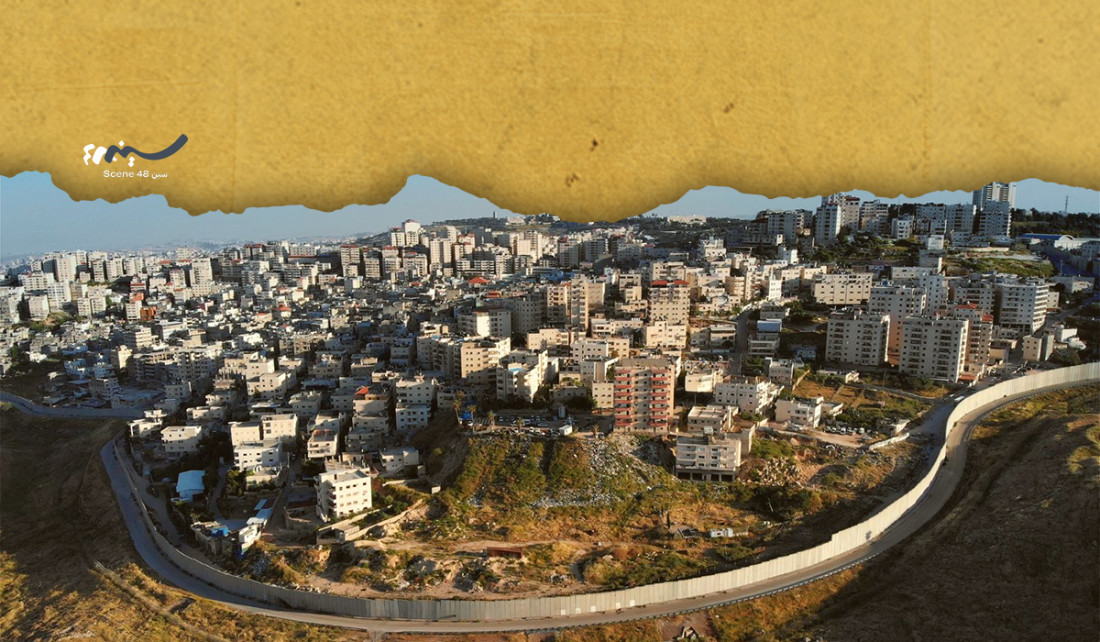
Palestine is not simply a case affected by climate injustice; it is a case in which environmental injustice is actively produced through colonial control over land, water, mobility, and development. Occupied Palestine offers a particularly clear example of the intersection between colonialism and the absence of climate justice. The Zionist project was founded upon a colonial myth that denied the existence of the Palestinian people and treated the land as an empty space to be engineered, controlled, and possessed. Since then, systematic policies have been implemented to reshape Palestinian geography through land confiscation, uprooting trees, burning orchards, controlling water resources, building settlements, constructing bypass roads, erecting the apartheid wall, and turning certain Palestinian areas into waste sites or environmentally and economically besieged spaces. This cannot be separated from Israel’s military-industrial apparatus, which operates according to a colonial-security logic that takes precedence over human and environmental rights.
Climate inequality is clearly reflected in the vast gap between Palestinian and Israeli per capita carbon emissions. While Palestinian per capita emissions are estimated at around 0.5 tons of carbon dioxide annually, Israeli per capita emissions reach approximately 11 tons per year; twenty-two times higher. This gap does not merely reflect differences in consumption patterns; it exposes a colonial structure that grants the colonizer opportunities for production, consumption, and control, while depriving Palestinians of resources and the ability to pursue development. The paradox lies in demanding that Palestinians share the burden of an environmental crisis with those who produce it and benefit from its unjust conditions.
Zionist colonialism has also worked to destroy Palestinian local knowledge tied to land, agriculture, and livestock, replacing it with chemical and commercial modes of production that serve the colonial project. This has extended even to the symbolic appropriation of elements of Palestinian nature, such as thyme, sage, and the anemone, transforming them into symbols within the colonial narrative in an attempt to dispossess Palestinians not only of nature itself, but also of meaning.
Accordingly, climate justice in Palestine cannot be reduced to technical environmental policies. It must be understood as part of the broader struggle against colonialism, capitalism, and structural discrimination. The question is not only: How do we protect the environment? Rather, the more fundamental questions are: Who stole nature? Who controls land, water, and air? Who pays the price of the crisis? And who has the right to determine the form of the relationship with nature? From this perspective, climate justice is a profoundly emancipatory question—, one that cannot be separated from social, economic, and political justice, and that cannot be achieved without dismantling the structures that produce and reproduce exploitation.

Abdalaziz R. Al-Salehi
A Palestinian researcher in the fields of social sciences and humanities. He holds a master’s degree in Sociology from Birzeit University. Al-Salehi has worked with several Palestinian NGOs in research and coordination roles and has authored a number of published studies.
Related Articles