The Absence of Presence and the Psychology of Representation
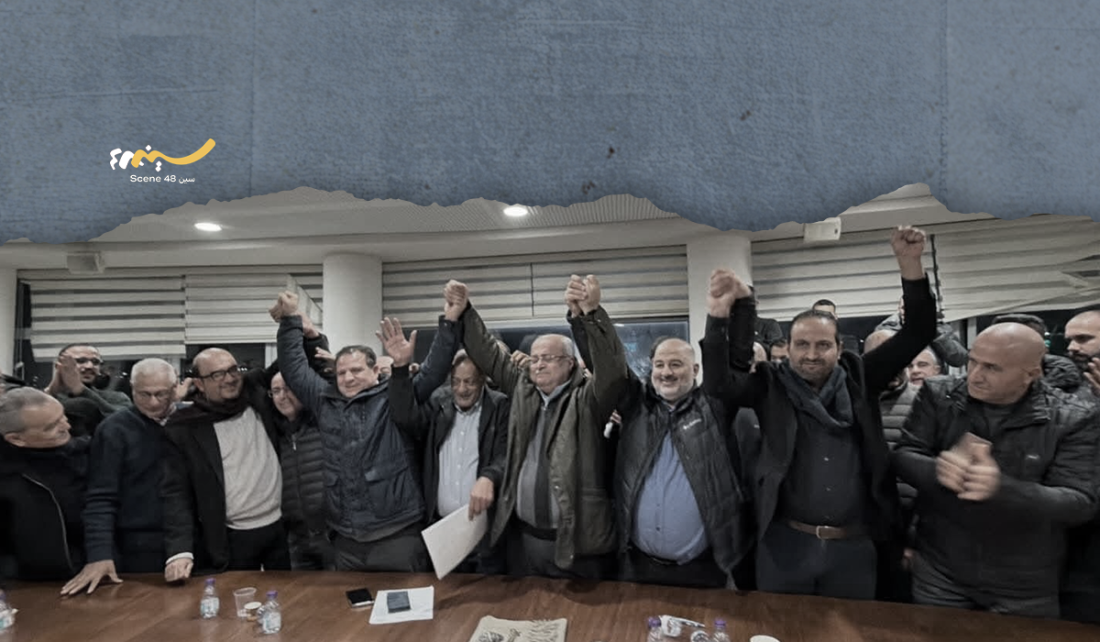
Following the recent protests in Sakhnin, I came across a photo on social media that prompted a moment of internal reflection. The image brought together heads of political parties, all men, and was accompanied by public criticism regarding the absence of women. On the surface, the photo appeared to document a long-awaited political moment: a consensus around a joint list. Whether this consensus was real or imagined matters less here than the reactions the image provoked.
By chance or otherwise, no women were present in that captured moment. Yet their absence quickly became the focal point of commentary, as if the legitimacy of the image itself remained incomplete without the “female element.” What struck me was not the question itself, but the speed and familiarity with which it appeared, almost automatically, as it does in many public spaces. This raised a deeper concern: are we facing a genuine inquiry into roles and responsibility, or a search for symbolic representation that is assumed to embody justice in and of itself?
The question “Where are the women?” is not new. It echoes a historical and existential inquiry that emerged with early liberation movements and first-wave feminism in the early twentieth century, particularly in struggles for suffrage and equality within the public sphere. It was born of long-standing, systemic exclusion and of efforts to establish women’s presence as a right rather than a favor. Over time, this question moved beyond parliamentary halls into nearly every corner of modern life, including boardrooms, conference speaker lists, and political groups, until female absence itself became a marker by which institutions are judged for their modernity and ethical standing.
From this perspective, the question holds clear legitimacy and remains ethically necessary in many contexts still shaped by histories of marginalization. Yet, like any tool of struggle, it does not retain its critical function indefinitely. When repeated without reflection, the question risks shifting from an opening toward rethinking power and responsibility into a mechanical practice concerned primarily with balancing the image. In such cases, the question no longer interrogates structures; it evaluates appearances.
When the question becomes mechanical, it may also become coercive. Some women can find themselves pushed toward occupying roles that do not align with their personal choices, psychological readiness, or life circumstances. The pressure of “representation” extends beyond politics into professional and social life, until deviation from familiar roles becomes an obligation rather than an option.
Psychologically, the repeated elevation of public roles at the expense of private needs does not simply exhaust women; it reshapes the meaning of freedom itself. What appears as empowerment may, in practice, function as a demand, an obligation to perform presence in order to repair an image. Visibility becomes a moral currency, and absence a silent accusation. The question of representation drifts away from agency and toward compliance.
A question that once emerged from a real wound does not necessarily remain critical. When reiterated without reassessment, it can harden into habit. What began as an intervention may gradually transform into a discursive reflex, one that repeatedly names exclusion while leaving the conditions that produce it intact.
This article does not seek to address a single question of absence, but to examine how certain ethical questions, particularly those born of historical wounds, lose their direction when repeated without confronting their roots.
The same dynamic appears when questions are raised about policing in Arab society, or about the role and responsibility of Arab representatives within the Knesset. These are legitimate questions, yet within the Palestinian context inside Israel, they do not arise in a vacuum. They emerge from a long history of systematic repression and structural marginalization that has neither been addressed nor dismantled. When such questions are repeated without interrogating the political and ethical foundations that produce them, they risk reorganizing reality rather than illuminating it, shifting struggle from holding the state accountable to continuously testing the legitimacy of the Arab citizen within it.
In this context, the question of “the Arab role” cannot be separated from the structure into which that role is demanded. Palestinian citizens are repeatedly called upon to prove their responsibility, effectiveness, and political legitimacy within a state that threatens their existence, language, and national identity, and treats them as conditional exceptions rather than full citizens. They are asked to participate, to represent, and to perform civic responsibility, yet only within boundaries set by a system that does not grant them equal standing.
This constant demand to define and perform “the Arab role” does not necessarily signal empowerment. More often, it compels adaptation to the image of the “good citizen” as defined by the state, rather than as lived by the community itself. Struggle for justice thus becomes a continuous test of eligibility, where individuals and groups are burdened with proving worthiness instead of questioning the system that produces exclusion in the first place.
Here, the parallel with the discourse on women’s representation becomes clear. In both cases, marginalized groups are asked to perform representational roles that do not necessarily emerge from their own needs, histories, or psychological realities, but from the system’s need for balance, order, and legitimacy. Representation, under these conditions, does not liberate; it can normalize compliance and redirect struggle from structural accountability toward improved performance within an unjust framework.
In such cases, asking replaces engaging. Repetition substitutes responsibility. Structural exclusion is not the absence of bodies from a frame, but the persistence of conditions that render presence costly, conditional, or ultimately ineffective. The critical question, then, is no longer simply “Where is the woman?” or “Where are the Arabs?” but what such presence is required to signify, whom it serves, and what it conceals.
This analysis does not reject the question of women’s presence, nor does it deny its historical necessity. It insists, however, on returning the question to its ethical weight. When detached from meaning, representation risks becoming an instrument of discipline rather than justice. To ask “Where are the women?” remains essential, only if the question resists becoming a ritual, and instead reopens space for agency, accountability, and structural change, including the unseen forms of constraint we may ourselves reproduce in the name of progress.
Photo courtesy of Mohammad Khalilieh.
Nowar Masarwa
A clinical psychologist working in the health sector and a writer in psycho-social themes.
Related Articles