The Paradox of Progress: Palestinian Women and Political Power
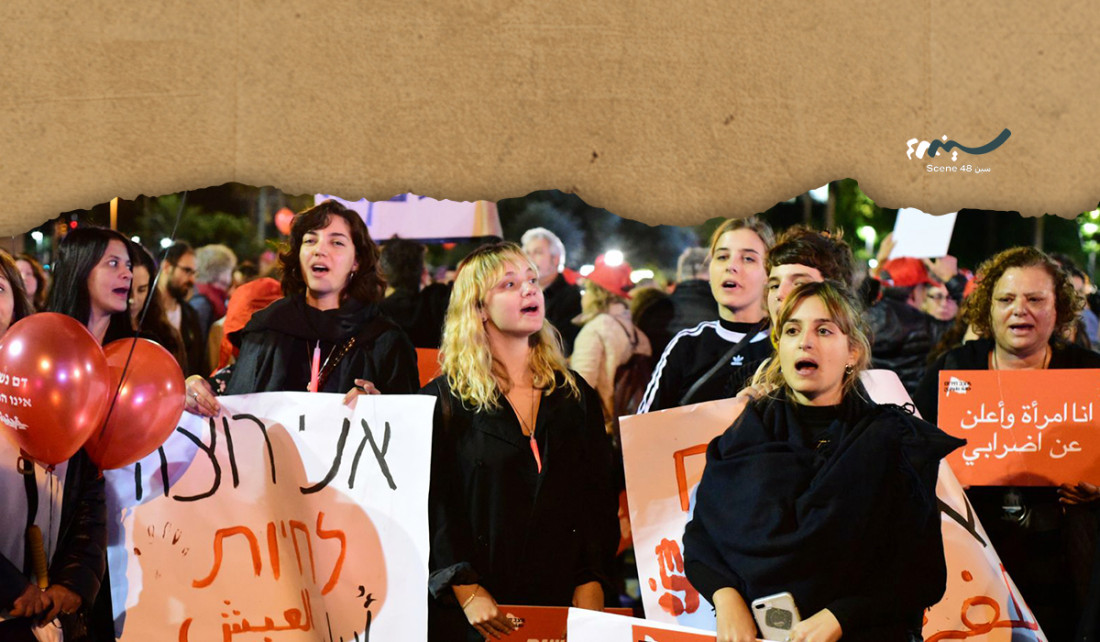
With every electoral cycle, the question of the political representation of Palestinian women in Israel returns to public debate. Discussions often focus on the number of women included in electoral lists, their presence within political parties, or the few who succeed in reaching elected positions. Yet, reducing the issue to numbers alone overlooks a deeper question: why, despite the significant progress Palestinian women in Israel have achieved in education, professional fields, civil society, and community leadership, do they remain underrepresented in positions of political power and decision-making?
Through my years of work as the Coordinator of Community Feminist Work at Women Against Violence (WAVO), and through leading and accompanying several initiatives aimed at strengthening women’s political participation and influence in decision-making spaces, I have witnessed that the challenge has never been a lack of women’s abilities, qualifications, or commitment to public life. Palestinian women in Israel have demonstrated leadership, resilience, and expertise across many fields. They lead institutions, organize community initiatives, contribute to public discourse, and play a central role in social change. However, this progress has not been translated into equal political representation or meaningful influence within decision-making institutions.
Political representation does not begin at the ballot box. It begins much earlier, within the social structures that determine who is perceived as a leader, who has access to influence, and who is granted legitimacy. Political parties do not operate separately from society; rather, they often reflect the same power relations and social structures that shape community life, including patriarchal and clan-based systems.
This is one of the central contradictions facing Palestinian women in Israel. Political parties, which are expected to serve as spaces for democratic transformation, can also reproduce existing inequalities. Traditional networks of influence, family-based structures, and established perceptions of leadership continue to shape political opportunities and candidate selection. Women often find themselves excluded from these networks, not because they lack experience or public trust, but because political leadership has historically been defined through male-centered models.
The contradiction becomes even clearer when we consider women’s achievements in other spheres. Palestinian women in Israel have made significant advances in higher education, professional careers, research, management, and community activism. They have proven their ability to lead, organize, and create social impact. Yet, when it comes to political leadership, their legitimacy is still questioned, as if the skills recognized in other areas are insufficient for decision-making positions.
Local government provides one of the clearest examples of this gap. Local authorities are not only administrative institutions; they are also spaces where social power relations are expressed and reproduced. The limited presence of women in leadership positions reflects the continued association of political authority with traditional forms of male influence. The issue is not that women are absent from public participation. On the contrary, Palestinian women in Israel have long been active in community work, civil society, and social struggles. The challenge lies in the structures that determine who moves from participation into positions of formal power.
The same challenge exists within political parties. The question is not only how many women participate as members, activists, or candidates, but also where they stand when crucial decisions are made. Who determines candidate rankings? Who shapes political priorities? Who controls the mechanisms through which leadership is produced and recognized? Women’s participation in election campaigns and organizational activities does not necessarily guarantee access to the circles where political decisions are formed.
This challenge also extends to parliamentary representation and the Higher Follow-Up Committee for Arab Citizens of Israel. These institutions represent different levels of political engagement and collective representation, yet they raise the same fundamental question: how can a society claim to fully represent itself while women, who constitute half of society, remain significantly less present in the spaces where political visions, priorities, and strategies are formulated?
The struggle for women’s representation has sometimes been misunderstood as a form of activism separate from politics. This perception reflects a deeper problem: the assumption that politics is produced only within traditional political institutions, while feminist organizing is treated as external pressure. In reality, feminist work among Palestinian women in Israel has been a long-term political struggle aimed at transforming decision-making structures and expanding the meaning of representation itself.
The efforts led by feminist organizations and women’s coalitions to strengthen women’s presence in national and political institutions were not symbolic initiatives. They were organized, sustained, and rooted in the belief that women’s representation is a democratic necessity. The demand for women’s participation in institutions such as the Higher Follow-Up Committee was not a request for privilege or a temporary quota; it was a demand to recognize women as equal partners in shaping the collective future.
Women’s political representation is not a secondary issue or a demand limited to women alone. It is a question at the heart of democracy, equality, and the future of collective leadership. A society that challenges exclusion and discrimination must also examine the power relations within its own political institutions and ask whether they reflect the values it advocates.
The goal should not be limited to increasing the number of women in political institutions, although this remains essential. The deeper challenge is transforming the mechanisms through which leadership is produced, recognized, and legitimized. Equality is not achieved simply by opening doors for women; it requires changing the rules that define who has access to power and who is considered capable of leading.
After years of working alongside Palestinian women in Israel, my experience confirms that the challenge has never been a lack of leadership potential, knowledge, or commitment. The real challenge lies in political and social structures that have failed to translate women’s achievements and contributions into fair and meaningful representation.
Therefore, the discussion about women and politics must move beyond the question: “How many women have reached political positions?” The more important question is: “How do we build a political system in which women’s leadership becomes a natural reality rather than an exception?”
Gender justice is not a secondary demand added to a national or democratic project. It is a measure of the credibility of that project. A society cannot claim to struggle for freedom, equality, and justice while reproducing exclusion within its own political structures.
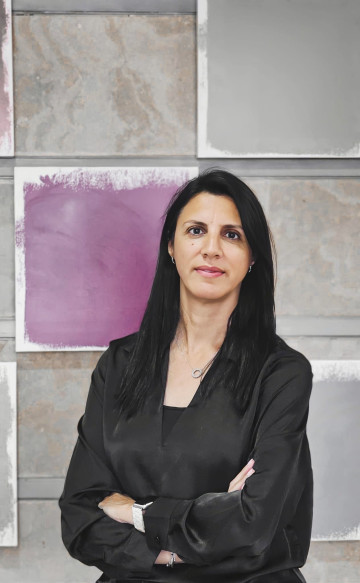
Nadira Abu Dubai Saadi
A feminist activist, journalist, and researcher, and the Coordinator of the Community-Based Feminist Work Program at Women Against Violence Association.
Related Articles