Rooted in Resistance, Devoted to Dignity
I cannot say when my arduous journey in volunteer and grassroots work began, nor when I first immersed myself in the activities of national struggle. I do not remember the moment I chose to become a woman devoted to the worries and suffering of the poor, to the causes of oppressed and struggling women from among my people. I was never an activist within a women’s organization, nor a member of a nationalist party, a Marxist faction, a feminist group, or a humanitarian association dedicated to relieving the destitute and impoverished among my people. I was free and unbound in my grassroots work: I decided, initiated, planned, and acted without formal programs, tactical schemes, or strategic blueprints. Everything was simple and spontaneous, all for the sake of those who have no voice. Yet my fertile memory has carried me back across decades, to remember where my culture of supporting the poor, women, and vulnerable children of my people originated. Since that time, I have served the people and worked for them: for a better alternative for women, for a brighter future for children, for a better life for all our people, a people that seeks nothing but dignity, freedom, and deliverance from injustice, tyranny, and persecution. A people that longs for an end to suffering, to the bleeding and the unhealed wound that has persisted since the Nakba of 1948 until this very moment. A people that demands an end to killing and massacres.
 |
|---|
It was the year 1976, in the immortal month of March, when the land of the Galilee revealed its secrets to us. It was Land Day in my village, ‘Arrabat al-Battuf in the Galilee, the day when people, men and women alike, rose to defend dignity, land, and honor. There, for the first time, I encountered women’s activism. There, I learned the meaning of giving, of volunteering, of sacrificing one’s soul, and of constant devotion for the sake of others. I saw my mother, Umm Wahba, may God have mercy on her, and the women of the village standing face to face with the army, which had entered the village in full force to suppress the people with gunpowder and fire. Yet women and men together stood bare-chested, resisting bullets and shells in defense of the land and dignity, in defense of the soil of the Galilee. In every home, street, and alley, my mother and the village women offered water and onions to soothe the effects of tear gas. There, women turned their homes into fortresses and shelters for the struggle, hiding young men pursued by the army. My mother and the women of the village became teams of doctors and nurses, treating hundreds of young villagers who had been injured in clashes with the army. These were scenes of pride and honor that warmed the heart, scenes of steadfastness, dignity, and the highest form of nobility. From there, from the soil of the Galilee, from my mother and the women of my country, from its alleys and streets, from the neighborhoods of al-Bayader, al-Marah, and al-Jalama, I learned the meaning of giving. I learned sacrifice for the sake of others, from among my people, who live and endure oppression, injustice, and the bitterness of pain.
Thus, this was the beginning. From here arose perseverance and tireless work in service of the people and the masses. Here I realized that grassroots fieldwork, direct immersion with people and their concerns and suffering, through popular initiatives and individual and collective volunteer efforts, relying on the immense capabilities of our people and the generosity of simple, capable individuals among us, is a more effective and successful path than bureaucratic institutional work tied to external foreign funding.
.jpeg) |
|---|
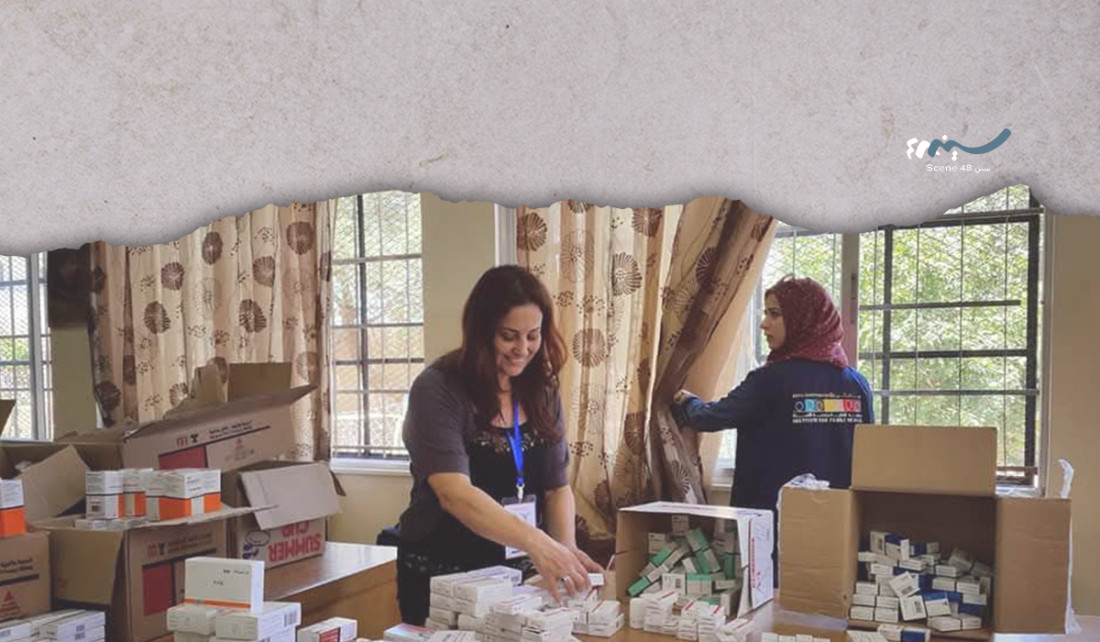
For forty years, I have remained engaged in the same unceasing activity: work on behalf of Palestinian prisoners and detainees; continuous support for Palestinian refugees in the camps of the West Bank and for the children and women of the camps, whether through food or medicine; ongoing aid for impoverished children and for students in UNRWA schools in Jenin, Tulkarm, and the Gaza camps; medical assistance for hospitals and the needy in the West Bank, Gaza, Jerusalem, and within Israel; support and aid for abused women, their children, and their families; and assistance for the struggling workers in factories and workshops. Were I to recount the story of my humble life’s journey through these years of giving, support, and solidarity, it would require much effort and time. Nevertheless, I am determined to continue this journey of giving as long as God grants me health and strength to carry on.
 |
|---|
“Do not be dismayed by the path of righteousness because few walk upon it.”
— Imam Ali ibn Abi Talib
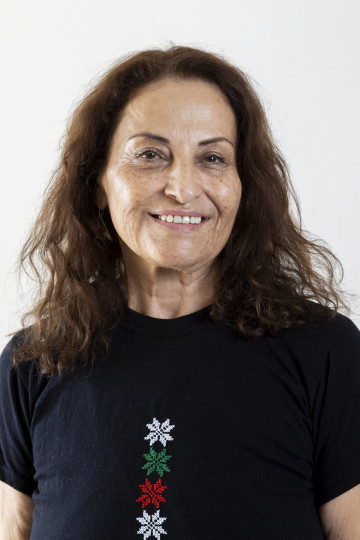
Suhair Badarneh
A social activist from the village of Arrabat al-Battuf, residing in Haifa.
Related Articles