UN Security Council Resolution 1325: How It Can Still Be Useful
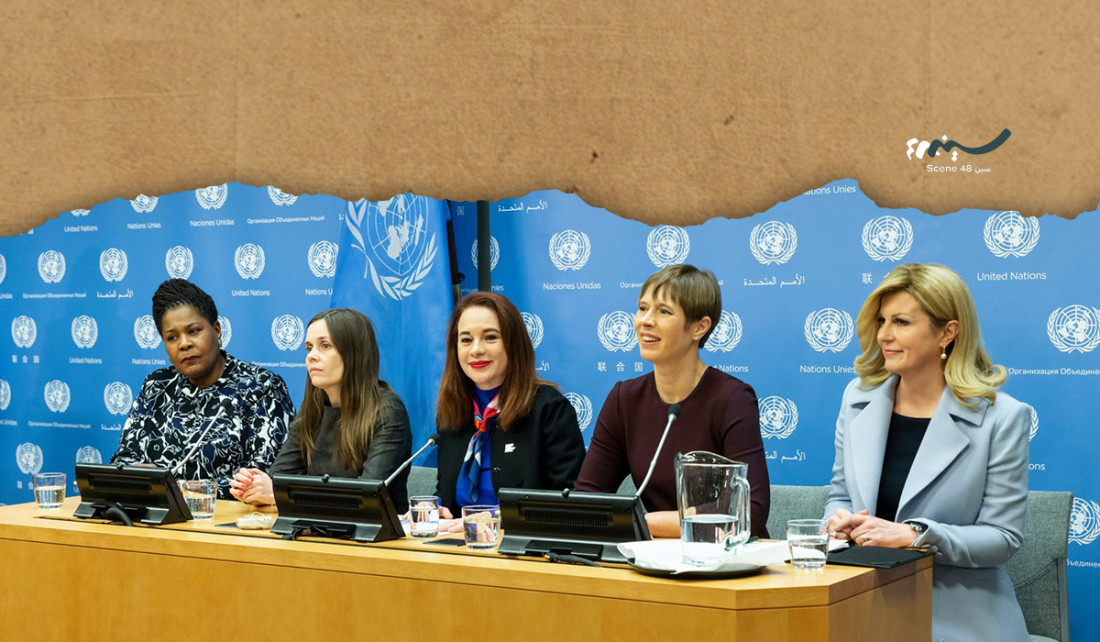
On 31 October 2000, the United Nations Security Council adopted its first-ever resolution explicitly addressing women. This was not the only factor that made UN Security Council Resolution 1325 (Resolution 1325) historic. The resolution, achieved through the collective efforts of women’s organizations across the world, recognized, for the first time, that women experience the impacts of violent conflict in distinct and disproportionate ways, while simultaneously being almost entirely excluded from decision-making positions on matters of peace and security.
The resolution emerged against the backdrop of several significant global developments during the 1990s. The first was growing awareness of, and international attention to, the use of rape as a weapon of war during the conflicts in the former Yugoslavia and Rwanda. The second was the historic Good Friday Agreement in Northern Ireland, which ended decades of violent conflict and in which women played a crucial role in shaping the peace process.
Resolution 1325 rests on four central pillars:
Participation: Calls on UN Member States to ensure the meaningful representation of women from diverse communities in decision-making processes related to peace and security;
Protection: Requires the protection of women and girls from all forms of violence in situations of ongoing conflict;
Prevention: Focuses on preventing violent conflict through gender-sensitive approaches; and
Relief and Recovery: Promotes the integration of gender perspectives into humanitarian assistance and post-conflict reconstruction efforts.
Immediately after its adoption, some of the resolution’s inherent limitations became apparent. Because it was adopted as a resolution without enforcement mechanisms or sanctions, it became a form of “soft law,” and many states were slow to take concrete steps toward implementation. Once again, women’s organizations and activists around the world stepped forward, raising awareness of the resolution and the obligations it created. Among other efforts, they ensured that the resolution was translated into dozens of languages to make it accessible to women’s groups globally.
Women’s organizations and activists continued to serve as the driving force behind transforming Resolution 1325 into something approaching a global standard in diplomacy and international policy. It became a reference point in many contexts, including in states’ reporting processes under CEDAW. The UN Security Council subsequently adopted a series of complementary resolutions reinforcing the Women, Peace and Security agenda, including Resolutions 1820, 1888, 1889, 1960, and 2106. More than 110 countries have developed National Action Plans for the implementation of Resolution 1325, with some countries having already adopted second-, third-, and even fourth-generation plans.
Following the adoption of the resolution, international organizations conducted extensive research examining its impact. Findings demonstrated, for example, that when women participate in peace negotiations, this has a significant impact not only on the likelihood of reaching a peace agreement but, even more importantly, on the sustainability of those agreements. While most peace agreements around the world collapse within only a few months, agreements in which women participated were found to have a 35% greater likelihood of lasting for at least 15 years.
Despite the limited implementation of Resolution 1325, several peace processes have demonstrated its transformative potential. These include the 2016 Colombian Peace Agreement, which ended a civil war that claimed more than 250,000 lives: 30% of each delegation around the negotiation table were women; and the 2014 peace agreement in the Philippines, where, for the first time, a woman, Miriam Coronel-Ferrer, led a negotiating delegation and signed the agreement as its chief negotiator.
However, when we look around the world today, it is clear that almost 26 years after its adoption, Resolution 1325 has not achieved meaningful implementation on the ground. In many places, there has been little progress and, at times, even regression regarding the principles of the Women, Peace and Security agenda.
The lack of meaningful implementation is not a technical issue. It is deeply connected to questions of power: who remains around decision-making tables and who is unwilling to make space for new perspectives that may challenge existing interests and structures within peace and security institutions. These structures are often closely linked to political, military, and economic interests, including arms industries and the continuation of conflict situations. It is therefore not accidental that Resolution 1325 does not explicitly address issues such as disarmament or arms trafficking.
Many states sought to implement Resolution 1325 by increasing the number of women serving in police and military forces. Yet, after several years, it became clear that simply adding women to these institutions did not advance the broader objectives of the resolution. Around the world, it became increasingly evident that “counting women’s heads” around decision-making tables may be a necessary condition, but it is far from sufficient to achieve meaningful protection of women from violence or to prevent violent conflict.
Those working in the field are familiar with the repeated statement often heard from policymakers: “We could not find relevant women for this issue.” Women’s organizations worldwide have worked extensively to challenge this claim and to question what “relevance” actually means.
Does expertise in peace and security require only a military background? Or does meaningful decision-making also require knowledge and experience in history, public health, economics, education, and other fields that shape societies and ensure that future generations grow up with values of respect, peace, and reconciliation?
Another criticism of Resolution 1325 is that some states and international actors have used it as a means of “whitewashing” other actions undertaken in the name of security. Furthermore, many countries have chosen to implement the resolution primarily through their foreign policy, as though Women, Peace and Security issues do not also concern their own domestic policies and practices.
So why do we, at the Women, Peace and Security Center of Itach-Ma’aki, together with many other activists around the world, continue to use Resolution 1325 as a tool for policy change?
First, because we do not truly have another alternative. Resolution 1325 remains one of the last remaining lifelines in a period of severe regression in women’s rights generally, and particularly regarding women’s participation in peace and security decision-making. Many governments and institutions continue to recognize the importance of Resolution 1325 and remain committed to its principles.
But more importantly, precisely because we and other advocates recognize that the resolution’s substantive principles have not yet been realized, we also see an opportunity. We believe that if these principles are implemented as originally intended, Resolution 1325 still has the potential to create the meaningful transformation that women around the world continue to demand: bringing more perspectives around decision-making tables, including those of marginalized communities and of civilian and human expertise, can bring sustainable and just peace agreements, can protect women, and can prevent more armed conflicts.

Netta Loevy
An attorney and the co-director of Women, Peace and Security Center at Itach Ma’aki – Women Lawyers for Social Justice.
Photo Credit: Yaniv Berman.
Related Articles