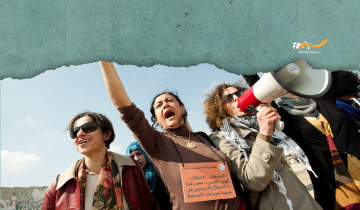
AI and the Right to Self-Determination

When discussing technological innovations, specifically AI, several issues must be considered. The first is that society and policymakers lack a comprehensive understanding of advanced AI systems. While the accepted risk of AI lies in its capacity to alter all aspects of the economy and society, a higher, often unacknowledged risk is its potential to eventually surpass human intelligence. Second, recent advancements in AI point to a significant paradigm shift as technological innovations transition from being merely enabling tools to becoming deterministic interventions. Consequently, human control over the use and integration of AI is expected to diminish. Third, historically, technological innovations are harnessed to enhance shareholders’ wealth at the expense of human well-being and sustainability. Furthermore, collaborations between leading innovative companies and governments are aimed at restricting people’s freedom by undermining personal autonomy and intensifying surveillance.
Nonetheless, marginalized groups must strive to leverage these innovations to advance their causes, as advancements in AI provide a limited window of opportunity in certain crucial areas. The question becomes whether the efforts of underrepresented groups, in this case Arab women, should be directed toward seeking incremental change within existing systems (such as the approach of liberal feminism) or toward pursuing radical, transformative change aimed at dismantling those systems. Some viewpoints assert that so-called “liberal” feminism has failed women and that they should consider the ways radical socialist feminism could permanently change the status quo. History demonstrates that radical feminism is a more effective means of achieving women’s liberation.
The downside of initiatives aimed at supporting marginalized groups, such as the Biden administration’s DEI (diversity, equity, inclusion) framework, is that they are run by the government and corporate management. This represents a top-down approach, which leads to superficial outcomes rather than empowering self-agency. Furthermore, government-controlled initiatives are influenced by shifts in political ideology. During Trump’s second term, the implementation of DEI initiatives underwent a drastic shift due to legal pressure and executive orders limiting public funding. This shift led many companies to either scale back or eliminate formal DEI programs. In the context of this essay, DEI initiative efforts are aligned with liberal feminist ideology. Nonetheless, it will be worthwhile to explore the possibility of designing and implementing similar interventions in Arab countries.
Exercising the right to self-determination requires embracing radical rather than incremental change, and striving for full autonomy and independent decision-making. A core pillar of self-agency is the ability to control one’s own destiny; personal choices and actions should be what shape one’s environment and future, rather than allowing others to do so. Furthermore, activists should not assume that existing systems were established to improve the conditions of marginalized groups or that they were designed to be fair, transparent, and inclusive.
The right to self-determination is rooted in sovereignty, self-agency, agency, and the preservation of identity. Can AI tools serve as an enabling force for Arab, and specifically, Palestinian women in their pursuit of self-determination? There is no doubt that AI tools can be useful, albeit to varying degrees. They will positively support efforts aimed at identity preservation, thereby fostering self-agency, enhancing the exercise of agency, and ultimately leading to sovereignty.
Protecting identity from erasure is crucial for achieving self-determination. AI tools can digitize, organize, and safeguard oral histories, literary works, and traditional art forms such as embroidery patterns. Furthermore, AI tools can be used to create a digital archive that preserves Palestinian culture and documents the stories of past generations, potentially helping to shape public opinion regarding the Palestinian cause. Moreover, to ensure that authentic narratives reach international communities, AI analytics can be used to monitor censorship and shadow banning targeting Palestinian voices on social media platforms. Palestinian women should form monitoring groups to identify negative or contradictory narratives targeting the Palestinian cause and the Palestinian people’s right to self-determination.
Arab women (including women in Palestine) can use AI-powered platforms to engage and connect with global feminist and grassroots movements and diaspora communities to organize civic action and initiatives. Additionally, AI learning platforms provide uninterrupted education to young Palestinian women pursuing higher education or skill development during times of crisis and frequent disruptions.
International law has long recognized the right to self-determination. Female legal advocates and researchers employ AI algorithms to process field data, documents, and media materials to prepare legal evidence for international human rights bodies, while also using natural language processing models to draft compelling advocacy documents such as press releases in several languages to reach audiences worldwide.
And most importantly, women must recognize that economic independence is fundamental to self-determination. AI can break down physical barriers and systemic isolation by bypassing geographical restrictions. For instance, women can engage in the global workforce remotely using AI tools, such as freelance work, data analysis, content creation, and software development. This allows Arab women to secure financial independence despite mobility restrictions and blockades caused by occupation. Unfortunately, due to Zionist control over Palestinian land, women do not have control over the land and material resources needed to revive their communities. The same applies to women in Sudan, Libya, and Iraq, and most of the Arab states suffering tremendously due to the impacts of colonial “local” agents.
The following are examples of case studies from various regions regarding AI tools used to support civil causes:
Grassroots political movements across India and West Africa used AI-assisted content creation tools to translate, format, and adapt political speeches for local dialects and languages, bypassing traditional news outlets. These speeches were directly distributed to the people utilizing platforms such as WhatsApp and Telegram. This created accessible news coverage for millions of citizens by completely avoiding the need for mainstream media coverage.
Activists in Brazil used large language models (LLMs) to draft actionable legislation, enabling grassroots participation in a process typically reserved for elite legal teams and lobbying firms. By leveraging public opinion data, complaints, and regulatory requirements, they developed policy frameworks and drafted legislative syntax in a few minutes. These efforts culminated in the enactment of a comprehensive municipal decree protecting citizens from water meter replacement fees.
Independent civic organizations and human rights auditors have uncovered systemic bias in automated candidate evaluation systems by running targeted counterfactual datasets through civic and decision-making algorithms. This can help prevent the bias faced by female and minority candidates, bias that stems from skewed training data. The auditors’ efforts prompted global regulatory shifts, such as New York City’s Local Law 144, mandating audits of “Automated Employment Decision Tools” (AEDTs) used in hiring and promotion processes. These AEDTs must undergo an independent annual audit to detect bias and mitigate discrimination.
In short, AI tools will enhance the ability of Arab women to play an active role, enabling them to preserve their culture, pursue their education, and remain connected with international communities. The AI tools will also play a pivotal role in empowering individuals who aspire to political participation, leadership, and the shaping of public life, ultimately paving the way for the realization of the right to self-determination. To maximize the potential of artificial intelligence, the following ideas and steps should be considered:
Having the desire for change, connection, and leadership. Without the driving force of such desire, existing AI tools will be ineffective in enabling and actualizing self-determination.
Building trust: trust has been and remains a major roadblock in advancing joint Arab cooperation.
Building oneself up: self-development through the acquisition of skills and knowledge, and the pursuit of economic independence.
Forming groups around professions, interests, hobbies, or other shared factors, with each group serving as a focal point or communication hub.
Building connections and facilitating collaborations with other groups.
Creating content: as the volume of information and material produced by Arab women’s voices grows, so does their influence in shaping public life.
Establishing platforms to disseminate one’s own narrative to bypass biased media channels and networks.
Monitoring existing content: continuously review and correct existing bias in the media and across various platforms.
Strengthening efforts toward unification and breaking down the political barriers that separate Arab experiences, given the differing political systems and administrative arrangements among Arab states.
Striving to establish an umbrella organization that encompasses all activist groups and grassroots bases, so that it may ultimately serve as the foundation for a formidable political force.

Dr. Mahmoud Watad
A Professor of Management. His research in innovation, knowledge management, and organizational change has been published in prestigious journals such as Sloan Management Review and the Business Process Management Journal. For the 2013–2014 academic year, Dr. Watad received a Fulbright Senior Scholar Award to study organizational innovation in Morocco. His degrees in engineering and management are from some of the leading institutions in the world, including UT Austin and NYU.
Related Articles