Who Controls Survival?
In Palestine, survival is no longer a given, it is a political outcome. The ability to access water, remain on land, secure energy, or simply move from one place to another is not evenly distributed, nor is it governed by neutral systems. Instead, these basic conditions of life are structured by power. What emerges is not only environmental degradation or humanitarian crisis, but a deeper transformation: survival itself becomes uneven, conditional, and contested.
This reality forces a rethinking of the familiar people, power, planet nexus. In Palestine, “people” are not simply populations affected by conflict, but communities navigating layered constraints on their ability to endure. “Power” is not only military or political authority, but the capacity to regulate access, to permit, restrict, or deny the very resources that sustain life. And the “planet,” far from being a passive victim of war, becomes an active terrain of control, where land, water, and infrastructure are governed in ways that shape who can survive and how.
Nowhere is this more evident than in the infrastructure of survival itself. Water, perhaps the most fundamental resource, is not simply scarce, it is unevenly accessible. Control over water sources, distribution networks, and usage rights transforms a natural necessity into a political instrument. Access becomes conditional, mediated by authority and constraint, rather than determined by need.
Land, too, is not just territory but livelihood. The ability to farm, build, or remain rooted in place is shaped by a broader political logic that governs presence and absence. Displacement, in this sense, is not only a humanitarian consequence but an environmental one, severing communities from the very resources that sustain them.
Energy and fuel introduce another layer to this dynamic, and here the environmental intersects directly with regional politics. In conditions of war, fuel flows, electricity provision, and infrastructure repair are not merely logistical concerns, they are embedded in negotiation processes involving regional and international actors. Access to fuel or the restoration of electricity is often tied to ceasefire arrangements, humanitarian corridors, or broader diplomatic bargaining. In this sense, energy becomes not only a condition of survival, but also a currency of political exchange.
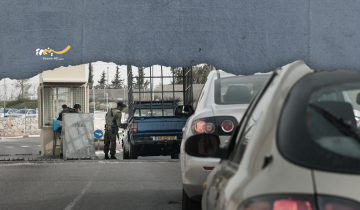
Mobility ties these elements together. The ability to move between regions, across checkpoints, or toward essential services determines whether individuals can access water, land, or energy in the first place. Restrictions on movement do not simply limit freedom, they structure access to survival itself.
Taken together, these dimensions form what can be understood as an infrastructure of survival, a system through which life-sustaining resources are organized, distributed, and controlled. Crucially, this system does not operate in isolation from regional politics. It is shaped by broader dynamics of conflict management, external intervention, and mediation efforts that seek, often imperfectly, to regulate the flow of resources necessary for life.
Not all individuals or communities experience environmental harm or resource scarcity in the same way. In Gaza, for example, access to electricity is often reduced to only a few hours a day, directly affecting water pumping, hospital operations, and food preservation. In parts of the West Bank, restrictions on land use and water access limit agricultural activity, forcing farmers to rely on more costly or less reliable alternatives. Mobility further deepens these disparities, since the ability to cross checkpoints or move between areas can determine whether individuals can reach hospitals, access clean water, or maintain livelihoods.
These differences are not incidental. They reflect a broader political structure in which access to essential resources is unevenly distributed and strategically regulated. Some communities navigate intermittent access and uncertainty, while others face conditions where survival itself becomes precarious. What emerges, therefore, is not simply inequality, but a system in which exposure to environmental harm and access to life-sustaining resources are shaped by power.
In this framework, environmental inequality is inseparable from political inequality. Exposure to harm, as well as the capacity to adapt or recover, is unevenly distributed. Survival itself becomes stratified, less a universal condition than a differentiated outcome shaped by authority and control.
Importantly, this is not only a story of destruction, but of governance. The environment in Palestine is not simply degraded, it is managed, regulated, and embedded within a system of power that determines who can live, how, and under what conditions. War and occupation, therefore, are not only political realities, they are environmental ones, structuring the material conditions of life in profound and lasting ways.
If survival is politically structured, then justice cannot be limited to formal political arrangements or even the cessation of violence. It must also address the distribution of life-sustaining resources. Environmental justice, in this sense, is not separate from political justice, it is central to it.
From a regional perspective, this also presents a challenge for diplomacy and mediation efforts. If access to water, energy, and infrastructure is embedded within the conflict itself, then mediation cannot focus solely on ceasefires or political agreements. It must also engage with the conditions of survival on the ground. In practice, this means that mediators are not only negotiating the end of violence, but the terms under which life can be sustained during and after conflict.
To speak of justice, then, is to ask not only who governs, but who has the ability to survive, and how that ability is negotiated, constrained, or enabled through political processes.
As long as access to the basic conditions of life remains shaped by power, the people, power, planet nexus will continue to produce not only inequality, but structured vulnerability. In Palestine, the struggle is not only over territory or sovereignty, but over the terms of survival itself. And until those terms are made more equal, survival will remain not a shared human condition, but a contested and uneven reality.
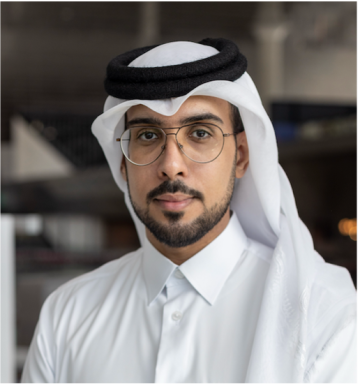
Dr. Abdulla Banndar Al-Etaibi
An assistant professor in the Department of International Affairs at Qatar University. He holds a PhD in Political Science from the Australian National University, an MSc in International Public Policy from UCL, and a BA in International Affairs from Qatar University. His research examines foreign policy, Gulf states, tribal identity, and national narratives; he is the author of Shifting Narratives and Evolving Roles of Qatari Foreign Policy (Palgrave Macmillan).
Related Articles