Living Ecology as Liberation Practice
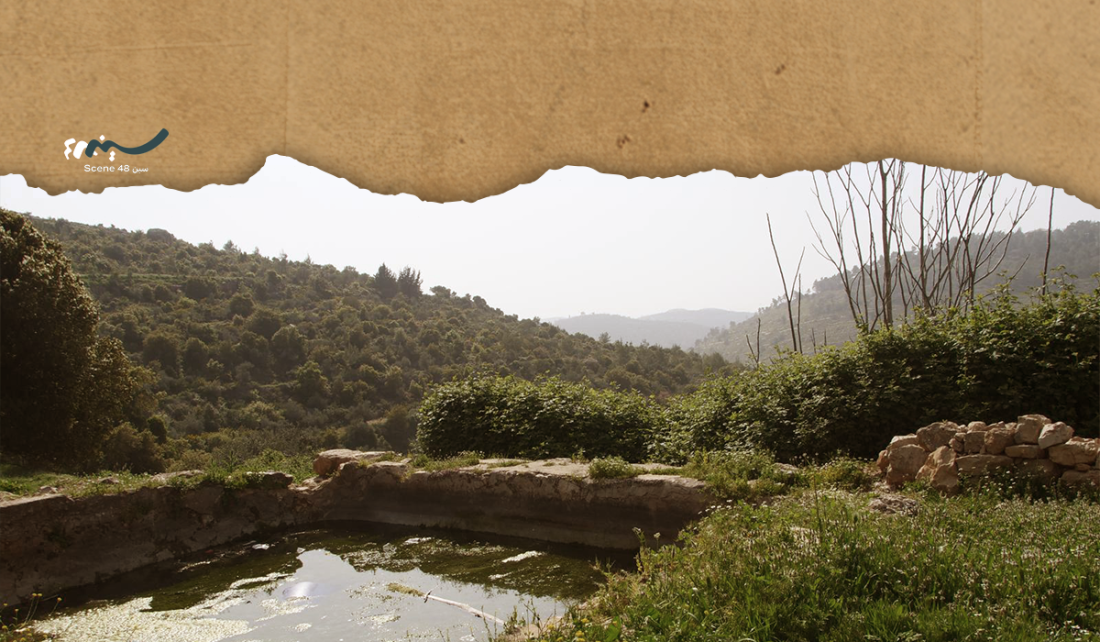
With a mutual yearning to map the land, ever since we met in 2012, Nida and I traveled as much as we could around Palestine. We carried our tea kettle every time we visited the Zalatimo estate in Ein Qiniya, long before we knew that is where we would plant roots for Sakiya. We made tea with spring water and wild sage and thyme, and with each visit our community grew and our shrinking geography expanded with narratives that wove underground infrastructures with above-ground spirit worlds. Stories emerged about this small village's community, their relationship to the land, refugee camps, cities, other villages, coastal areas, valleys, mountains, trees, fields, springs, and caves. Sakiya grew through these encounters. For us it came to resemble all of Palestine, and the entire world.
Sakiya is a progressive academy, a field for experimental knowledge production and sharing in Ein Qiniya, a village seven kilometers west of Ramallah, Palestine. In 2017 the Zalatimo family entrusted Sakiya with their ancestral land, a rewilded hillside in Ein Qiniya Area C under Israeli military control, home to two historic buildings in disrepair, the ancient spring of Um al-Einein, the Sufi shrine of Abu al-Einein, and two holy trees, a holy oak and a holy strawberry tree. Through land stewardship, art, and building practices, we seek to create a new narrative around our relationship to land, knowledge, and the commons, imagine a liberated future, and engage in practices of collectivity, sustainability, and security. These practices are not new but are continuously and increasingly threatened by the forces of colonization and neoliberalism. Liberation, we believe, comes from connecting with and reframing an ancient relationship to the land. In Arabic the root of Sakiya (سقي, ساقية) relates to the stem of a mushroom, papyrus, an irrigation ditch, a water wheel, a cupbearer, quenching someone’s thirst, the act of supplying or obtaining water, concluding a sharecropping contract, the right to access water, tending to or caring for, or making flow. Sakiya is used in Palestine and throughout the Arabic-speaking region to refer to water springs and their infrastructures, or to villages that host them. Sakiya is also the name of a destroyed village near Yaffa in Palestine.
 |  |  |
|---|
The shepherds in the community were skeptical about the fate of the spring at first. The majority of Bedouin communities in Palestine faced forced displacement and lost access to water springs through colonial policies of land confiscation and claims of natural preservation. The process of land privatization and modernization plans of different governments that laid claim to and control over the commons closed off lands that were once collectively managed. Some of the springs that had been used by farmers and shepherds for centuries have had their infrastructure modernized for “efficiency,” with water transported directly into pipes to the different farms, terminating access for goats and other more-than-human worlds.
Two of the last springs in the village that were somewhat accessible until two years ago, Ein al-Majoor and Ein Boubeen, have been taken over by the nearest settlement and are now out of reach for Palestinians. The spring on our site, Ein Um al-Einain, or al-Oueina, is currently the last spring accessible to the shepherds who continue to water their herds, especially in the dry season between spring and fall. We watched tens of goats give birth under the holy oak, and we witnessed young shepherds grow to become caretakers of their own herds.
 |  |  |
|---|
The valleys surrounding the village and Sakiya are among the most fertile in the region and lie within the most ecologically diverse corridor in the eastern Mediterranean. Walking through these lands, you can see layers upon layers of infrastructures. Until the middle of the twentieth century, the terraced hills were full of vineyards, olive, almond, and pitted fruit and citrus groves, vegetable farms, and wheat and barley fields. During the summers, starting with the wheat harvest and ending with the grape and fig harvest, people stayed on their lands in small dry stone-stacked structures called manateer (Arabic plural, mintar singular), or watchtowers, where they tended their crops, gathered yields, and dried figs and grapes for the winter. Different typologies of these structures still dot the hills between Ramallah and Ein Qiniya, alongside wells, springs, pools, and small dams that slowed water in the valleys after rainfall, such as Wadi al-Oqda and Wadi al-Kalb, where today a major road is being built by the Municipality of Ramallah, threatening to bury much of the valleys beneath it.
Sami Yacoub, a village elder, tells the story of his arrival in Ein Qiniya at age four, when he fled with his family from Barfilia, their village, in 1948. Barfilia is one of 500–600 villages destroyed by Zionist militias alongside Palestine’s vibrant coastal cities. The valley was a lifeline as people walked and rode donkeys until they reached Wadi al-Dileb. Today, half of the village residents have roots in Barfilia, but Wadi al-Dileb is closed off by settlements occupying the hilltops around it, and farmers are barred not only from returning to Barfilia but from cultivating their lands in the valley. Climbers who came from all over Palestine to climb the rocky hillsides were kicked out, arrested, and attacked. This valley, once abundant with Dileb (maple) trees, wheat, and honey, where shepherds and families gathered along the stream, children swam, and women gathered and washed together, has become one large enclosure.
Historic olive groves and agricultural lands, hillsides, and valleys in the West Bank have become military buffer zones around hilltop settlements built after 1967, closed off by barbed wire and military checkpoints, and made inaccessible to most landowners and stewards, or cut off by the separation wall that Israel began building in 2002. Many of the olive groves in Ein Qiniya were made into military buffer zones for the four settlements that surround the village to the west and north. In a few cases families receive permits for a small number of members to pick olives on certain days during specific hours. The collective work and celebration associated with the olive-picking season are largely no longer possible.
Much of the historical forest in the West Bank that hosted hundreds of tree species and hardy bushes was heavily cut down for wood, but some pockets survived, especially around holy shrines as a sign of respect to these sites and the spirits believed to inhabit them. Narratives and rituals related to these sites, the hills, trees, and springs around them, cultivated an embodied and collective relationship to the land. Seasonal rituals associated with holy shrines in Palestine and the region once brought together entire communities who participated in remembrance, chanting, cooking, and organizing, resulting in vital cultural production and political mobilization. The stories of the Sufi shrine of Abu al-Einein on our site remind us of a time when spiritual and cultural practices took individual and collective forms of expression and symbolized relationship to land, to each other, and to the spirit and divine worlds.
Much of our ecology has been threatened and lost due to settlement and military occupation takeover and settler attacks, and it is further threatened by the expansion of neighborhoods around Ramallah and the roads that connect them. However, being on the hill has allowed us to extend our space deep within the roots and water canals, in tree canopies and with the roaming spirits, and to expand our sense of time as we work on rehabilitating historic infrastructures, restoring soil, learning and sharing stories, foraging, cooking, and collecting and planting seeds. Ancient routes along old trees, holy shrines, magnificent boulders, and protected springs, alongside structures of neoliberal expansion, settlement takeover, and land dispossession, collide around us in the past and present, while opening a pathway to imagine a possible future. We do not know how long we can stay, reclaim, resist, challenge, accept, and dream, but we see Sakiya in the future we imagine. The relationships that brought us to Sakiya, or brought Sakiya to us, existed long before us and, we believe, will remain long after us.
Photo Credit: Sakiya.
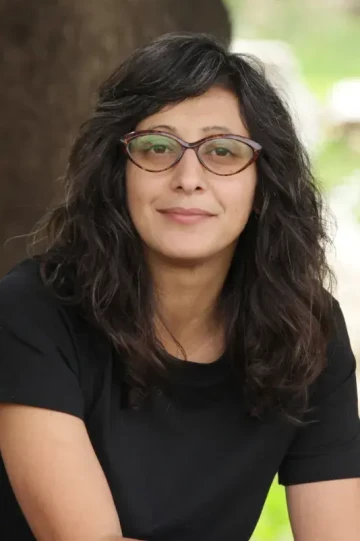
Sahar Qawasmi
An architect, restorer, organizer, and forager. She has contributed to the protection and rehabilitation of architectural heritage in Palestine through cross-disciplinary approaches as part of Riwaq and as an independent consultant. She has designed, organized, and documented walking trails and led walks between historic centers, refugee camps, archaeological sites, and natural sites across Palestine. Sahar cofounded Sakiya – Art | Science | Agriculture with Nida Sinnokrot, a progressive academy located on a hillside of deep architectural and natural histories in Ein Qiniya, Ramallah, Palestine, where artists, farmers, activists, community members, and students rethink political and social agency and the space of the commons. There, through collective experimentation, Sahar explores cultural practices outside capitalist, national, and institutional structures. Sahar Qawasmi was a 2025 Loeb Fellow at the Harvard Graduate School of Design.
Related Articles