From Wadi Salib to Revolution: Palestinian Women and the Struggle for Liberation
Growing up in Haifa, Wadi Salib was part of my everyday geography. This is a neighborhood that today stands as evidence of the meeting of settler colonialism and capitalism, repackaged in the terminology of “development,” “progress,” and “urban renewal.” Wadi Salib is not merely a site of urban dispossession; it is also the birthplace of one of the most globally recognized Palestinian women revolutionaries, Leila Khaled. Much has been written about her, and My People Shall Live: The Autobiography of a Revolutionary remains one of the most widely circulated Palestinian revolutionary autobiographies. Khaled narrates her childhood displacement, political awakening, and involvement in Palestinian struggle with the Popular Front for the Liberation of Palestine (PFLP), framing resistance not as individual militancy but as a collective right of a dispossessed people.
It was against this backdrop that I received an invitation to contribute to this special issue on gender and Palestinian women. The coincidence felt urgent and timely.
My own memory of Wadi Salib resonates with this history, reminding us that women’s political agency was nurtured in spaces shaped by both dispossession and resistance. Khaled’s story emphasizes this, but it is also part of a broader pattern of Palestinian women shaping revolutionary struggle.
At the same time, it is an article that refuses liberal feminist frameworks that ignore the roots of violence in Palestine. In Khaled’s account, resistance is not a personal choice; it is both a moral obligation and a political necessity rooted in ongoing colonial violence.
Liberal gender discourses often approach Palestinian women through narrow lenses of victimhood, domestic oppression, or humanitarian suffering. While patriarchy and gendered violence are real and must be addressed, such framings systematically exclude colonial violence and the counter-narrative of Palestinian women as agents of revolutionary and political transformation. Thus, Palestinian women’s participation in resistance unsettles liberal feminist assumptions that imagine emancipation as separable from anticolonial struggle.
Khaled’s trajectory, however, was not exceptional. Palestinian women played critical roles in resistance well before the consolidation of the contemporary Palestinian national movement. Two women-led organizations are particularly instructive. Rafeqat al-Qassam (The Sisters of al-Qassam), established in Haifa in 1930, received weapons training directly from Izz al-Din al-Qassam himself, challenging early colonial and patriarchal assumptions about Palestinian women’s political capacities.
Similarly, Zahret al-Aqhwan (The Chrysanthemum Flower), founded during the Nakba in 1947 in the Yaffa area by sisters Maheeba and Nariman Khourshid, is among the earliest Palestinian resistance movements composed entirely of women. Members engaged in logistical coordination, weapon smuggling, intelligence gathering, and direct armed confrontation. These histories are not marginal footnotes; they are foundational to understanding Palestinian resistance as a gendered and collective project. These women-led organizations illustrate that Palestinian feminist agency was not a late development; it was embedded in early anticolonial struggle, challenging both colonial domination and patriarchal norms within society.
The visibility of figures such as Dalal al-Mughrabi and Leila Khaled in the late 1960s and 1970s further destabilized dominant representations of Palestinian resistance as exclusively hypermasculine. Al-Mughrabi led an armed operation in 1978, while Khaled’s plane hijackings in 1969 and 1970 sought to internationalize the Palestinian cause and secure the release of political prisoners. These actions must be understood within the broader context of a colonized people and their continuing resistance across generations.
Women’s participation in the struggle did not simply add women to an existing nationalist project; it actively disrupted social hierarchies within Palestinian society itself. As scholars have argued, revolutionary spaces served as sites where gender norms were renegotiated, though incompletely and unevenly. Resistance thus became a terrain of feminist agency embedded within, rather than opposed to, anticolonial struggle.
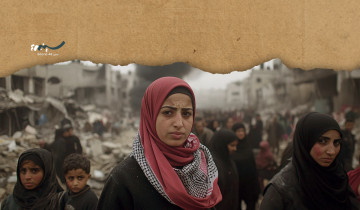
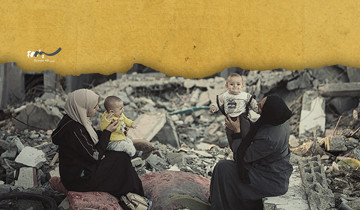
This legacy persisted during the First and Second Intifadas, where women played central roles in grassroots organizing, popular committees, and political mobilization. Something that still accompanies women’s activism to this day. In Gaza, in the shadow of the genocide, Palestinian women play a vital role in sustaining the family/society as much as they can, functioning.
To ignore this history is not only to misrepresent Palestinian women but to reproduce a colonial epistemology that separates gender from power, resistance from legitimacy, and feminism from liberation. As the 1988 Palestinian Declaration of Independence affirms, “The courageous Palestinian woman is the guardian of our survival and our life, and the keeper of our eternal fire.”
This challenges liberal feminism’s depoliticized gender narratives and insists on a feminist reading of Palestinian resistance grounded in radical agency, collective struggle, and the refusal to be erased.
Dr. Nijmeh Ali
A political scientist whose work examines resistance, indigenous politics, and settler colonialism, with a focus on Palestine and Israel. She is a Global Academy Fellow with the Middle East Studies Association (MESA) and has taught and written widely on decolonial thought and political struggles in the Middle East.
مقالات متعلقة