Studying Through the War: The Story of Nebal and Mariam
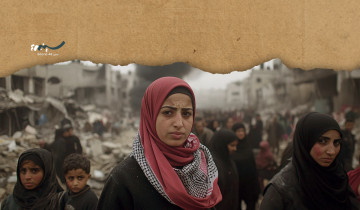
When Nebal and Mariam speak about Beit Hanoun, they do so carefully, sometimes haltingly, conscious that they are describing a place that no longer exists. The town in the northern Gaza Strip where their family had lived for generations, where they were born and raised, has been largely destroyed. Its name now belongs more to memory than to geography.
Before the war, Beit Hanoun was home to their immediate family of ten, two parents and eight children and to an extended network of nearly 300 relatives. They lived on the margins of financial security, sustained by routine, work, school and the bonds of clan and kinship.
Their parents, Raed and Ehtiram, both completed high school and spent their adult lives as day laborers. Raed drove a taxi when fuel and work were available. Ehtiram took on informal labor wherever it could be found. There was no insurance, no guaranteed income and no savings. Education beyond high school was viewed as an aspiration rather than a realistic path forward. The most formally educated member of the extended family was Ehtiram’s father, who had taught high school English literature.
In 2019, Nebal, the fourth child and second of five daughters, announced that she wanted to study medicine in Egypt. The proposal challenged both economic reality and social convention. Her two older brothers had struggled to complete high school and were already absorbed into the same precarious labor that defined their parents’ lives. For Raed, the idea of an unmarried daughter living alone abroad was not only financially risky but socially unacceptable. Nebal insisted. She argued repeatedly, refusing to abandon the idea. Eventually, her father relented.
The money came together unevenly: an online fundraising campaign, small donations from Raed’s foreign taxi clients and informal contributions from acquaintances.
Nebal left Gaza and enrolled at Zagazig University, north of Cairo, where she is now studying medicine. Her education remains fragile, dependent on continued financial support, but it represents a rare break in a family history shaped by survival labor.
While Nebal was building a future abroad, her youngest sister Mariam was struggling to preserve one at home. From 2023 to 2025, as war engulfed the Gaza Strip, the family was displaced more than six times. They moved between shelters and tents, sleeping on wet mattresses and competing daily for food, water, and safety. Throughout this period, Mariam continued preparing for the Tawjihi, the national matriculation exam that determines access to higher education.
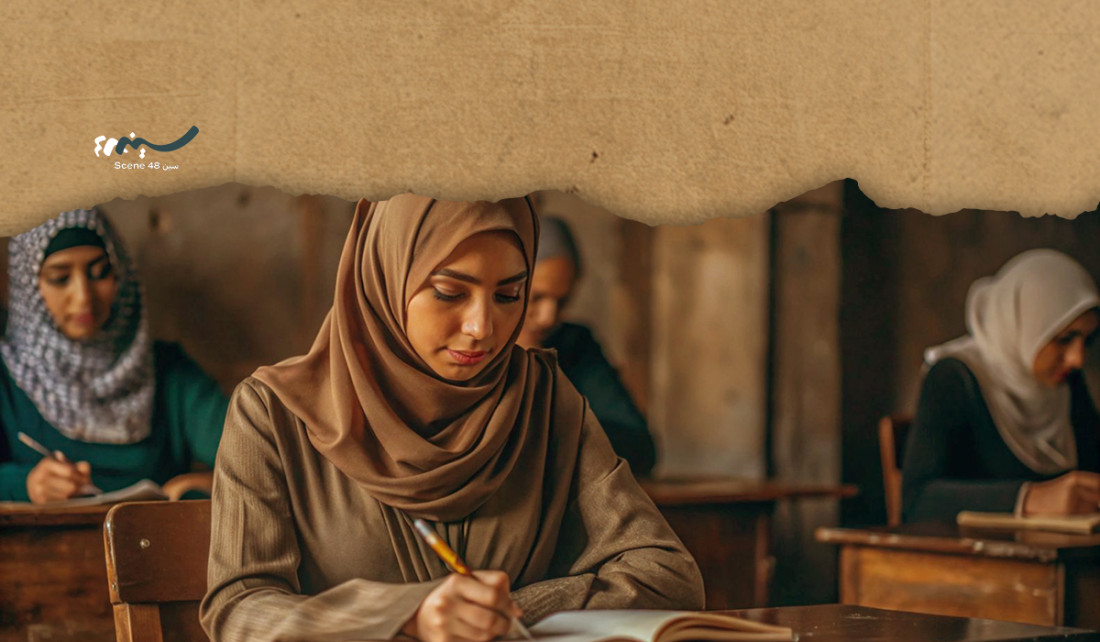
She studied whenever circumstances allowed. She sat for exams under conditions that made sustained concentration nearly impossible. Electricity was sporadic at best, privacy non-existent. Education became something practiced in fragments, between airstrikes, evacuations, and long hours of waiting.
Nebal repeatedly attempted to secure an exit for her sister. She contacted individuals and organizations, hoping Mariam could leave Gaza and study safely in Egypt. But evacuation routes were limited and tightly controlled. Only severely injured children were sometimes permitted to leave. Healthy seventeen-year-olds were not.
In January 2026, the Tawjihi results were released. Mariam scored 95.4 percent. In Gaza, where academic achievement often collides with political and economic reality, the result was both extraordinary and uncertain. High grades do not guarantee opportunity. They only make it possible in theory.
The sisters’ story is not unique within their family. Their eldest sister, Raneen, had earned the second-highest Tawjihi score in the entire Gaza Strip in 2014. Through a family friend, a scholarship opportunity in Berlin had been arranged. Raed declined it on her behalf. Raneen did not challenge her father’s decision. She remained in Gaza, enrolled in a local university and studied Business Administration. She graduated with strong results but never found employment. Today she is married, the mother of six children, living in a tent and dependent on charity for daily sustenance.
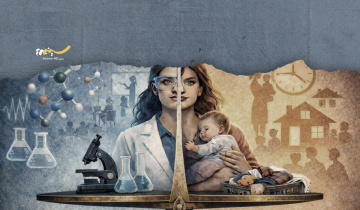
The contrast between the sisters reflects both a personal and generational shift. All three are academically gifted, but Nebal and Mariam believe that education without mobility is not only insufficient, but does not guarantee long-term economic survival. They speak openly about stubbornness, not as a flaw, but as a necessity. For them, persistence is the difference between knowledge that remains trapped and knowledge that can sustain them and their family.
Today, Mariam is waiting. Her family is attempting to secure official documentation from the Palestinian Authority so she can submit her Tawjihi results to universities in Egypt. The process is slow and uncertain, shaped by bureaucracy, borders and finances beyond their control.
For now, Mariam is improving her English and reading up online about science independently, preparing for a future that may or may not arrive. Her success has already been measured, in tents, under bombardment, without guarantees.
Whether it will translate into opportunity remains an open question, shared by many young Palestinians whose hope for a better future through education has survived the war, even when their homes, towns, schools, and families have not.
Author’s Note:
This is a true story. The names of Nebal and Mariam have not been changed, and the events described here have not been altered for the purposes of this retelling.
Mariam M. Shahin
She has been working as a writer and filmmaker for four decades.
Based between Jordan and the Gulf, she is the author of Palestine: A Guide, an exploration of the homeland written with the exiled community in mind.
مقالات متعلقة