Gaza’s Salty Water: How the Sea Shaped Survival and Solidarity under Siege
In the years leading up to October 2023, Gaza became an experiment in international law: could a territory be simultaneously denied occupation status yet stripped of sovereignty? Could it be freed from (Israeli) “boots on the ground”, while remaining hermetically closed to the world?
The Palestinian Authority did not govern the Strip, and Hamas was not a recognized sovereign. Gaza therefore floated in a peculiar in-between, neither fully governed from within nor directly administered from without.
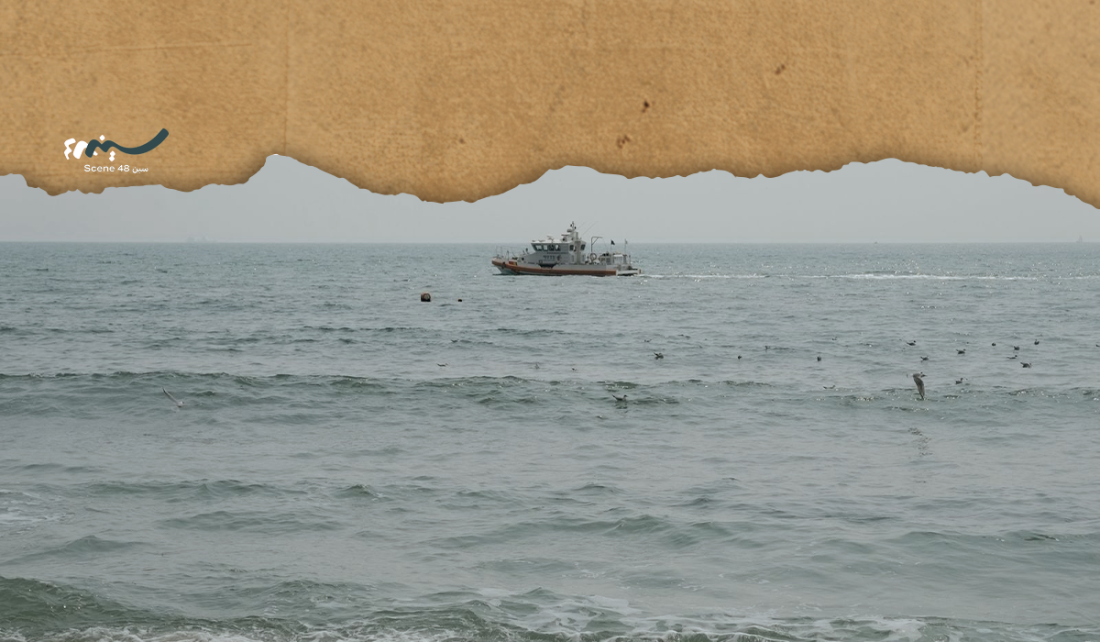
The maritime environment was central to that experiment in denial. After Israel withdrew its settlements in 2005, it sought to persuade the world it was no longer the occupying power. As reflected in countless legal documents, including decisions by the International Criminal Court, that effort did not succeed. Yet even where that legal failure is clear, Israel arguably did achieve a successful element of the experiment: the effective hermetic closure of Gaza.
The naval blockade declared during Operation Cast Lead in early 2009 sealed the last side of Gaza not contiguous with Israel or Egypt. After the Gaza flotilla incident of May 2010, the UN’s Palmer Report found that “The naval blockade was imposed as a legitimate security measure in order to prevent weapons from entering Gaza by sea and its implementation complied with the requirements of international law.” That finding was neither inevitable nor uncontested. In retrospect, however, it helped entrench one of the structural conditions that enabled the genocide that followed in Gaza.
What follows traces how the legal abandonment of Gaza was constructed from the sea, and how the maritime environment was weaponized during the genocide. Yet those same waters also became a conduit for solidarity with Palestinians under siege in Gaza.
Weaponizing the Sea
In earlier work I described certain maritime zones where migrants are led to drown without anyone appearing to violate rights. I called these “maritime legal black holes.” These areas, for example in the middle of the Mediterranean, arise not from a sovereign openly suspending law but from international law’s division of duties between states and individuals. Where no state asserts jurisdiction and no rescuer is nearby, deaths become legally tolerated by international law.
Gaza, before the genocide, had been molded into a comparable structure of international indifference. Israel insisted it bore no occupier’s duties; Egypt enforced a sealed border; the sea was patrolled by the Israeli navy. The result was a population enclosed on three sides by walls and on the fourth by warships.
The sea was not merely a barrier. It was the principal medium through which a population could be rendered effectively rightless. The Strip was cut off from imports, exports, fishing grounds, medical supplies, and kin. Long before October 2023, the maritime perimeter had already performed the legal work of isolation that made later atrocities possible.
After the horrendous Hamas attack of 7 October 2023, these maritime controls were turned into weapons in a campaign that aimed at eliminating Palestinian existence in Gaza. The tactics had precedents. In 2015, Egypt began flooding smuggling tunnels at Rafah with seawater; an early instance of using the Mediterranean as an instrument of coercion. In February 2024, the Israeli military confirmed that it was pumping seawater into the tunnel network beneath the Strip. Scientists warned this would cause irreversible contamination of Gaza’s sole aquifer, which supplies most drinking water.
The IDF also dropped leaflets over Gaza quoting the Quranic verse “so the flood took them while they were wrongdoers,” from Surah Al-Ankabut, invoking the image of Noah’s deluge. Hamas had earlier framed its attack as Tufan Al-Aqsa (Al-Aqsa Deluge). Israel’s use of the same imagery, this time as a threat of literal flooding, amounted to a rhetorical and material weaponization of water.
For long months, Israel imposed a campaign of starvation; equally devastating was the campaign of thirst. Like Israelis, Palestinians are completely dependent on the sea for their drinking water a vast proportion of which is desalinated. Israel’s targeting of desalination plants, on top of long‑standing seawater intrusion into the aquifer, weaponized the sea itsef.
As Gaza’s tap water turned saline, photographs from Gaza’s coast showed displaced families collecting seawater in jerry cans. They used it for washing, cooking, and ultimately for drinking when nothing else remained. Salt water, which does not sustain life, replaced the fresh water that does. As the Guardian reported, the UN special rapporteur for the right to water, Pedro Arrojo-Agudo, likened the plan to the legendary Roman salting of Carthage’s fields. The conquering army, the legend holds, salted the soil to render uninhabitable the territory of their ancient rival. David Boyd, the UN rapporteur for human rights and the environment, warned that damaging Gaza’s sole water supply would be “catastrophic” for the environment and human rights. The comparison was not rhetorical ornament: it names a strategy of erasure through salt and thirst.
The legal experiment of extreme maritime closure thus became an attempt to suffocate a people.
The Sea as Medium of Solidarity
Yet the sea also worked in the opposite direction. From the moment the maritime blockade was declared, seaborne acts of solidarity challenged the closure. The Mavi Marmara flotilla in 2010 ended in nine deaths and produced one of the more revealing legal episodes of the past two decades. More recent flotillas, including the Global Sumud flotilla, renewed the gesture amid mass starvation. Most such vessels were intercepted; their cargos of rice, flour, and medicine rarely reached Gaza. Activists report abuse and torture in Israeli custody, including sexual assaults. As I write, I see a post from Alexandria about a small yacht flying a Palestinian flag found emptied of its crew on the beach; medicine and flour were reportedly still on board.
Smaller acts of maritime solidarity also appeared. As Israel’s siege intensified, people in northern Sinai filmed themselves tossing plastic bottles filled with lentils and chickpeas into the Mediterranean—improvised lifelines entrusted to currents. One clip showed a young man throwing bottle after bottle into the sea, coupled with a prayer: “Allah the great, may you carry this bottle, as you carried Noah’s Ark, and deliver it for us to Gaza.” The imagery of the deluge, weaponized by belligerents, was reclaimed as an act of neighborly rescue. These messages‑in‑bottles repurposed an old vocabulary for a besieged people whose hunger had been made policy.
Reaching Out
The same maritime space that produced legal isolation also produced the most visible attempts at deliverance. Gaza’s sea was both an instrument of dispossession and a medium of refusal.
This tension echoes a broader theme in Palestinian history. Dispossession is often told as the loss of land during the Nakba, which is true and essential, but incomplete. Palestinians have been severed from their own coastline—from Acre to Jaffa to Ashkelon. The beach, a basic site of leisure, fishing, embarkation, and arrival, has been wrested from Palestinian collective control. Gaza remained, for a time, the great exception—and that exception made the Strip’s coastline a vital part of Palestinian life and imagination: “Palestinian will to live,” reads one recent Instagram post showing survivors swimming, bathing, and rowing with quiet joy.
In March 2024 (well before Jared Kushner’s Gaza Riviera proposal) Kushner suggested Gaza’s “waterfront property could be very valuable,” proposing to bulldoze part of the Negev to relocate Gaza’s population away from the shoreline. The logic is telling: nearly a century of dispossession are reframed as real‑estate opportunity, with people reduced to obstacles to be removed.
The sea cut Gaza off legally before it was fully cut off militarily. Yet the sea was also the direction from which the world repeatedly tried to reach in. Gaza’s salty water is the water at its beaches, the seawater forced into bodies when fresh supplies ran out, and a metaphor for the tears that rise when one chooses to see. Those waters testify both to the deliberate stripping away of Palestinian life and to the persistent, often fragile acts of solidarity that defy it.

Prof. Itamar Mann
An associate professor (on leave) at the University of Haifa Faculty of Law and acting Chair in International Law and Human Rights at Münster University. He teaches and researches public international law, political theory, human rights, migration and refugee law, and environmental law. He is the author of Humanity at Sea: Maritime Migration and the Foundations of International Law (Cambridge University Press, 2016). His forthcoming book, also with Cambridge, is Liferaft Manifesto: Democratic Survivalism and the Sea.
مقالات متعلقة