Natural Resources Under the Shadow of War
The natural resources possessed by states are among the most important foundations of economic growth, development, and the achievement of a high level of welfare. Realizing this requires capable governance that can determine how these resources should be used with maximum efficiency, while also improving and developing the legal frameworks and the facilities needed to allow foreign investors to come in and invest in them. This is what the Gulf states and Saudi Arabia are doing through Vision 2030, which has already delivered more than 1,000 reforms in the legislative framework to attract foreign direct investment.
Saudi Arabia, the Gulf states, Iraq, and Iran together possess the largest resources on earth, exceeding those of the Russian Federation or the United States. This has made the region a theatre of power struggles and external intervention by major powers seeking to control these resources and align them with their own interests.
Given what we see on the ground in terms of wars and unrelenting attempts to seize control of these resources, the strength of any state in the years ahead will depend on its ability to overcome economic bottlenecks faster than they arise, whether those bottlenecks are caused by competitors or by unavoidable conditions such as natural disasters and epidemics. It will also depend on logistical capacity, as well as the partnerships a state maintains with the world’s major economic powers.
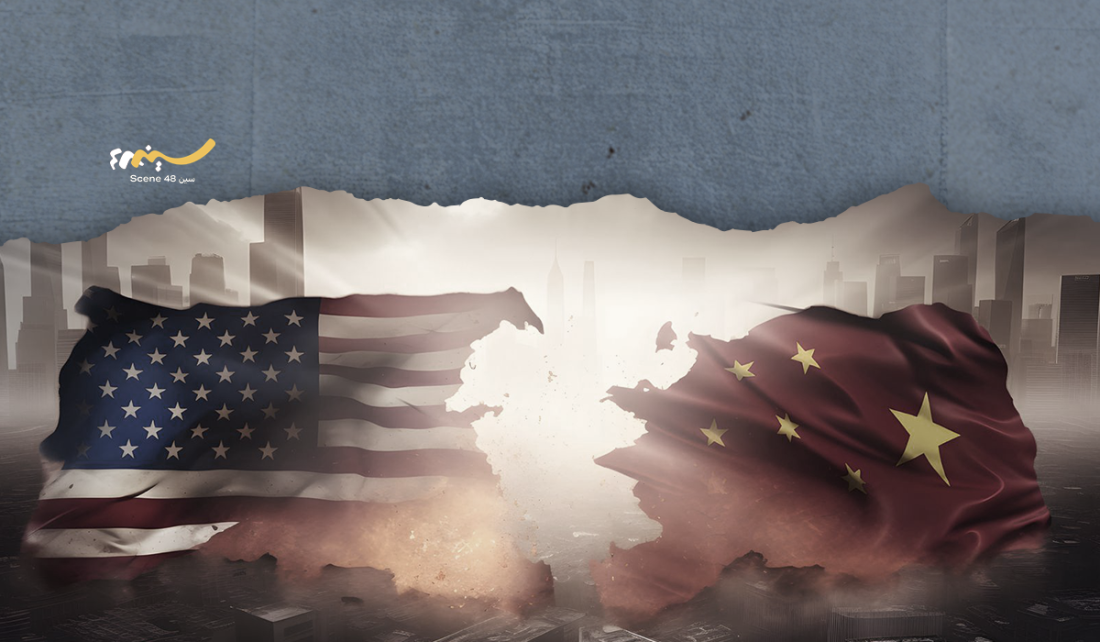
When we speak of the United States, it faces resource scarcity and ageing infrastructure, which makes it difficult for it to extend its global influence. China’s rapid advance across multiple fields, especially manufacturing and advanced infrastructure, has made it an influential and competitive economic pole, creating intense rivalry with the United States, which has fallen far behind in this regard.
The global repercussions of this rivalry, in which the United States seeks to economically constrain China and raise the cost of its access to energy, have had a negative impact on our Arab region as well. They have significantly disrupted development plans, delayed many projects, and redirected a substantial share of financial resources towards the war effort. As a result, the world, the region, and the Gulf states are expected to face these problems in the coming years, especially if the Strait of Hormuz is closed, through which 25 percent of energy resources pass, along with petrochemical products, fertilizers, helium, aluminum, potash, ammonia, sulfur, and other industries on which the world depends.
Now that Iran has effectively rendered the Strait of Hormuz impassable, around 20 million barrels of oil per day, 20 percent of global liquefied natural gas supplies, and vast quantities of petrochemicals have been disrupted. The closure has also halted roughly one-third of global fertilizer supplies, which will have a direct impact on global food security.
We are therefore facing a global economic disaster if the closure of the Strait of Hormuz continues. It would lead to economic stagnation amid sharp increases in energy prices and growing difficulty in accessing them, especially for developing and poor countries that cannot afford these higher costs. It would also trigger a disaster in global food security, given that 30 percent of fertilizer and ammonia supplies depend on the Gulf states.

Eid Saleh Bin Eid
An economic adviser and Head of the Arab-African Centre for Investment and Facilitation.
مقالات متعلقة