Land, Life, and Continuity in Occupied Palestine: Violence targets the conditions of life, not life itself
Across Gaza, life unfolds under conditions that compress memory, displacement, and survival into a continuous present. The Nakba persists not as a past rupture but as an ongoing structure, inscribed in everyday life. Cycles of war and blockade have reshaped material and ecological conditions, transforming how care, memory, and survival are sustained.
Destruction extends far beyond bombardment. It reaches into the infrastructures that sustain survival, water systems, agricultural land, and health services, as well as intimate domains of family, reproduction, and memory. Since 7 October, strawberry production (a key driver of the local economy) has been destroyed, and some of Gaza’s most fertile lands have been turned into no-go areas. Violence here is not only direct and episodic, but also infrastructural and cumulative, targeting the conditions of life in ways that may constitute genocidal acts under international law.
What emerges is a convergence of environmental degradation, institutional violence, and social reproduction. These attacks extend beyond immediate destruction, targeting the biological and social reproduction of the population and reshaping the possibility of a livable future. They reorder how life is reproduced, remembered, and projected forward.
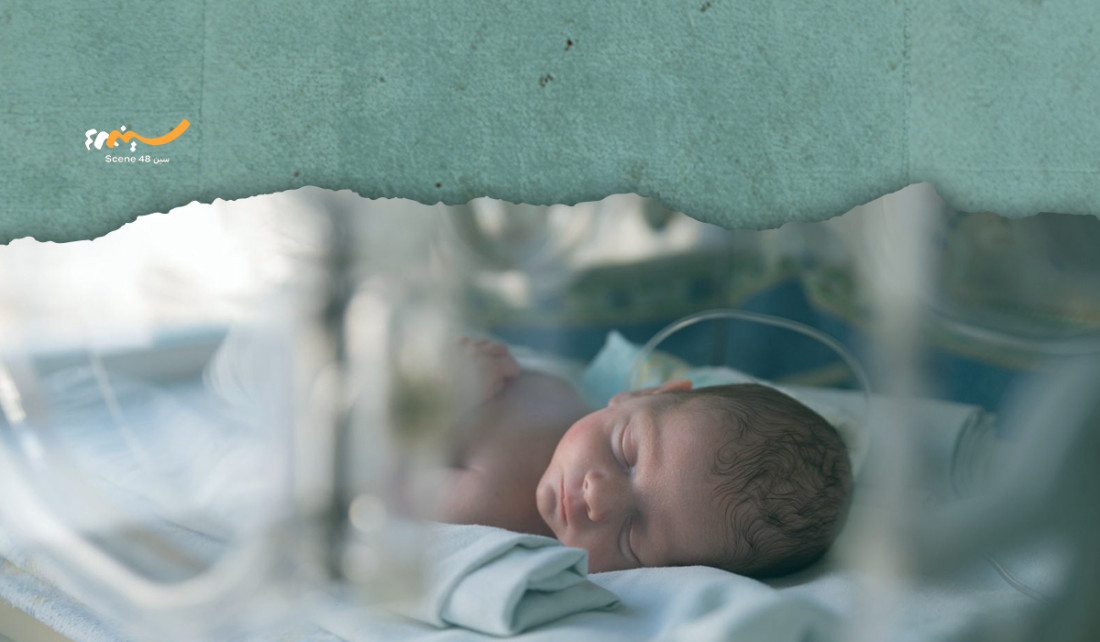
In a context where family continuity holds significant social meaning, targeting reproductive health systems exacerbates this rupture on both individual and collective levels. The destruction and disabling of health infrastructure has extended beyond hospitals and maternity care to include assisted reproduction services, undermining the reproductive futures and parental aspirations of thousands of couples.
In December 2023, an attack struck the Al Basma IVF Centre, destroying approximately 4,000 embryos and over 1,000 reproductive samples, an erasure of possible futures for many families. At the same time, repeated attacks and blockade have degraded obstetric and neonatal care, turning pregnancy and childbirth into high-risk conditions. Several international bodies, including an independent United Nations commission, have suggested that systematic attacks on the reproductive capacity of the Palestinian population may constitute acts prohibited under international law. These dynamics point to a form of power that extends beyond immediate violence, targeting the biological and social reproduction of a population.
These dynamics have far-reaching demographic and social implications. The decrease in births, increase in maternal mortality, and disruption of fertility treatments reshape not just statistics, but also perceptions of a viable future. Reproduction, viewed as both a biological process and a means of life and collective continuity, has been deeply affected. These challenges manifest powerfully in daily experiences.
Marwan and Maïs began their marriage with the expectation of building a family. Over time, however, their trajectory became defined by an absence carrying deep social and emotional weight.
After years of unsuccessful attempts to have children, they pursued various forms of assisted reproduction. 'We have consulted nearly every specialist, Marwan explains. For many families in Gaza, children are considered a family treasure, and the absence of children can place immense pressure on a couple. But we remain together. We value our life.”
Infertility, however, is not experienced as a private condition. It is interpreted within a broader environment shaped by war and exposure. “Doctors say it may be linked not only to stress, Marwan adds, but also to substances released during bombardments, phosphorus, and other weapons. We do not know their long-term impact.”
The boundary between environment and body begins to dissolve. Toxic war environments not only damage health but also destabilize the conditions of fertility and reproduction, raising deeper questions about the future of life itself.
After eight years, the couple came to accept their situation. Yet this acceptance does not signal a withdrawal from family life, but rather its transformation.
“We have accepted God’s will,” Marwan says. “In Islam there is no formal adoption, but there is tabanni in the sense of supporting and raising a child. We have considered it. In the meantime, we remain close to our nieces and nephews.”
Their approach to care took shape during the 2014 war, when they hosted displaced families. One father, unable to care for his young son after losing his wife, entrusted the child to them.
Through such arrangements, Marwan and Maïs reconfigure parenthood beyond biological reproduction. Care becomes relational, extending through kinship, responsibility, and moral obligation. In a context where reproduction is increasingly precarious —socially, materially, and environmentally— family continuity is not abandoned but reimagined.
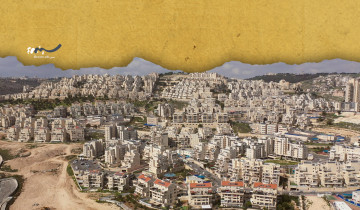
These factors extend beyond Gaza. In the West Bank, environmental degradation operates through land fragmentation, settlement expansion, and restricted water access, progressively eroding livelihoods and health.
This is not collateral damage but a form of slow environmental violence that reshapes ecosystems, bodies, and social relations simultaneously. The erosion of land becomes inseparable from the erosion of memory and collective continuity, revealing a broader dismantling of the infrastructures that sustain life.
Across both contexts, the damage inflicted on land cannot be reduced to an unintended consequence of conflict. It is constitutive of a broader mode of transformation in which ecosystems, bodies, and social relations are altered in tandem. Soil degradation, water scarcity, and contamination do not remain environmental concerns alone; they penetrate food systems, bodily integrity, and intergenerational continuity.
What emerges is a form of slow environmental violence—one that does not simply destroy, but reorganizes the conditions under which life is made possible. The erosion of land becomes inseparable from the erosion of memory, social reproduction, and collective continuity. Taken together, these processes reveal a shared condition: the gradual dismantling of the ecological, social, and political infrastructures that sustain life, reshaping not only environments, but the relations between people, power, and the material worlds they inhabit.
Dr. Elena Qleibo-Kogan
An anthropologist, diplomat, and writer who has lived in the Middle East since 1987. She holds a PhD from Université Bourgogne Franche-Comté and is the author of S’en sortir sans sortir: Ethnographie de la vie quotidienne sous le blocus, an ethnography of everyday life under blockade in Gaza. Her ongoing research is on Gaza social transformations virtually. She has worked in Jordan, Iraq, Syria, Lebanon, and Venezuela as humanitarian professional and negotiator.
مقالات متعلقة