Palestinian Cultural Identity: Roots that Cannot Be Uprooted, and a Voice That Never Falls Silent
Culture stands as one of the most essential pillars upon which nations build their existence. It is not a luxury or a mere intellectual exercise; it reflects identity, preserves memory, and enables collective expression. In the Palestinian case, culture becomes far more than an artistic pursuit; it is a form of resistance and endurance, and a tool for preserving existence in the face of erasure and dispossession.
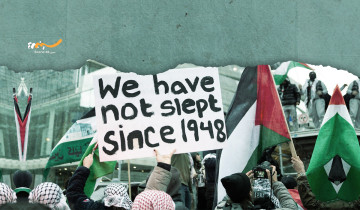
Since the dawn of history, Palestinians have been intrinsically connected to their land. The land is not merely a geographical space, it is the soul and memory. When a Palestinian is asked about relationship with the land, the connection is expressed through actions: planting olive trees, folk songs, poems, paintings, and daily life’s symbolic details. Thus, speaking about the Palestinian’s bond with the land is not a philosophical or sentimental question, but a historical and human truth that cannot be denied.
The Palestinian is born carrying a rich history of stories and memories. Yet, Palestinians remain deeply attached to life, standing steadfast in the face of destruction and oppression that have failed, despite their brutality, to sever their connection to homeland or memory. On the contrary, each new generation emerges more committed to its identity and more aware of the importance of defending it.
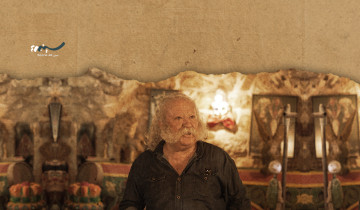
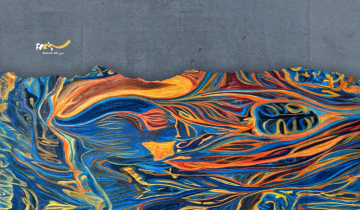
At the heart of this reality lies Palestinian art, one of the strongest expressions of cultural identity. Art in Palestine has never been detached from the national struggle or from daily life. Palestinian music and songs have long carried messages of steadfastness and hope, while visual arts and murals have become a language of resistance, expressing both pain and beauty. Theater, literature, and poetry have likewise provided open spaces to narrate the Palestinian experience.
Palestinian art has become a bridge between intellectuals and freedom advocates across the world, creating a broad human solidarity. Many international artists have come to understand that the Palestinian cause is not only that of a people, but one that speaks to justice and human dignity. In this way, Palestinian art has transcended aesthetic boundaries to become a global human voice expressing the universal yearning for freedom and life.
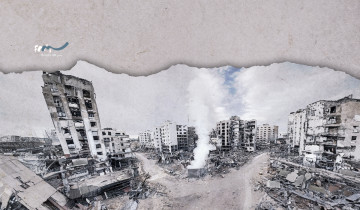
In the midst of the humanitarian catastrophe witnessed in Gaza during recent waves of destruction and genocide, the power of Palestinian cultural identity emerged in its most striking form. Despite the horrific scenes of death and ruin seen around the world, artists from Gaza rose from the rubble carrying their brushes and cameras, documenting the pain while painting life amid devastation. Their artworks, photographs, and stories conveyed their suffering, yet also shouted love and defiance.
These artistic expressions were not mere attempts at self-expression; they were living human messages, revealing another face of the Palestinian people—the face of a nation that loves life despite oppression. Art transformed tragedy into testimony, reminding the world that the Palestinian cannot be defined only by suffering but also by creativity and the power to transform pain into inspiration.
It is therefore clear that Palestinian cultural identity is not a heritage frozen in time, but a living, evolving organism nourished by daily experience and renewed through every historical stage. This identity is built through language and dialect, through artistic heritage, and through collective memory that preserves songs, tales, and proverbs, all of which together form a creative response to destruction, filled with hope and vitality.
The Palestinian experience proves that culture is not a luxury that can be abandoned, but rather a weapon of awareness and a means to preserve dignity and memory. While the occupation attempts to steal the land and erase history, Palestinians persist in writing, painting, singing, and creating; thus, proclaiming that identity and deep roots cannot be erased despite fierce the storms.
What makes Palestinian culture truly unique is its ability to bring together pain and hope, past and future, locality and universality. It stems from a deeply human experience yet transcends borders to reach the global conscience in search of justice. Hence, we can confidently say that the Palestinian cultural identity remains steadfast, profound, and ever-renewing, capable of building bridges of friendship and solidarity with the free people of the world, because it embodies the truest humanity: one who loves life and resists to live it with dignity.
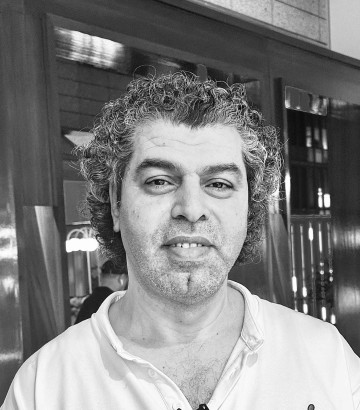
Mohammad Al-Hawajri
Born in 1976 in the al-Bureij refugee camp in Gaza, is a Palestinian artist based in Sharjah. He is a founding member of the Eltiqa Group for Contemporary Art in Gaza. His work combines irony and reality to explore social and political issues related to life in Gaza, using diverse media such as painting, video, photography, and unconventional materials like spices and animal bones. He has exhibited internationally, including at Documenta 15 in Kassel, Germany (2022). His major projects include Cactus Borders, Guernica–Gaza, Animal Farm, and Red Carpet. His works are part of prestigious collections such as the Arab World Institute (Paris), Darat al Funun (Amman), Dar El-Nimer for Arts & Culture (Beirut), Sharjah Art Foundation, and Art Jameel (Dubai). From 1999 to 2001, he studied under Syrian-German artist Marwan Kassab-Bachi at Darat al Funun in Amman, where he won first prize in 2000.
مقالات متعلقة