Palestinians: Imagery, Ethics, and Counter Identity
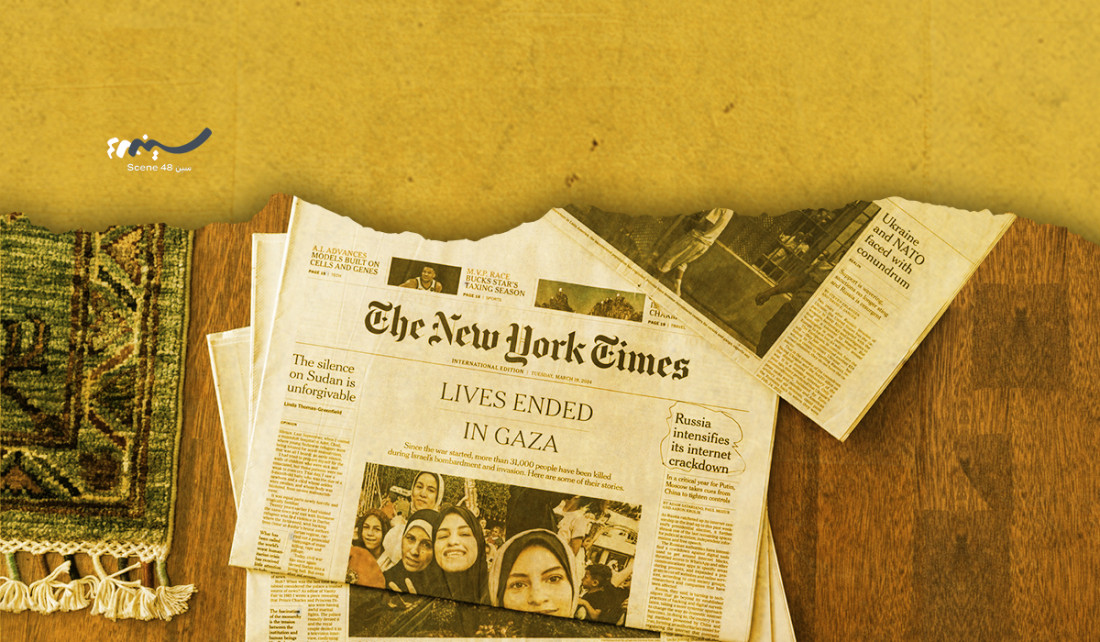
During a course in Europe in October 2025, a fellow student confided that she was scared to go out that weekend. I asked why. She said some organizations had invited some “Palestinians” to the city. Her tone what that of fear. She didn’t know my background. The words revealed something deeper: the discursive images associated with Palestinians.
Over around fifty years, Palestinians’ representations in mainstream media and some Arab circles have often been reductive and contradictory. When Palestinian history or political urgency arises, Palestinians appear as threats to stability, chaotic figures, invisible victims, or militant heroes. The very word “Palestinian” evokes fixed images and emotions that obscure the depth and complexity of Palestinian identity, struggle, and resilience.
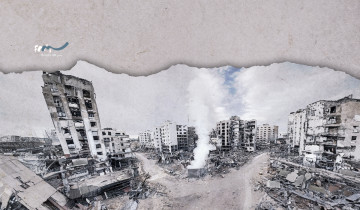
This dynamic extends to the material and symbolic treatment of Palestinians and their land. The ongoing events in Gaza have surfaced these dynamics and at times awakened an alternative consciousness.
The War of Representation
Edward Said’s Covering Islam explains how Western media construct the “rest of the world,” producing distorted imagesseeing the Muslim world through a lens of fear and cultural superiority; reducing its diversity to an “other” defined by violence, irrationality, and opposition to Western values.[1] Such narratives came to the fore in the aftermath of October 7th and the ensuing discourses.
On one occasion, Israeli PM Netanyahu’s office accused Belgian Prime Minister Bart De Wever who announced Belgium’s possible recognition of the Palestinian State, of being “weak” and appeasing “Islamic terrorism,” saying: “He wants to feed the terrorist crocodile before it devours Belgium. Israel won’t go along and will continue to defend itself.”[2]
Such rhetoric conflates Palestinians with global Islamism to justify aggression while ignoring Palestinian migrants’ integration and low numbers in Europe. These narratives illustrate Debord’s spectacle: where reality is replaced by imagessustaining power.[3]
Propaganda “manufactures consent,” normalizing injustice as Chomsky notes.[4] This also involves a “normalization of pain” per Sontag.[5] Images of Gaza provoke empathy, denial, powerlessness, anger, and desensitization.
Beyond the virtual projection, Palestinians experience what Agamben called a “state of exception,” stripped of legal rightsand the right to life.[6]
Amid ethnic cleansing and the silencing, Palestinians assert existence and defend their moral right to live. Their depictions of daily life (acts of “being seen”) reflect awareness of global spectators and value systems. They navigate counter-narratives and visibility hierarchies, resisting on different levels.
Ethics, Power, and the Right to Speak
Israeli discourse uses historical analogies to justify military action and suppress resistance. In April 2024, pro-Israeli commentator Ben Shapiro justified Hiroshima and Nagasaki bombings arguing for decisive military measures.[7] Such justifications frame incursions on Gaza and the West Bank as preemptive targets while evading ethical violations.
The instrumentalization of “good” versus “evil” recalls Kant’s Metaphysics of Morals and Arendt’s Origins of Totalitarianism, where moral law can be subordinated to political power, justified as a “necessary evil.”[8] This extends to Israel’s continued destruction of Palestinian landscape.
The voice of the Gazans is important in this context. Gramsci’s prison notebooks reflect on cultural hegemony and the subaltern.[9] One may need to ask “Can the Gazan Speak?” Spivak’s question, Can the subaltern speak? interrogates ifmarginalized groups under colonialism can have a voice within dominant powers. She argues that colonial and elite discourses silence subaltern voices, even when others “speak for” them.[10] In my experience, even some pro-Gaza activism sometimes obscures the voice of Gaza.
Any act of solidarity must be conscious of power relations, fragmented geographies, collective trauma, silencing, and the psychological divisions produced under ethnic cleansing. Occupation generates geographic separation and the deprivation of resources; resisting it therefore requires resisting fragmentation itself and reconnecting with agency on multiple levels.
Counter Identity
Palestinian identity is more complex than commonly framed. Pre-1948 Palestinians included Arabs, Christians, Muslims, Jews, Communists, Armenians, Syriacs, Greeks, Samaritans, Druze, etc. who professed various trades. Palestinians built cultural and intellectual life with newspapers, theatre, music, and arts, while excelling in agriculture, architecture, industry, and education.
Despite occupation and siege, education remains central: over 25 percent of Palestinians aged 18–24 attend university, exceeding regional Arab averages.[11] Israeli policies, aimed at control, paradoxically fostered broader national consciousness, sustained cultural, and strengthened resilience.[12]
Palestinian identity encompasses social, cultural, territorial, and imperial dimensions, as well as the politics of othering. Palestinian identity has evolved into a unifying force that challenges fragmentation and connects “the free souls of the world.” Being Palestinian today carries the weight of trauma and loss, but also resists colonial erasure and affirms profound historical and existential significance.
[1] Said, E. W. (1997). Covering Islam: How the media and the experts determine how we see the rest of the world (1st Vintage ed.). Vintage. (Original work published 1981)
[2]Netanyahu, B. (2025, September 3). Israel’s Netanyahu calls Belgium PM weak after Palestinian recognition pledge. Reuters. https://www.reuters.com/world/middle-east/israels-netanyahu-calls-belgium-pm-weak-after-palestinian-recognition-pledge-2025-09-03.
[3] Debord, G. (1967). La société du spectacle. Paris: Buchet-Chastel.
[4] Chomsky, N., & Herman, E. S. (1988). Manufacturing consent: The political economy of the mass media. Pantheon Books.
[5] Sontag, S. (2003). Regarding the pain of others. New York: Farrar, Straus and Giroux.
[6] Agamben, G. (2005). State of exception (K. Attell, Trans.). University of Chicago Press. (Original work published 2003).
[7] Shapiro, B. [@benshapiro]. (2024, June 24). https://x.com/benshapiro/status/1782439861074419987
[8] Kant, I. (1797). Metaphysics of morals (Part I, Doctrine of Right, on treating humanity as ends in themselves); and Arendt, H. (1951). The origins of totalitarianism. New York: Harcourt, Brace & Company.
[9] Gramsci, Antonio. Selections from the Prison Notebooks. Edited and translated by Quintin Hoare and Geoffrey Nowell Smith. London: Lawrence & Wishart, 1971. (Originally written 1929–1935).
[10] Spivak, G. C. (1988). Can the subaltern speak? In C. Nelson & L. Grossberg (Eds.), Marxism and the interpretation of culture (pp. 271–313). Urbana: University of Illinois Press.
[11] Al-Hroub, A. (2023). Evaluating gifted education in Palestine: A study of … Cogent Education, 10, 2240931. https://doi.org/10.1080/2331186X.2023.2240931.
[12] Barqawi, A. (2024, February). Hal nahnu sha‘b am shu‘ub Filastiniyya? | Salim Tamari | Tawāqub Podcast | 16 [Interview video]. YouTube. https://www.youtube.com/watch?v=zZxCqytNnLc
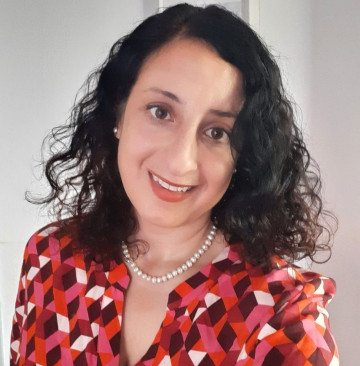
Elise Aghazarian
A Palestinian-Armenian sociologist. She is currently pursuing her PhD in cultural history.
مقالات متعلقة