Unspoken Rules of Speech Around Money

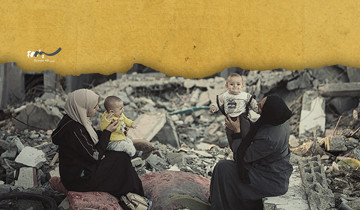
The familiar figure the world recognizes when it looks at Palestinian women is one-dimensional. She is grieving, exhausted, dignified in loss, and her language is expected to be that of suffering. Her life is a story of motherhood, endurance, and ache. This figure is legible, and the reaction to her is predictable: sympathy, sometimes even respect. But she is also carefully contained. She cannot speak of power, she cannot speak of strategy, and she cannot, under any circumstances, speak comfortably about money.
Within Palestinian communities, money is one of the most policed subjects. It carries shame, fear, and moral suspicion, and to speak openly about wanting it, managing it, or planning with it risks social rupture. Silence is safer. Modesty is safer. Appearing needy is safer than appearing ambitious.
Money does not become this charged by accident. In Palestinian contexts, economic harm is structural: produced by land seizures, home demolitions, militarized borders, checkpoints, and unstable labor conditions that can shift with a new policy or raid. Under occupation, a collective psychology of scarcity and money anxiety forms across generations. In such a landscape, money is not neutral or merely “personal responsibility.” It is constantly shaped by forces that make stability fragile and precarity ordinary.
This context is often erased in Western and Israeli narratives, where Palestinian demands around money are reframed as charity cases rather than claims to justice. When Palestinians speak of compensation or reconstruction, they are articulating demands for repair and responsibility, not dependency. Yet the media frames these requests as aid, pity, or opportunistic, abstracting the occupation that produced the losses in the first place.
Within this landscape, Palestinian women specifically exist at the intersection of two forms of invisibility: geopolitical and gendered. In global news, women overall appear less often than men, and when Palestinian women do appear, it is rarely as decision-makers, economic thinkers, or strategists. They are portrayed as victims, mothers in ruins, or bodies in mourning, rather than as employers, investors, organizers, or negotiators. At the same time, data points to a different reality: in the West Bank and Gaza, roughly one in four tech startups has a woman founder (1), a rate that is double that of New York. This reminds us that the women who do build and lead are simply not the ones being seen. This gap between reality and representation makes it easier to describe Palestinian women’s calls for compensation as pleas for kindness instead of as reasonable demands for what is owed, because the public has not been trained to see them calculate, plan, and insist on material terms.
My work at Malna sits inside this tension. Over the past fourteen months, I have worked closely with over two hundred Palestinian women, inside the Green Line and some from the West Bank, as a personal finance educator and coach. On paper, our sessions are about budgeting, debt payoff strategies, negotiating salaries, and investing. In practice, technical meetings can quickly become emotional terrain, not because these women lack discipline, but because money has never been permitted to exist as a neutral topic in their lives. It has always been entangled with precarity, fear, and the sense that what is earned can be taken away.
In those sessions, women speak easily about struggle: sharing stories of debt, unstable income, fathers and husbands controlling access to bank accounts, and families stretched thin by rising prices and disappearing opportunities. It is easy to say, “I am worried,” “We are behind,” “We are barely making it,” because financial difficulty, like grief, is socially acceptable. It confirms belonging within a shared reality. But when the conversation shifts from lack to desire, from survival to accumulation, the room tightens. Almost no one says, without justification, “I want money” or “I want to be rich.” Those who are financially stable downplay it, insisting they are “just getting by,” as if naming abundance might invite loss or judgment.
Family teachings reinforce this caution. Many of these women were raised and are raising their children on warnings that money attracts envy and conflict, that success should be quiet, wealth hidden. Asking for more can be labeled greedy; discussing salary can fracture relationships; mentioning investments can invite resentment; negotiating pay with a Jewish Israeli employer can feel risky, even dangerous. The lesson is clear: better to understate, better to blend in, better to survive quietly.
Occupation and systemic marginalization give these teachings their sharp edge. When land can be seized, employment revoked, or mobility restricted, money never feels securely owned; it feels conditional, always at risk. Under such conditions, visibility is exposure. To display money, or to desire it openly, can feel naïve, as if ambition were tempting fate. It is often safer to narrate hardship than to narrate aspiration, safer to align with the recognized figure of the suffering woman than to risk being seen as calculating, demanding, or ungrateful.
The result is a pattern of strategic silence. Many Palestinian women choose not to talk publicly about money, not to disclose their salaries, not to negotiate too hard at work, not to ask for what they deserve. Publicly, they perform restraint, careful not to appear greedy or out of place; privately, they calculate, plan, and dream in whispers. Self-censorship becomes a survival strategy in an environment where gender, ethnicity, and economics intersect to make visibility dangerous. Yet the cost of this silence is cumulative. Without shared language around money, women remain isolated in financial decisions. Mistakes are repeated. Knowledge is delayed. Collective power struggles to materialize. Silence keeps everyone safe, but it also keeps everyone small.
I began speaking openly about money precisely because of this silence. I speak about money psychology and the shame wrapped tightly around it, about how living under occupation shapes risk tolerance, scarcity thinking, and wealth planning. I speak about how Western discourse insists on treating money as a neutral tool, detached from political reality, while for Palestinians every financial decision is shadowed by questions of safety, restricted movement, and raw survival. I began speaking publicly not because it felt heroic, but because it felt necessary to name money as something women can touch, question, and reshape.
This is not empowerment theater. It is literacy. It gives women words they were never allowed to practice, not the language of suffering, which they know intimately, but the language of agency. In workshops, literacy arrives when a woman says, “I want control over my finances” or “I want to earn more and keep more,” without shrinking the sentence. Each declaration is modest, but with it, a rule loosens. A silence breaks. Not loudly. Not heroically. But enough to matter.
I do not know if this work changes structures. I do not know if it shifts power in measurable ways. But I have watched how, once a woman names her desire without flinching, she begins to make different choices: harder negotiations, firmer boundaries, more ambitious pursuits. For now, that refusal to remain quiet about money is reason enough to continue.
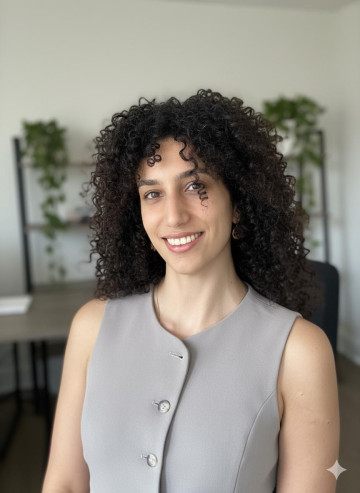
Layan Jarjoura
An engineer, investor, and personal finance educator passionate about helping Arab women step into their full power by taking control of their finances.
مقالات متعلقة