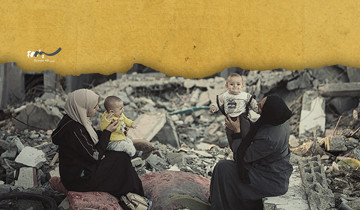
The Diaspora’s Duty to Save the Palestinian History: A Rumination
It’s hard to describe the feeling of longing for a place you’ve only been to once, this feeling deep in your core that something is missing, that perhaps if you returned, that feeling would be resolved.
I went to Gaza in August 2001 with my mother and older brother. This was my mother’s first time back to the place she grew up in ninteen years. I had no understanding of why she left or why she didn’t return. The journey had been long, and I missed the comforts of our life in New Jersey. Our family cat wasn’t with us, and I had only brought a single stuffed rabbit with me as a memory of home.
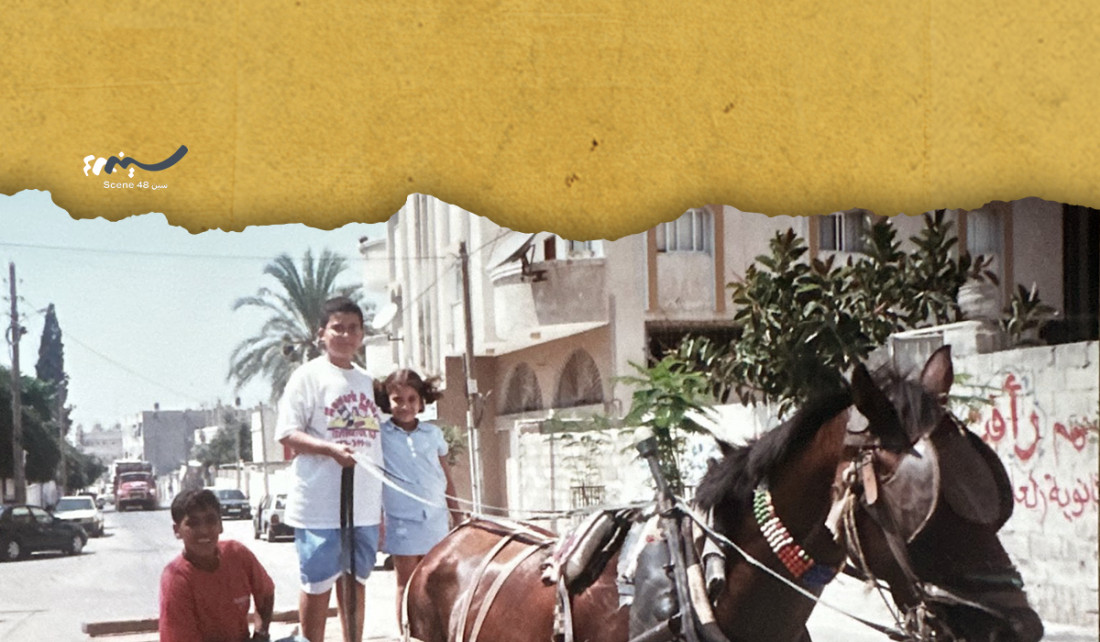
The land was foreign, but it did not feel hostile. We walked through orange groves and went to the beach, the air crisp and light. We rode donkeys and horses and stayed up late having fresh falafel and bootha from street vendors. My tata would go to the market and cook maftool. The home my mother and her fourteen siblings had grown up in was still standing and provided a safe shelter, one that felt like home.
In reality, the looming shadow of the occupation cast itself over every moment. My seven-year-old mind did not understand the complexities of those fragmented moments as anything more than a strange inconvenience. My mother was questioned at checkpoints manned by men and women in army dress and large machine guns. The electricity would shut off at random hours. Showers weren’t available every day. The television only played a Hebrew version of The Big Comfy Couch. My family had lived on the land for generations, yet I understood we were only thought of as passive tenants. Tanks would roll through the streets on a daily basis, children would throw stones at incoming IDF soldiers, and inevitably I would hear gunshots firing back. Every attempt to create fear and anxiety among innocent people was made.
There is one photo of my mother as a schoolgirl in Gaza. She is the same age I was when we went for the first and last time. She has the same pigtails I had at that age. She wears a neat, structured dress and carries a small briefcase. She looks the same as I did as a schoolchild in America, not because we are related, but because all schoolchildren at that age look the same: full of promise and hope and a longing to belong.
When I see this photo of my mother, I think of children like Hind Rajab, who was violently murdered by the Israeli Defense Forces. I think of Mohamed Shabban, my mother’s seven-month-old cousin, murdered after an Israeli Defense Forces bomb hit the tent in Gaza where he was sheltering. I think of the countless children in Palestine robbed of a life, their only crime being that they were Palestinian.
Living in the diaspora as a Palestinian often comes back to the idea of a right to return, a right to reclaim the land my mother’s family inhabited for generations, to return to a place that is supposed to be home. But the ugly reality is not so simple. The Gaza I knew and the Gaza my mother knew are now faint memories, separated by time and plagued by a continued genocide.
When I am asked about my memories of Gaza, I often point to the pictures from my trip twenty-six years ago: the smiling children, the lush olive trees and orange groves, the streets that bustled with life and promise. Frozen in time, they capture what feels like a fantastical place, somewhere that I can only recall by desperately trying to fill in the blank spaces between each photo. In all of the photos I am smiling. In all of the photos I look like I belong. In all the photos, even if for a moment, the occupation moves to the background.
In many ways Gaza can seem like a fantastical place only accessible via videos showcasing the absolute brutality of the ongoing occupation. Whole neighborhoods have been leveled to the ground, countless numbers of bodies are still stuck under the rubble, and entire families have been erased from the map. But there is another reality of Gaza, the one captured in photographs and passed down orally between generations of Palestinians who are strewn across the globe. It is not uncommon for families to keep keys and house deeds to the houses they intend to return to, all of them holding onto not just the memories of a place, but the reality of Palestine.
My duty as a Palestinian is not only to shed light on an occupation, but to show that Palestine is not fantastical, it is a real place. It is to imagine the reality of a new Palestine that does not leave Palestinians as destitute victims, but one that shows us as humans with bright futures ahead. The future of Palestine is defined by the choices we make today. Where are the living memories of those who have been lost? Who will save their photographs? Who decides who gets remembered after a genocide? If the future of Palestine is not one my mother and I can return to, then perhaps my job is to save the Palestine of today.
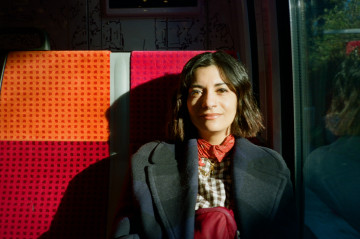
Sarah Mowaswes
A first-generation Palestinian-American filmmaker based in New York. Her producing credits include Patriot Act with Hasan Minhaj (Netflix), Mind Over Murder (HBO), Never Let Him Go (Hulu), and Fanatical: The Catfishing of Tegan and Sara (Hulu). Recently she produced the musical biopic This a Film About the Black Keys which had its world premiere at SXSW 2024. She was recently part of the CPH:DOX pitching forum in 2025 where she won the Al-Jazeera co-production award and was part of the Palestine Film Institute’s 2025 cohort at the Cannes Film Festival producer’s network. She is currently producing a feature length documentary on the late Palestinian intellectual, Edward Said.
مقالات متعلقة