Women and Decision-Making: Initiative Over Theory
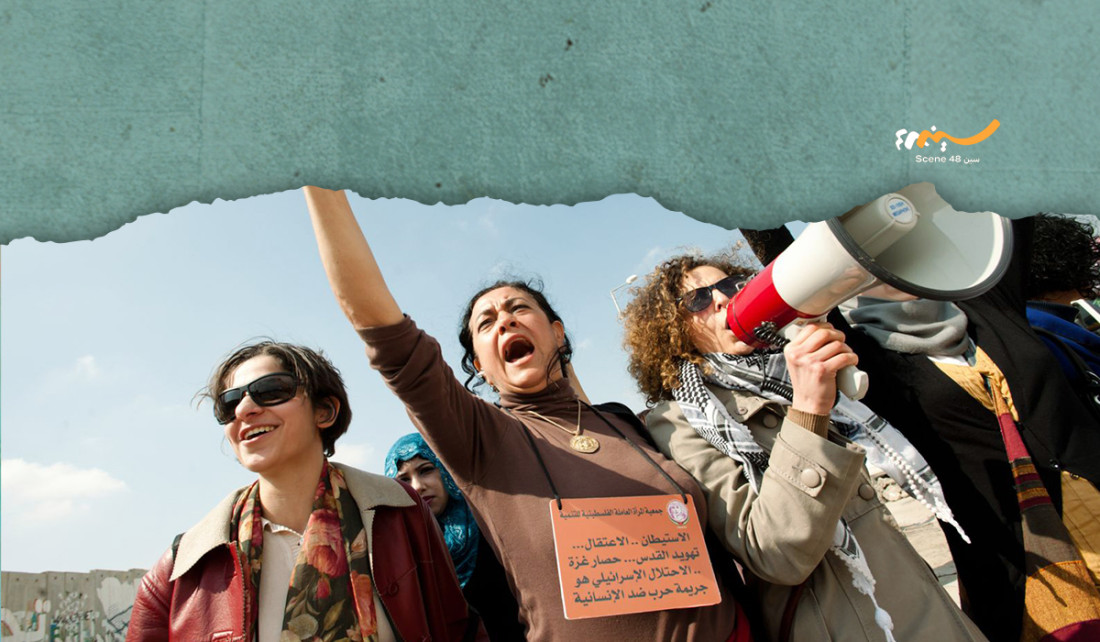
The status of Arab women in Israel is witnessing remarkable and cumulative progress in most areas of public and private life, and it has become impossible to imagine Palestinian society without this component. They are advancing because their individual and collective dream, which is at the core of society’s dream, overcomes most social obstacles and restrictions, the majority of which have already been resolved. This unceasing transformation also indicates that Palestinian Arab society is a supportive one.
Arab women’s ability to influence is no longer a matter of debate, whether naive or self-serving. I do not believe that women’s freedom and role are a matter of self-determination, and the same applies to men, who remain removed from this concept even if they receive more societal support than women do on the whole. Rather, any external societal support comes at the expense of the concept of self-determination at the individual level. In my view, there is something more important than self-determination, and by that I mean a woman’s right to herself, her behavior, and her body, as this right belongs to her and her alone, and this principle applies to her dreams as well. For it to be “hers alone,” this depends on her; just as, in our situation and journey, rights are taken and do not arise from her own initiative. But what about women who lack the personal or environmental capacity that would allow them to exercise this right? This is where so-called civil society comes into play, and before that, political activism, which, over time, builds a political project grounded in both political and social principles.
The real challenge lies not in theorizing but in taking the initiative, exercising leadership, and challenging what appears to be unchallengeable. The social structure is conducive to change in women’s status, and this is indeed happening, as evidenced by the presence of feminist elites in all spheres of life; the limitations are political and stem from structural closed-mindedness within political parties. When identity politics governs representation, women’s representation is hindered. However, women’s role is not limited to running for the Knesset or being elected; rather, their role lies at the level of decision-making, including self-determination. Political influence, given the structural closed-off nature of political parties, comes not only through persuasion but also through asserting oneself.
The political movement dominating the scene has become traditional in the sense that it is incapable of liberating itself from its own traditionalism. The issue here is not a change in leadership figures, which in and of itself does not allow for periodic renewal, but rather that the movement fails to renew its political and value-based ideology or to make an effort to reexamine these matters. Candidacy for the Knesset has come to be seen as the ultimate dream in life and a measure of progress. Meanwhile, the parties do not necessarily suffer from being male-dominated, but rather from a lack of vision based on the concept of renewal and the creation of space for internal hierarchical mobility. However, this does not address the issue of women’s representation. It is expected that there will be no progress in this regard in the future, this time due to a new obstacle: the management of personal campaigns in the preliminary elections for cross-listing, which has led to a rise in identity-based candidacies. In practice, the outcome will ultimately depend more on the effectiveness of marketing than on the candidate’s merit. Furthermore, the quota system, or securing women’s positions, provides a more reliable guarantee of their inclusion on the list, whereas the prevailing political narrative treats this quota as the ceiling for representation rather than the threshold, in accordance with the principle of affirmative action. It should be emphasized that the progressive movement, including feminism, is not an identity-based policy but rather a value integrated into policies and the pattern of political action.
If women’s emergence and prominence on the parliamentary political scene are merely elitist, this does not necessarily strengthen women’s status; there is no single woman who represents all women, nor is there a need for one. However, there are representatives of progressive ideologies in every sphere of life, including the creation of a feminist role model.
The political movement that boycotts or does not participate in elections, with both its secular and religious currents, is less innovative and less accessible to gender-based leadership dynamics. This stagnant lack of renewal reproduces itself and engineers a pattern of sustainable leadership, which primarily affects women and youth. Generations have passed without any renewal of leadership or youth-led initiatives.
There is a phenomenon that may have repercussions for women’s role and their liberation: the growing shift of progressive secular discourse within the political and mass movements toward aligning itself, and even its vocabulary, with traditional thought. This leaves no room for the advancement of women and youth except to the extent that these groups struggle both within and outside party frameworks. The relationship between the progressive and traditional currents is not necessarily one of conflict, but rather one of acceptance based on pluralism as both a reality and a guiding principle for social relations.
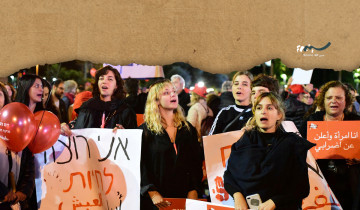
In this context, what the recently emerged “There’s a Place for All of Us” party brings to the table is a reversal of prevailing concepts in terms of form, namely, the establishment of a party led by a woman, Rela Daoud, who is Arab, and characterized by its distinctly youthful nature. I am not expressing my personal stance on this party here. From a model perspective, however, the new party may serve as a catalyst for the emergence of other youth-oriented Arab political parties or movements, not necessarily at the expense of existing parties. However, we must bear in mind that the political landscape and the diversity of Palestinian society are far broader than what is represented by existing parties and movements, which, in turn, may be influenced by this new model in their political work on the ground. It should be noted that the women’s movement, and, fundamentally, the progressive movement with its comprehensive vision, did not wait for the emergence of this party; rather, it preceded it by many generations and constituted a struggle in and of itself, one that has never ceased despite the fluctuations in political, social, and feminist-gender culture.
Conversely, we observe that women’s presence in youth protest movements, which are rebellious in nature and spirit, has a broader impact and greater scope than what is seen in the organized political movement. Moreover, the scope of these movements extends beyond the partisan political sphere.
This pattern is not merely local but global; we have seen it in the protest movements against the war of genocide, as well as in the shifts in U.S. politics and the younger generation’s rebellion against its traditional leadership, as they impose their own political agenda and identity, one based on solidarity with victims and a challenge to dominant power structures. In our case, specifically in the Israeli context and particularly after October 2023, we witnessed a targeting of the entire nation, and a specific targeting of women who stood out for their courage in defying oppression. This is what has happened in Israeli academia, as well as toward female artists and grassroots activists; among the most prominent cases were Professor Nadera Shalhoub-Kevorkian and the artist Dalal Abu Amneh.
The most problematic pattern is seen in municipal and local elections, where campaigns are often based directly on social structures and the identities derived from them, and where, in most cases, with the exception of a few places, women’s representation is structurally constrained. In this regard, there are inspiring examples in coastal and mixed cities, historically in Nazareth, exclusively since the victory of the Front led by Tawfiq Ziad in 1974, and in the case of Violet Khoury, who chaired the Kfar Yasif Local Council in 1969. In contrast, recent years have witnessed popular movements led predominantly by women and youth, particularly in the face of organized crime and the continuous and escalating number of victims. These are bold movements that may give rise to young female leaders who will continue to play a role in political and popular leadership.
Historically, the Arab student movement, exclusively during the 1970s and 1980s, represented the most progressive model in this regard, in my view, for two main reasons: first, the comprehensive Palestinian liberation movement and the emergence of new rebellious generations, including the Land Day generation, which was also influenced by progressive transformations, both in the Arab world, in the struggle for liberation from colonialism, and globally, in the late 1960s, particularly among the rising generations and university students who opposed the U.S. war in Vietnam, supported global liberation movements, and stood firmly against colonialism. The second reason is that the Arab student committees in Israeli universities and their national federation constituted national frameworks directly elected by their membership, and were led by two progressive currents: the Communist Party, the Arab Student Front, and the Progressive National Movement, Sons of the Land. Within the student movement, leadership was the most accessible compared to any other form of national organization.
There is no single path to social change, and certainly Knesset elections are not the only criterion, even if they are a criterion. Accordingly, I cite another example of a socio-political conceptual shift that actually took place: the petition we initiated in the late 1980s, which demanded the resignation of the then-chair of the Follow-Up Committee because he had provided an identity certificate in support of a father who had killed his pregnant daughter, the mother of his children, under the pretext of “family honor” in Tura’an. The leadership of the Communist Party, of which I was an active member, expressed reservations about the petition itself and its content, viewing it as an obstacle to the priority of “national unity.” We defied the leadership’s reservations without backing down in any way regarding the petition’s content, timing, or wording. The matter did not stop at the petition; it quickly evolved into a movement that later gave rise to the “Alternative Coalition to Combat Family Honor Crimes,” a name that challenged all existing social norms by rejecting the concept of “family honor,” thereby becoming one of the most significant and far-reaching social movements. At the party level, during the 21st Communist Party Congress, a constitutional amendment was adopted that aligns with the spirit of the social change initiative. The environment fostering the forces of change is also shifting as a result of those very forces themselves. The foundations for social change are in place; what is needed is the courage to take the lead in the feminist movement and to create a supportive, interactive environment conducive to this change. Social change, and change in attitudes, does not come about on its own; rather, there is always a vanguard of activists who make change a reality without seeking anyone’s permission.
A Word of Appreciation
Aida Toma Suleiman concluded her parliamentary term, and in the context of this article, she deserves words of tribute and appreciation for having carried out her parliamentary duties in both their popular and parliamentary dimensions. It should be noted that Aida’s career did not begin in the Knesset but spans four decades, beginning with her leadership in student and party activism, her pioneering work in the women’s movement, and her holding of various positions within both the party and the broader public sphere. In my view, she has transcended identity politics and derived her merit from her leadership role.
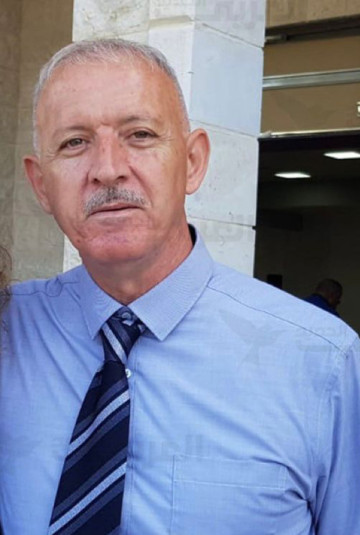
Ameer Makhoul
A prominent Palestinian Arab public figure, political analyst, researcher, and human rights defender based in Haifa. He focuses extensively on Israeli-Palestinian politics, civil society, and human rights. He works as a researcher for the Progress Center for Policies based in London.
Related Articles