Falastini Spirit: Between Distance and Defiance
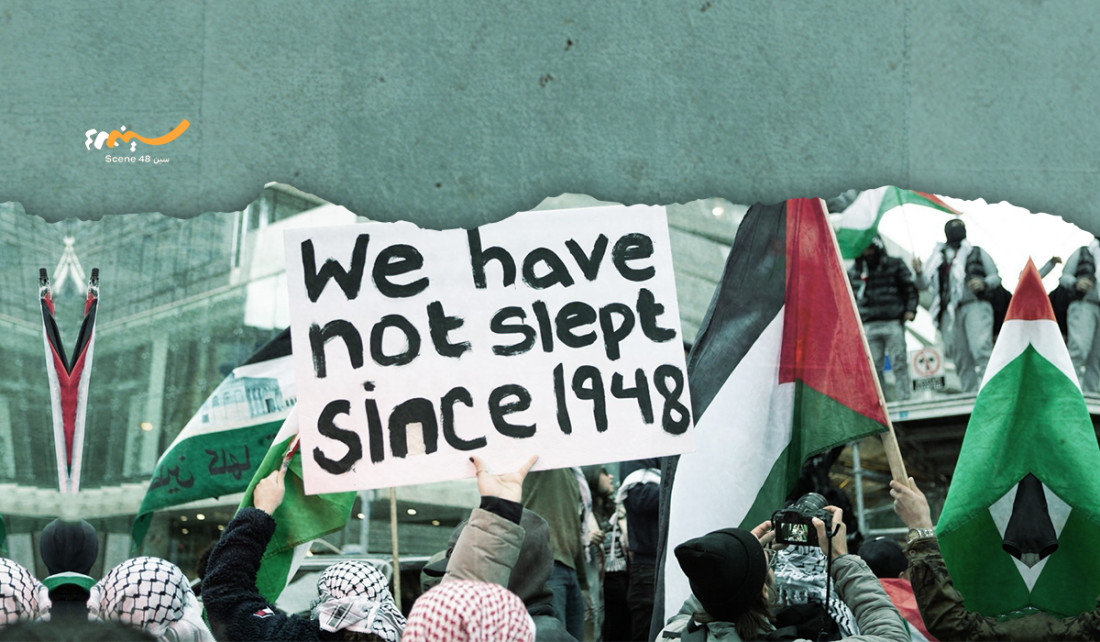
Almost a month ago, Scene48 invited me to write for their bulletin Falastini Spirit. I felt it was not only an opportunity but also a responsibility. As a Palestinian woman in Europe, I carry both distance and the weight of witnessing genocide while living on a continent that often looks away; and in many ways, is complicit.
I was born in Nazareth, in the occupied territories of 1948. My grandfather was a refugee from Saffurye. For the past six years, I’ve lived in Brussels, working in theatre. The words attached to me (woman, Palestinian, refugee’s granddaughter, migrant, artist) are all true, yet none complete. Each reflects fragments of a story shaped by displacement and resistance.
After two years of not visiting, I decided to return to Palestine. On my way back to Brussels, the Zionist agent at Ben Gurion Airport asked, “Why not stay in Belgium? You look happy there. Why come back?” She asked ten times, her tone not curious but instructive: forget Palestine, move on.
Weeks later, at a shawarma shop on Chaussée de Mons, a street of Levantines here in Brussels, a man harassed me in Arabic. When I responded, he accused me of not deserving to be Palestinian because I looked like I was from ’48. In that moment, I felt displaced twice: by the occupation and by the wounds it left inside our people.
A Week of Intersections
The following week captured all my intersections at once. On Thursday morning, at the Zionist embassy, renewing my passport cost me an 84-euro fine because one paper was “scratched.” Three men behind the counter spoke with practiced arrogance. I left in tears, then called Belgian authorities about my residence papers; still “no update.” Between the colonizer’s bureaucracy and Europe’s migration policies, my existence felt suspended.
That evening, I attended a performance by a Muslim theatre collective about young Moroccans in Brussels confronting Islamophobia and belonging. After the show, I met an Egyptian friend who finally received a visa after years of rejection. The next night, on Friday, a group of racialized artists —Congolese, Moroccan, Chinese, Burundian— performed about borders as spaces of healing.
Later that night, a queer European man, bearded and wearing a skirt, asked me what privilege I had, as a Palestinian in Brussels, to want “systemic change.” The same evening, I spent ten minutes, three times, explaining how to pronounce my name. Each time they got it wrong. Each time, I repeated slowly: R-A-G-H-D. Raghd.
I realized how queerness in Europe is often stripped of its politics, reduced to an aesthetic of difference rather than solidarity. For me, queerness (like being Palestinian) must remain political: a resistance to patriarchy, fascism, and colonialism.
On Saturday, I went with a friend from Gaza, who has never seen his city since becoming an adult, to a concert by Nicolas Jaar (a Chilean-Palestinian originally from Bethlehem) and Ali Sethi (a Pakistani-American musician). Their music gathered our scattered geographies into a single, powerful sound.
On Sunday, I attended Ali, an opera about a Somali boy who crossed the deadly Libyan route to Europe at fourteen. His story echoed countless others, the choreography of migration, the fragile performance of “welcome.” On my way home, transport control stopped me and asked for my Belgian ID. I explained I didn’t have one yet. They asked for another document, and I showed them my Israeli passport, under the gaze of a Moroccan policeman to whom I spoke in Arabic, with a strong Palestinian accent (emphasizing my qāf and using mesh to say “not”), as a way of saying: this passport, wallahi, does not represent me.
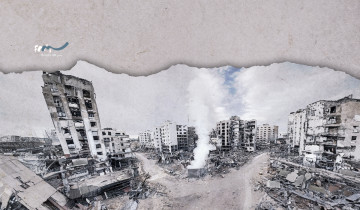
Being Palestinian and a migrant in Europe is never one story. It is an ongoing negotiation between belonging and rejection, visibility and erasure, between defending your name and proving your existence. Meanwhile, our people in Palestine are enduring unimaginable suffering. Gaza lies in ruins, the West Bank under siege, Jerusalem suffocating. Inside the 1948 territories, Palestinians are silenced.
Even here, the echo repeats: be quiet, be grateful, be neutral.
But ‘Falastini Spirit’ refuses neutrality. It is the refusal to disappear: paying a fine to your colonizer because of a “scratch,” watching others perform your pain while you insist on telling your own, surviving humiliation yet refusing silence.
‘Falastini Spirit’ is not nostalgia. It is presence: a living archive carried through language, music, art, olive trees, and bodies that keep crossing borders. To be ‘Falastini’ in Europe is to carry home as struggle and defiance.
To stand amid erasure and say, quietly but firmly: “We are still here. And we will return.”
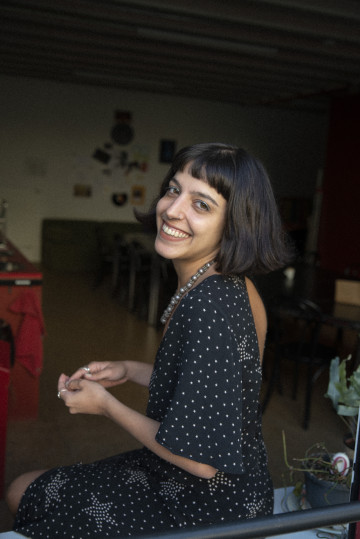
Raghd Azzam
is a Palestinian from Saffurye, raised in Nazareth and based in Brussels. She is a social and political activist, originally trained as a linguist and translator. For two years, she has worked as a cultural mediator in francophone theaters and as an events coordinator. She co-founded Palestine and Beyond, uniting multidisciplinary Palestinian artists in Europe.
Related Articles