In Being Palestinian, I Resist
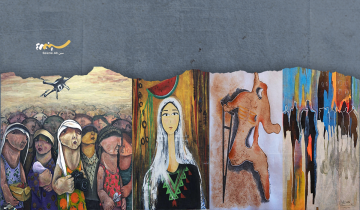
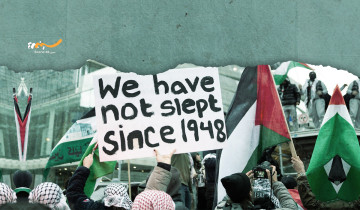
“When injustice becomes law, resistance becomes a duty.” I grew up knowing these words not as rhetoric, but as reality. Palestinian resistance is often linked to images of stones, rifles, and mass demonstrations. Yet, it is also wider, deeper, quieter, sometimes invisible. As a Palestinian, I resist when I write, when I teach, when I refuse silence, and when I insist on naming things as they are: occupation, apartheid, genocide.
We resist in many ways: in the streets, in classrooms, in policy meetings, in arguments at dinner tables, and in refusing the story that tells us to surrender and leave.
Perhaps our ultimate resistance lives in two truths. The first is simply being. Our steadfastness, resilience, and refusal to leave lie at the heart of our resistance. As a settler-colonial project, the Israeli occupation seeks maximum land with minimum Palestinians. It overtakes land, implants settlers, and displaces Palestinians incrementally but steadily. Choosing to remain, day after day, is resistance in itself. I resist by waking up on this land, by refusing displacement, by belonging to my olive trees and terrain.
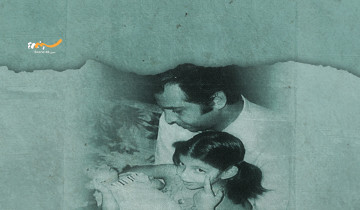
The second is education. We are a people who turned classrooms into acts of defiance, who insisted on learning even when incarcerated, who sacrificed bread and water to educate our children. We resist by learning. This mentality shaped my family, compelling my parents to dedicate every resource they had to give me and my sister the best education available. When I was in junior year of high school and my sister in senior year, my mother spent half her annual salary on our tuition. This is how important education is for Palestinians.
Education helped me discover my passions, my strengths, and how I might best serve the Palestinian cause. After college, where I studied biology with minors in English literature and translation, I hit a few roadblocks that made it clear I would not continue down the path of science. Yet I did not feel lost. With my family’s support, I knew I would find my way.
I immersed myself in various fields: education, contemporary art, gender equality, youth empowerment. Each step drew me closer to human rights. This became the cornerstone from which I explored different paths and opportunities. Eventually, I returned to my childhood dream of studying law by pursuing an MA in Human Rights Law at SOAS, University of London in 2015–2016, one of the most formative experiences of my life.
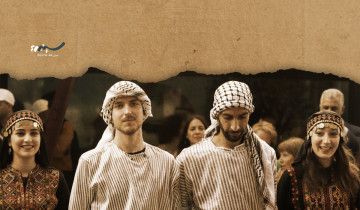
Living abroad taught me that identity is not static but dynamic, shifting with context. Throughout my professional life, I identified strongly as a woman, a human being, and a Palestinian. Yet, living alone in London, I felt the strength of my Palestinian identity more intensely, nourished by nostalgia and love, expressed through Arabic music, patriotic songs, wearing the keffiyeh in the streets, cooking Palestinian dishes, and explaining Palestine to floormates and friends.
I had to leave Palestine to feel how deeply it lived in me. In London, I asked myself: Am I first a Palestinian? A woman? An Arab? A human being? The answer changed day to day, month to month, crisis to crisis.
While different strands of my identity shifted during years of travel, two identities have risen to the surface most strongly since the genocide escalated in October 2023: the Palestinian and the human. They beat with almost the same pulse. Identity itself becomes a form of resistance, especially when it refuses simplification or erasure. To insist on my full humanity is resistance. To insist on my Palestinianness is resistance. And I refuse to choose between them.
The past two years have made me question many things: the relevance of my PhD thesis in asking about international law and notions of justice in times of genocide, my career in political economy analysis, research, and organizational development, the privilege of not waiting for the next bomb to fall. They also made me question my commitment to resistance and steadfastness.
Yet they have clarified many things as well. I used to think resistance was something one does. Now I understand it is also something you are: a way of standing, a way of staying, a way of insisting on your identity in a world that tries to unwrite it.
And so I return to that old saying, not as a slogan but as a life lived, breath by breath. My resistance is my presence, my learning, my writing, my becoming.
I used to ask: Am I first a Palestinian, a woman, an Arab, a human being? Today, the answer is simplest in its fullness: I am all of them at once. And each part of me resists in its own way: the Palestinian who refuses disappearance, the woman who insists on voice, the human being who refuses to call cruelty by any other name.
This is who I am.
And in being so, I resist.
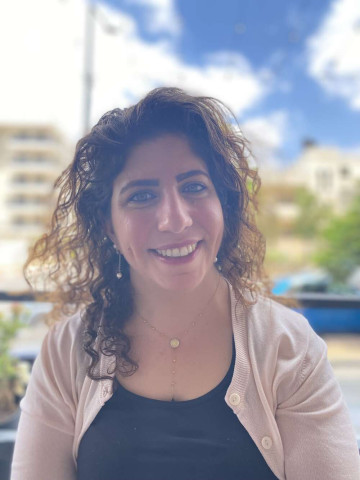
Tamara Tamimi
A Palestinian from Jerusalem. She holds an MA in Human Rights Law from SOAS, University of London, and is completing a PhD at Queen’s University Belfast on international law and the Palestine question. Tamimi has extensive experience in project management, research, communications, political economy analysis, and advocacy across fields including education, contemporary art, gender equality, youth empowerment, governance, and human rights. Her work has been published in peer-reviewed journals and platforms such as including Development in Practice, E-International Relations, Al-Shabaka- Palestinian Policy Network, and Confluences Méditerranée.
Related Articles