Who Are the Palestinians?*
*An extract from the author’s book Find Me at the Jaffa Gate: an encyclopaedia of a Palestinian family (NewSouth, 2025).
An easy question to answer.
But often you do not accept the answer.
If you ask me, ‘Where are you from?’ I will tell you (see: My diaspora).[1] Emily Jacir says: this is the hardest question to answer because our answers never satisfy you. She says: in extreme cases we are simply told that that in fact is not where we are from.
The extreme case is not an exception. It doesn’t occur to me for a long time that the contestation of my identity is a proof of what has happened.
Jerusalem, I have mentioned it previously, Jerusalem is divided and then it undergoes a re-unification as the Israelis call it (and we call it naksa). Naksa understands linear chronology and also the teleology of ownership. This is a word that means: setback. Naksa is a sub-section of Nakba, rightly understood. I attend a lecture called ‘Why the Arabs are not free’, and the speaker contends that we peak too soon, our Renaissance occurs while the Europeans are still crawling around in muddy quagmires and building structures out of sticks (first thesis). His second thesis pertains to the vernacular, and hinges on the first. He says the Arab Renaissance is just too early. What sends the English-speaking world flying ahead when it arrives in the sun? Apparently writers like Mark Twain and Norman Lindsay, spruiking vernacular dialects.
I cast about for the exception to such a withering critique, where I find the Syrian poet Nizar Qabbani, but as he is eighty-eight years later than Twain, what this comparison avails us of is not strictly relevant, though Qabbani is strictly anti-colonial and to many Palestinians a hero. I know several Palestinian men who are all named Nizar in honour of this poet, all born in the year following the December in which his second wife is murdered as an incidental casualty to the bombing of the Iraqi Embassy in Beirut. Of this, Qabbani writes in one poetic eulogy: She was not afraid that the homeland would kill her/but she was afraid that the homeland/would kill itself.
This is an apt reminder of the imprudence of attaching your hope to politics – though a homeland may still command worship. Do the Arabs also colonise? They do (they trade in slaves too). Although I am not aware of Palestinian colonisation so this depends how much pan you can put in the Arab. But I say this because I want you to know that I know, people on the receiving end of persecution are not saints. Nor is a sainthood the prerequisite for demanding your rights, nor having them enforced.
Some people have said that Palestinians do not exist and for a people who do not exist we are discussed frequently, and perhaps more frequently than unicorns. Palestinians are not to blame for this, but this blindness is one of the burdens we carry and may not lay down.
Who knows we exist? Funnily enough, the early Zionists. These are a cruel but comparatively honest people.
Jabotinsky says for example: [some] attempt to convince us that the Arabs are some kind of fools who can be tricked … [and] who will abandon their birth right to Palestine … I flatly reject this assessment of the Palestinian Arabs.
The first prime minister of Israel, Ben-Gurion, is also patently aware of us: If I was an Arab leader, I would never make terms with Israel. That is natural; we have taken their country. Sure, God promised it to us, but what does it matter to them? He has quite a lot of insight for a victor; he says they only see one thing: we have come and stolen their country. Why should they accept that?
Sometimes when we are looking for traces of our existence it is a balm to read the early Zionist writings. Later the state conceals us so well that it is argued in the Knesset today that all Palestinians in the area of Gaza should be transferred, and what is that to an Arab?
My father, for instance, maintains that the coffee with hel was not something they drank but a thing Ellen would offer when Lebanese guests came calling, although they all like the sugar. My father, for instance, maintains that at the Mirimar nut shop on Lygon Street he cannot make sense of the Lebanese grocer’s Arabic, Dad dropping the k of the ahwe like all good Jerusalemites. The old grocer signals to me from across the counter, handing me a piece of soft nougat, leaning in to confirm my father’s order for a kilo of kahwe. A Palestinian man and a Lebanese one who both turn to a girl learning Fusha and declaim, ‘I don’t know what he’s saying!’, and if to my unpractised ear it all sounds the same, I delight in the way these two regional neighbours emphasise their differences for decades. I will go on loving these antagonisms, as does my dad and the grocer who greets us ‘Ahlaaaan!’, and we talk about the days when he fought alongside the Palestinians, which is celebrated in a photograph he hangs high on the wall and commands all of his customers to admire. And then one day the grocer will no longer be sitting there, and I still miss that man who would recognise my face and let me take groceries even when I had no money to pay for them.
It is true we have had some incompetent statesmen and also some fine ones (the latter of whom are systematically assassinated and imprisoned by agents of the State, both inside and outside its un-declared perimeters). In a democratic vote, the Israelis and Americans do not accept our decision (we elect Hamas, a party I will not defend and a party I will not criticise[2]).
An Israeli analyst of Palestinian affairs states that following this election and Israel’s official statement regarding its view of that outcome, Hamas seizes control of the entirety of the Gaza area, due to the fact that Fatah has refused to fully share the Palestinian Authority’s mechanism of power with its rival Hamas, despite Hamas’s decisive victory in the January 2006 general election (Erlanger and El-Khodary, New York Times, June 14, 2007). Following which, Israel throws some energy into ‘building up Fatah’ as it says and besieging Gaza, economically and militarily.
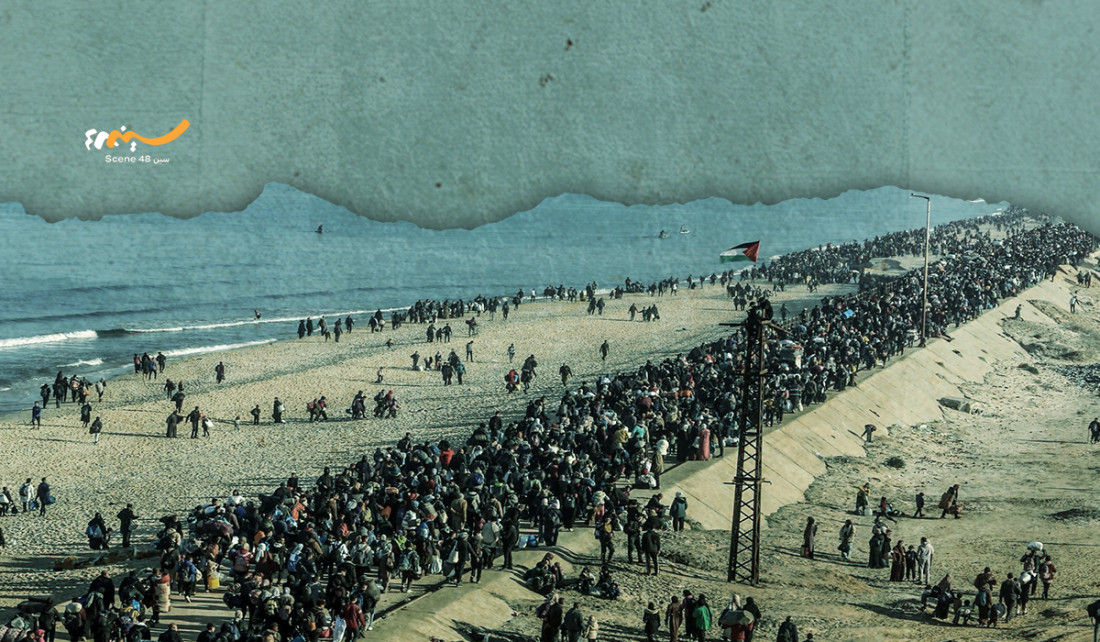
It is hard to envisage the current state of Gaza, which has been described by multiple onlookers with concern as ‘the world’s largest open-air prison’ (though the use of carceral logic has little to say of Palestinians but offers a window onto linguistic and literal cages). Yet whatever its value, this description is now superseded by a tundra that the equivalent of more than six nuclear bombs once dropped on Hiroshima has made of it. An editor I have been writing to in Gaza says simply in one of his emails, remember us. I spend close to a decade writing about Gaza’s bombardment and I think my supervisor captures something essential when he says, Gaza itself is a permanent state of criminality, to which he adds that it is not what happens in Gaza that makes it so. But I am kharej and it is shameful to say more here about the dahkel, other than that I remember you.
What I can say is this is not the first time Zionists have imprisoned the Palestinians (1948 in Jerusalem is front of mind, always). What I can say is I admire every last Palestinian whose family remained.
I am not interested in the function of law or in the operation of our unelected representatives. I am in Jerusalem and there is an expert in international law giving a talk on the possibility of mounting another case in the International Court of Justice. Two things to say: we always win these cases; and second, so what? What good does it do us – take a court that says ‘stop the genocide’, from whom we do not learn that a genocide is a genocide, but that the utterances of international law are non-binding.
‘Why waste your time?’ I ask in the question part of the talk; the speaker says, ‘Perhaps you don’t understand the operation of law?’
‘I agree,’ I say, ‘I don’t understand why we invest, in inherently oppressive laws, any legitimacy’.
When I am a young student my family prevails on me to study law, there is a saying that you can become a doctor, a lawyer, an engineer, or a failure – I laugh now to think of it. But I will remember the lessons most especially from property law, which is a powerful tool in colonial hands, the methodologies of thinking about land that is granulated through settlement and exceptions and the planting of flags.
Fundamentally I have no faith in a law that can make us disappear although we are present. Fundamentally, law is a tool of colonial power. Law, fundamentally, as it takes me the span of a law degree to discover, is not about justice but ritual. Law performs, law makes your hurt my fact, law legitimises your criminality, law is made illegitimately all the time. Law is force, is brutal, is ignorant of who I am. Khalas!
I make a statement one Nakba and I will make it again. I say: this is not a debate.
It is 2019 when I write this, year of Eurovision in Israel and questions of cultural boycott abound. I say: I’m not going to reason with anyone. Because this is not a debate.
False debates are not worth your time or mine. There are too many of them in the twenty-first century, like do gay people deserve equality? Have migrants stolen my job? Why are Aboriginal people so angry? If there are, in fact, Palestinians, to what extent are they culpable or implicated in their own catastrophe? These are all disingenuous questions, and I will not answer them. Dad says to his sisters when they tease him for being born in Amman, ‘Micaela knows who I am’.
What I will say is this: a Palestinian is a person who says, I’m Palestinian. When is a Palestinian a Palestinian? When we tell you we are (Palestinian).
Palestinians are frankly unconcerned by your opinion.
References
Vladimir Jabotinsky in 1923, quoted in Brenner, Lenni (1984). The Iron Wall: Zionist revisionism from Jabotinsky to Shamir. London: Zed Books, p. 74.
Erlanger, Steve and Taghreed El-Khodary (2007). ‘Hamas seizes broad control in Gaza Strip’. New York Times, June 14.
David Ben-Gurion quoted by Goldmann, Nahum (1978). The Jewish Paradox. New York: Fred Jordan Books, p. 99.
Hage, Ghassan (2010). ‘On Narcissistic Victimhood’. In Gaza: Morality, law and politics, edited by Raimond Gaita. Crawley: UWA Publishing, pp. 101-126; pp. 106-107.
Jacir, Emily (2008). ‘Some things I probably should not say and some things I should have said (fragments of a diary)’: pp. 141–151. In Guy Mannes-Abbott (2012). In Ramallah, Running. London: Black Dog Publishing, p. 150.
Qabbani, Nizar (2006). ‘Twelve roses in Balqis’s hair’. In On Entering the Sea: The erotic and other poetry of Nizar Qabbani. Translated by Lena Jayyusi and WS Merwin. North Hampton: Interlink Books, pp. 64–66; p. 65.
[1] “My diaspora” is chapter 41 in the book this chapter is excerpted from.
[2] A redaction has been made here. The original appears in the book.
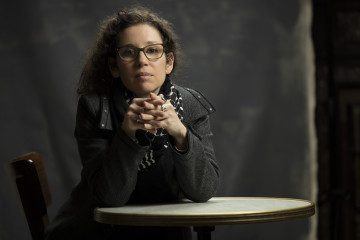
Micaela Sahhar
An Australian-Palestinian academic, writer and educator living on unceded Wurundjeri Country in Naarm/Melbourne. Her essays, poetry, and commentary have appeared in Cordite, Meanjin, Overland, Rabbit, Southerly, and Sydney Review of Books, among others. She is a Wheeler Centre Next Chapter Fellow (2021), a grant recipient from the Neilma Sidney Literary Travel Fund (2022), and was commended for the Peter Blazey Fellowship (2024). Find Me at the Jaffa Gate: an encyclopaedia of a Palestinian family (NewSouth, 2025) is her first book.
Photo Credit: Tim Herbert
Related Articles