Palestine’s Food Industry Under Pressure: Resilience, Sovereignty, and the Struggle for Survival
By virtue of my work with the Palestinian Food and Agriculture Industries Union (PFAIU), and through years of direct engagement with factories, farmers, producers, and supply chains across Palestine, I have witnessed how the food industry has become far more than an economic sector. It is today a frontline of national resilience, economic sovereignty, and social survival.
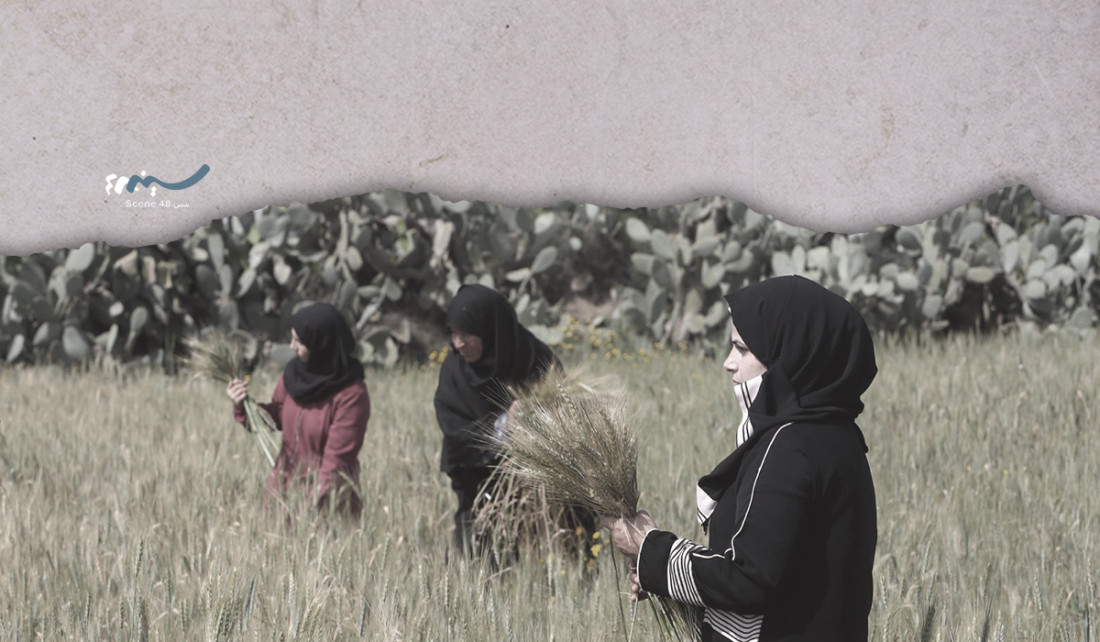
The Palestinian food and agro-industrial sector is among the most strategic productive sectors in the national economy, connecting agriculture with industry, farmers with factories, and local production with food security. It is also one of the largest employers of women and youth, particularly in rural areas where food processing, dairy production, olive oil, pickles, dates, vegetables, meat processing, and traditional food manufacturing provide sustainable livelihoods for thousands of families. Yet this sector operates under extraordinary and often impossible conditions.
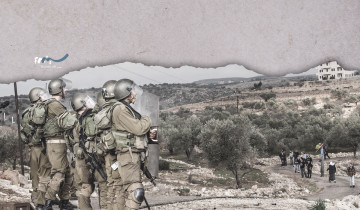
For decades, Palestinian industry has functioned under the structural constraints of occupation: restrictions on movement, barriers to importing raw materials and machinery, fragmented markets, limited access to land and water, and unfair competition with Israeli products that enter Palestinian markets under unequal conditions. However, since the current escalation of war and the tightening of Israeli economic restrictions, these challenges have reached an unprecedented level.
Today, many Palestinian food factories are not merely facing market competition, they are fighting for survival. The closure of major commercial routes, restrictions on transporting goods between governorates, and the effective exclusion of Palestinian food products from Jerusalem markets and other key commercial centers have severely disrupted production cycles. For many factories, Jerusalem alone represented a major share of daily distribution, especially for fresh dairy, meat products, baked goods, and processed foods. When access to these markets is blocked, factories lose not only sales but also their production rhythm, cash flow, and ability to retain workers.
At the same time, production costs have risen sharply. Energy prices, fuel costs, transportation expenses, packaging materials, imported ingredients, and logistics have all become significantly more expensive. Palestinian manufacturers often pay more to produce less, while facing reduced purchasing power among consumers due to the broader economic crisis affecting Palestinian households.
This is where the “People, Power, Planet” framework becomes deeply relevant. Food production in Palestine is directly tied to land access and resource justice. Farmers cannot cultivate without secure access to land. Factories cannot process without reliable water and electricity. Producers cannot invest when industrial zones remain vulnerable to closures, restrictions, and political instability.
Water, in particular, is not merely an environmental issue in Palestine, it is a political and economic issue. Control over water resources directly affects agricultural productivity, food processing capacity, and industrial sustainability. Palestinian factories are expected to meet international quality standards while operating under severe infrastructure limitations and unequal access to basic resources.
Environmental inequality is not theoretical here; it is embedded in daily production.
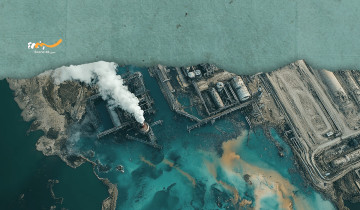
Industrial sustainability requires stable infrastructure, green investment, renewable energy, and modern waste management systems. Yet Palestinian factories are often denied the very conditions needed to transition toward greener and more resilient production models. Despite this, many food manufacturers are actively investing in solar energy, water efficiency systems, food waste reduction, and circular economy practices, not because it is easy, but because sustainability has become a necessity.
The Palestinian private sector is not asking for sympathy. It is asking for fairness.
Our factories produce according to international standards. Our products are safe, competitive, and increasingly innovative. Palestinian food industries use modern technologies, certified production systems, and quality assurance mechanisms recognized by global markets. What they need is not charity, but access: access to markets, movement, finance, infrastructure, and policy protection.
Economic justice must include the right to produce. Food sovereignty must include the right to sell. And environmental justice must include the right to remain on the land and build sustainable livelihoods upon it.
I’m an expert in this sector and have excellent knowledge. I believe that protecting Palestinian industry is not a narrow business issue, it is a national priority. Every factory that remains open protects jobs. Every local product that reaches the market strengthens resilience. Every farmer connected to a processing facility protects the continuity of agricultural life on Palestinian land.
In times of war, food becomes political. Choosing local production becomes an act of resistance. Keeping factories alive becomes part of protecting national existence.
Palestine’s food industry stands today at the intersection of people, power, and planet. It carries the burden of occupation, the weight of economic instability, and the responsibility of providing food for a nation under pressure.
Despite all this, it continues. Not because conditions are favorable, but because survival requires production, and dignity requires economic independence.
The question is no longer whether Palestinian industry is resilient, we have proven that repeatedly. The real question is whether the international community, policymakers, and economic partners are willing to recognize that industrial survival under occupation is not only an economic issue, it is a matter of justice.
Because in Palestine, food security is sovereignty. And protecting industry is protecting the future.

Bassam Abu Ghalyoun
The General Manager of Palestinian Food and Agriculture Industries Union (PFAIU).
Related Articles