People, Power, and Infrastructure: Rethinking Energy and Sovereignty in Palestine

In contemporary geopolitical contexts, power is increasingly exercised not only through visible forms of authority, but also through the management of systems that sustain everyday life. Energy, infrastructure, and access to natural resources have become central to how governance is experienced, negotiated, and constrained.
Within the Palestinian context, these dynamics take on particular significance. Energy is not merely a developmental sector; it operates within a broader political and regulatory environment that shapes the scope of economic planning, institutional capacity, and long-term resilience.
Palestinian energy systems remain closely interconnected with external supply networks, reflecting arrangements that have evolved over decades. While these frameworks have ensured a degree of continuity in service provision, they also introduce structural constraints that affect the ability to independently expand infrastructure, diversify energy sources, or respond flexibly to emerging needs.
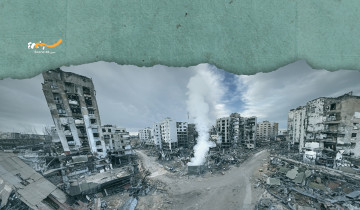
In Gaza, these challenges are amplified. The intersection of political conditions, infrastructural vulnerability, and periodic disruptions to fuel and electricity supply creates a pattern of energy insecurity with wide-reaching implications. This extends beyond immediate service interruptions, influencing healthcare delivery, economic activity, and the overall predictability of daily life.
In the West Bank, the landscape is more differentiated, yet still shaped by layered governance structures. Renewable energy initiatives, often presented globally as pathways toward sustainability, face procedural and regulatory complexities that can slow implementation. As a result, the transition toward energy diversification remains gradual and, at times, uncertain.
This raises a broader analytical question: to what extent can governance systems function effectively without meaningful control over energy systems?
Energy sovereignty is increasingly understood as a foundational component of institutional stability and policy autonomy. The ability to generate, distribute, and regulate energy is not solely technical, it is deeply tied to the capacity to plan, prioritize, and respond to societal needs.
In Palestine, this dimension intersects with a multi-layered political reality, where authority over resources, infrastructure, and regulation is distributed across different actors. This distribution creates both constraints and points of negotiation, shaping how energy systems evolve over time.
At the same time, global conversations on energy transition and climate resilience often assume conditions of regulatory clarity and resource accessibility. The Palestinian case highlights the importance of contextualizing these discussions, recognizing that pathways to sustainability are not only technological, but also political and institutional.
Looking forward, advancing energy resilience in Palestine will likely depend on approaches that combine technical innovation with adaptive governance frameworks. Enhancing coordination, enabling incremental infrastructure development, and expanding access to renewable solutions could contribute to greater system flexibility.
Ultimately, the question of energy in Palestine extends beyond supply and demand. It reflects broader considerations about how systems of power, governance, and resource access interact, shaping not only present conditions, but also the range of possible futures.
In Palestine, energy is more than infrastructure; it shapes governance, resilience, and sovereignty under conditions of political and regulatory constraint.
In Palestine, energy is not just supply, it is a question of sovereignty, governance, and resilience under political and infrastructural constraints.

John Khlbash
A researcher in political and strategic affairs.
Related Articles