Roots of Resistance: Land, Water, and Survival in Palestine
In Palestine, the environment is shaped and controlled by politics. The relationship between people, power, and planet is immediate, lived, and often harsh. The land is not only where we live, it is also where power is exercised, determining who can access water, who can farm, who can build, and who is forced to leave.
Environmental issues are not technical challenges waiting for neutral solutions, they are questions of rights and justice. Access to clean water, to land, to a safe and healthy environment—these are fundamental rights, yet they are continuously restricted by systems of control that shape every aspect of daily life. What is often framed as scarcity is, in reality, a matter of access governed by power.
Water makes this visible. Palestinian communities are frequently unable to develop or maintain infrastructure needed to meet even basic needs. Restrictions on drilling, on water networks, and on resource management limit what is possible. At the same time, water is not absent; it is unevenly controlled and distributed. Families are forced to rely on expensive alternatives while nearby resources remain out of reach. This is not simply poor management, it is a denial of water rights.
Land carries the same tension. It is not just territory, it is livelihood, identity, and continuity. Farmers face increasing difficulty reaching and cultivating their land. Movement restrictions, fragmentation, and environmental degradation reshape what agriculture looks like and whether it can continue at all. Olive trees, which hold both economic and cultural meaning, are left inaccessible. Over time, this amounts to a planned, gradual disconnection from the land itself.
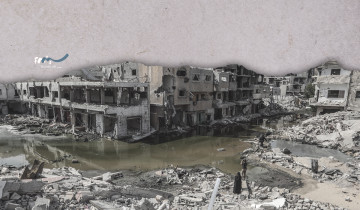
In Gaza, the situation is even more severe. Environmental systems are collapsing. Water is heavily contaminated, wastewater treatment barely functions, and chronic energy shortages undermine even the most basic services. Repeated military attacks have destroyed critical infrastructure faster than it can be repaired. The result is not only a humanitarian crisis but an environmental catastrophe that increasingly reads as ecocide, where ecosystems are damaged to the point that sustaining life becomes profoundly difficult.
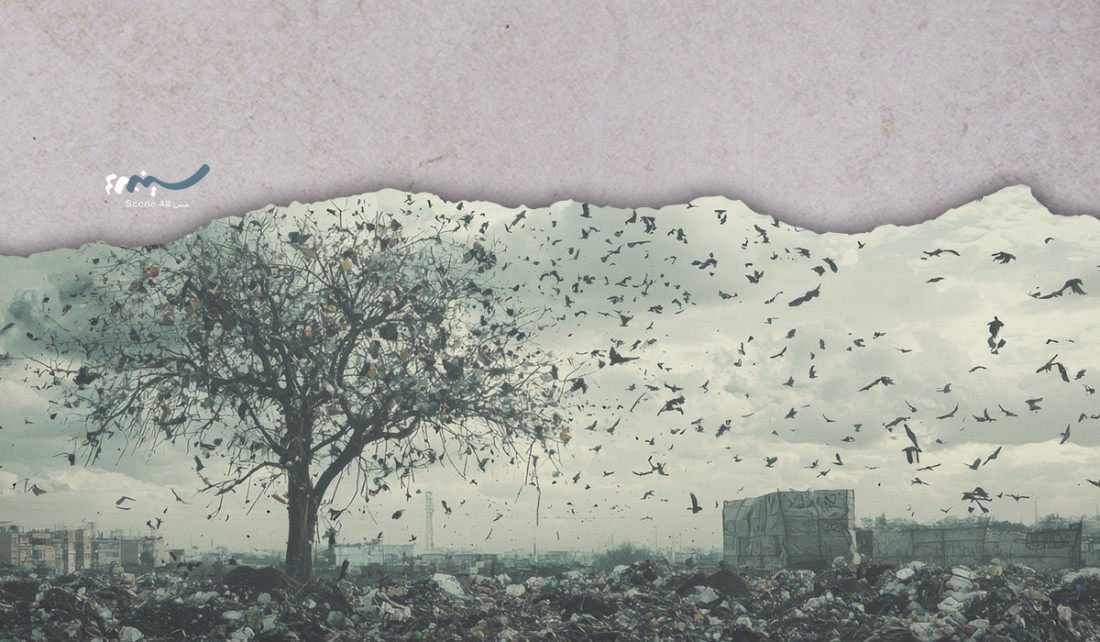
War deepens already fragile environmental conditions. It destroys agricultural land, contaminates water, and overwhelms strained systems. Displacement concentrates people in areas that cannot support them, increasing pressure on limited resources. Waste accumulates, pollution spreads, and health risks rise.
These impacts are not shared equally. Environmental harm follows lines of power. Those with the least control over resources bear the greatest burden. Rural communities, marginalized areas, and those living under siege experience the deepest layers of this injustice.
This creates a cycle: limited access leads to environmental degradation, which reduces resilience and makes communities more vulnerable to the next shock.
And yet, this is also a story of persistence and determination. Farmers continue to work their land under huge constraints, adapting with water-harvesting techniques and traditional knowledge. Communities find ways to sustain themselves despite imposed conditions. These are coping mechanisms, forms of resistance, and a refusal to be disconnected from land and life.
Understanding Palestine through people, power, and planet requires recognizing that environmental issues are inseparable from governance and justice. Climate vulnerability, resource depletion, and environmental degradation are all shaped by who controls resources and who is excluded from them. Without addressing these structural inequalities, any environmental solution remains incomplete.
This is why environmental justice is not an abstract concept but a necessary framework. It asks difficult but essential questions: Who has access to resources? Who makes decisions? Who benefits, and who pays the price? It demands more than fair distribution; it calls for recognition of lived realities and for meaningful participation in shaping the future.
As global discussions on climate and sustainability expand, treating environmental issues as detached from the political context is risky. In places like Palestine, this separation does not hold. Efforts that ignore power dynamics risk reinforcing the very inequalities they claim to address. Real solutions must engage directly with issues of control, rights, and accountability.
Palestine under pressure is not only a place of crisis, it is also a place that reveals, with clarity, how deeply connected environmental and political realities are. The struggle over land, water, and resources is ultimately a struggle over power and the possibility of living with dignity.
Without justice, there can be no sustainability, not here and not anywhere.
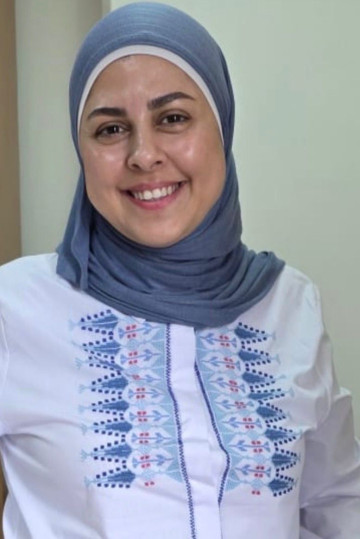
Rasha Hammo Abu Dayyeh
A water and environmental engineer and activist with over 17 years’ experience in environmental leadership, climate justice, and community resilience. She holds a certification in Environmental Leadership and Sustainability from UC Berkeley and focuses on water rights, the environmental impacts of war, and women’s leadership in climate action.
Related Articles