An Oasis of Hope
How do people in Palestine cope with decades of occupation and colonization? As noted in the book "Popular Resistance in Palestine: A History of Hope and Empowerment" (Qumsiyeh, Pluto Press, 2012), Palestinians have engaged in hundreds of forms of resistance that are not armed. Some 8.5 million of us are refugees or displaced people, and those who remain on the land of historic Palestine, 7.2 million indigenous Palestinians, are engaged in a struggle for survival in the face of ethnic cleansing, and now genocide and ecocide campaigns. Thus, everything we do in our country is a form of resistance: teaching, planting, eating, surviving, taking care of each other.
As I sit in my office at the Palestine Institute for Biodiversity and Sustainability (PIBS), looking out at the terraced landscape of our botanical and community garden, I am reminded that in Palestine our connection to the land goes back thousands of years. The transition from hunter-gatherers to agricultural communities some 12,000 years ago happened first in this area of the world, the western part of the Fertile Crescent. Our ancestors coevolved with the land and its animals and plants. Our cultural heritage is intertwined with our natural heritage. Every day tending each other and tending the land is an act of love and a quiet, daily form of resistance. That is the secret to our resistance, resilience, and persistence, collectively called "Sumud" in Arabic.
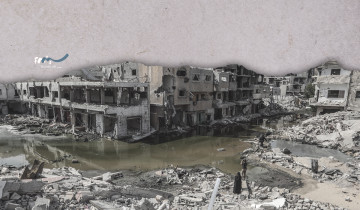
The farmers and shepherds we work with and meet daily remind us of these values of community, power, and sumud, despite pogroms by Israeli settlers and attacks by soldiers that happen every day. Despite more than half a million of us who were killed or died of starvation and disease due to the occupation, despite the nearly one million who were abducted and jailed (80 died just in the past three years while being tortured in Israeli prisons), and despite the lack of freedoms of movement, dwelling, religion, and access to water and medical care, we carry on. While modern colonial settlements on the hilltops enjoy luxurious lawns and running water, our villages go thirsty. In places like the largest open-air prison of the Gaza Strip, >21,000 children were killed, an average of 18 children per day since October 7, 2023. This is the reality the world increasingly recognizes. It is the systemic inequality that decides who is allowed to live and who is allowed to die, and what conditions the living must endure to remain on the land.
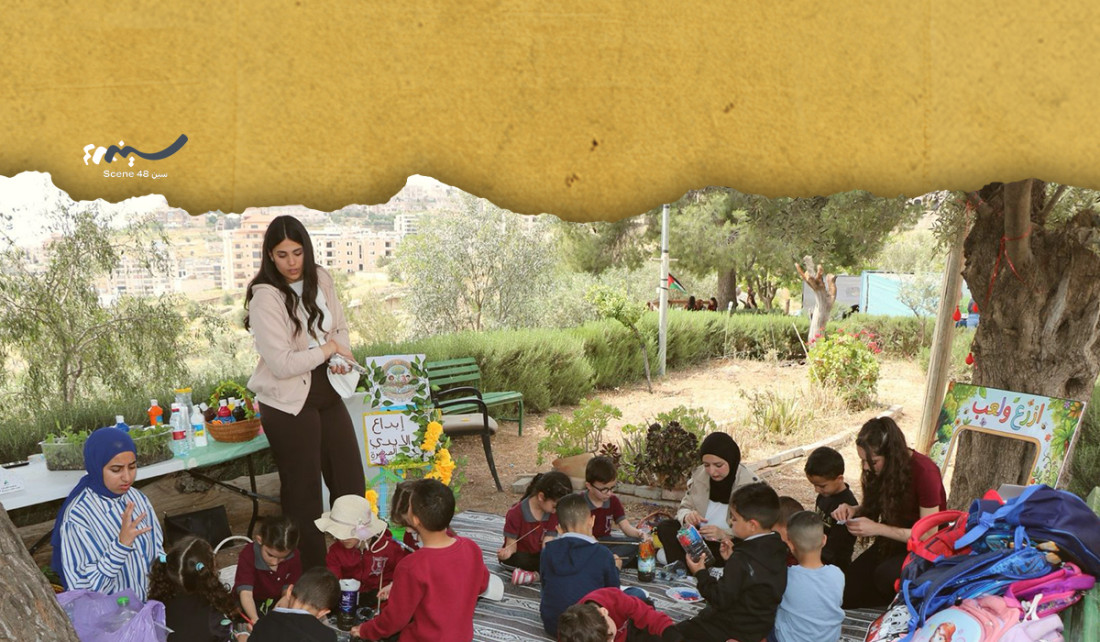
When a military order or violent acts prevent a family from harvesting olives, collecting rainwater, or grazing their flocks, it is not just an administrative hurdle. It is a slow, painful attempt to cut the cord between a people and their land. People often ask me about our institute, the Palestine Institute for Biodiversity and Sustainability at Bethlehem University (palestinenature.org), and how we cope with the situation. I tell them we are not coping, we are resisting, thriving, and engaged in sumud with everything we do. When little children come to the garden, plant, touch our animals, and learn about nature, such as butterflies, birds, rabbits, and bees, they not only improve their physical and mental well-being but start a ripple effect of reconnecting with nature. At this institute, over the last 12 years we have successfully turned a small corner of Bethlehem into an oasis of hope and resilience in the middle of mayhem (see this short video, and this booklet that beautifully illustrates what we do). It is a sanctuary where the noise of the occupation is replaced by the song of the Palestinian sunbird, our national bird, the buzz of bees, and the laughter of children.
When a group of local schoolchildren visits our botanical garden and natural history museum, I see their eyes light up as they admire an orchid or an iris or a wiggling earthworm in their hand. They develop that love of nature, exploration, and the web of life. The work they do promotes respect for themselves, empowerment, respect for others, and respect for nature. In those moments, they are not "oppressed people" or "refugees"; they are the rightful stewards of a 12,000-year-old heritage. By creating an environment where they learn about eco-friendly agriculture, recycling, avoiding plastics, and more, we are giving them the tools to bypass the systems that try to subjugate them. We are teaching them that self-sufficiency and resistance are integral to life. If you can grow your own food and heal your own soil, you hold a piece of your own freedom.
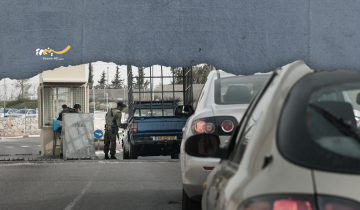
As we approach the release of this bulletin in June 2026, the word "justice" feels heavy. In a contested place like this, justice is not just a legal verdict. Justice is the smell of damp earth after a rain in a valley that has not been confiscated. Justice is the right of a Palestinian student to conduct research on a rare orchid without needing a permit to cross a checkpoint. It is the recognition that human rights and environmental health are the same struggle. You cannot heal the planet while the people living on it are being crushed.
I am often asked if I am optimistic about the future. Optimism can be passive, but determination is active. Like the seeds that lie dormant in our soil for years, waiting for the right conditions to bloom, the Palestinian spirit is built for endurance. Under the immense pressure of occupation, we have not broken; we have become more deeply rooted. We are documenting our species, protecting our water, and planting our seeds, not because we know exactly what tomorrow looks like, but because we know the land will be there when the morning comes.
This is an invitation for the readers of Scene48 to look at Palestine not just as a conflict zone, but as a microcosm of the global struggle for a habitable planet. The same dynamics of power that marginalize the Palestinian people are at play in the global climate crisis, where those who contribute the least to environmental destruction often bear the highest cost.
By supporting us and by placing Palestinian voices in the environmental movement, we are not just asking for aid, we are offering a blueprint for how to remain rooted, how to sustain hope, and how to protect nature even when the world feels like it is falling apart. We do not just dream of a sustainable future, we are planting it, one seed at a time, in the rocky but resilient soil of Palestine. At PIBS, we are not just saving plants, we are saving the idea that we belong here. We insist that even under pressure, life in Palestine can and will be beautiful.
Photo Credit: PIBS.
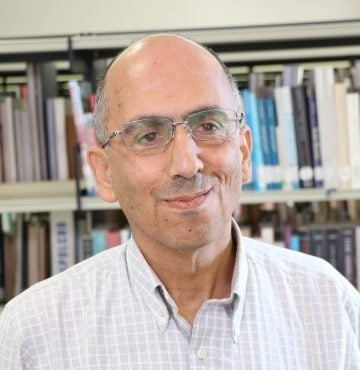
Professor Mazin Qumsiyeh
Founder and director of the Palestine Institute for Biodiversity and Sustainability (PIBS) and the Palestine Museum of Natural History (PMNH), has been nominated for the 2025 Nobel Peace Prize. Professor Qumsiyeh is a Palestinian scientist, author, and educator with an extensive background in biology and medical genetics. He has published over 150 scientific papers and several books on topics ranging from cultural heritage to biodiversity. His commitment to nonviolent resistance and environmental sustainability has been instrumental in advancing peace and education in Palestine.
Related Articles