Reclaiming Legal Representation as Part of Self-Determination
Self-determination cannot be understood as a single or isolated principle. Instead, it consists of several interrelated dimensions, including the freedom to determine political status, shape economic, social, and cultural development, exercise control over natural resources, and secure the material conditions necessary for a dignified life. Collectively, these dimensions recognize that self-determination requires more than formal political rights; it also depends on the ability to exercise meaningful agency within a political and legal framework chosen freely by those it governs (Chinkin 1997).¹
The experience of self-determination for Palestinian women citizens of Israel cannot be reduced to national politics, elections, or debates in international law. While these remain important arenas, many of the decisions that shape women’s ability to exercise agency are made in far more ordinary legal settings. Lawyers’ offices, conversations between lawyers and clients, planning committees, family reunification procedures, and courtrooms all become spaces where women negotiate their rights, make choices, and confront state power. These everyday legal encounters are not merely administrative processes; they are sites where the meaning and practice of self-determination are continuously shaped. These are rarely described as political spaces. They should be.
Every legal decision about whether a woman may continue living with her spouse, whether her family home may remain standing, or whether she can challenge state power is also a decision about who is entitled to shape her own life. Before judges determine legal outcomes, another form of determination is already taking place: the woman’s ability to participate in decisions affecting her case. This matters because legal representation is usually treated as a technical service. Lawyers are evaluated by outcomes: whether they won, lost, negotiated, or appealed. Missing from this conversation is the perspective of the represented person herself.
Who decided the legal strategy? Who understood what was happening? Who was able to ask questions? Who felt heard? Who remained invisible?
These are not merely questions about professional ethics. They are questions about political agency. Self-determination is often understood collectively: the right of peoples to determine their political future. Yet every collective struggle is lived through individual experiences of agency. If women are systematically excluded from decisions about legal processes that fundamentally shape their lives, then political self-determination becomes difficult to realize in practice.
For Palestinian women citizens of Israel, this challenge is intensified by overlapping systems of power. They navigate legal institutions as members of a national minority, as women, and often within legal procedures that regulate some of the most intimate aspects of life: family, home, belonging, and movement.
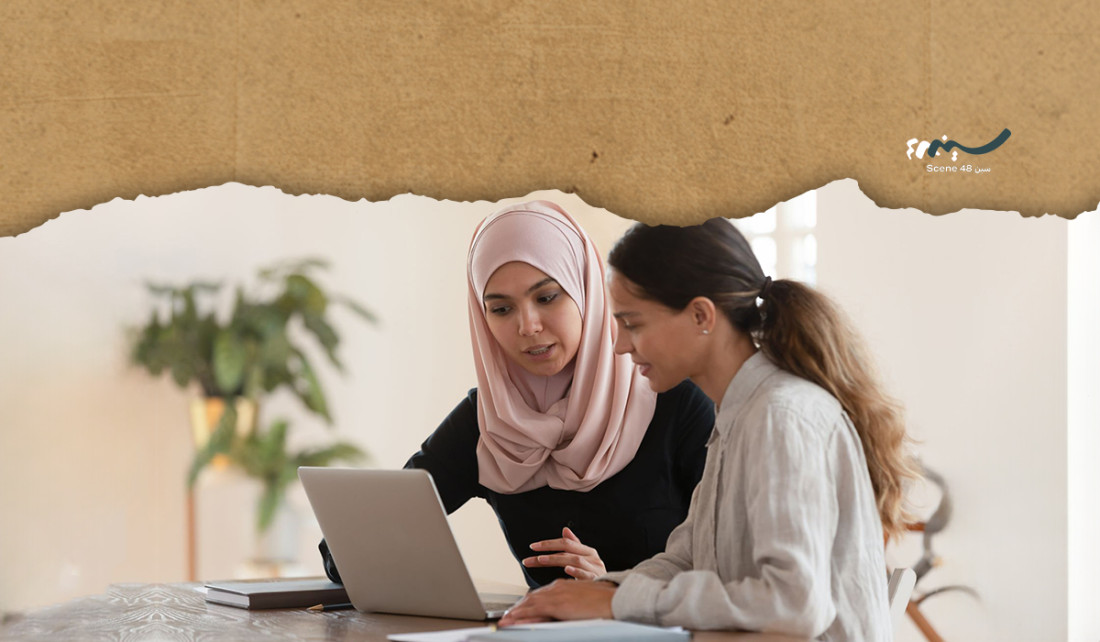
Lawyers become intermediaries between women and the state. They translate legal language, explain procedures, negotiate with authorities, and speak before courts. In doing so, they do more than provide legal expertise. They shape how women experience the law itself. This relationship carries enormous power. A lawyer can create space for participation by explaining options, listening carefully, and treating clients as partners in decision-making. Equally, representation can become another hierarchy in which decisions are made on behalf of women rather than with them.
Even when they appear to have a voice, the structures through which they must speak frequently translate, filter, or replace their own accounts. The issue, therefore, is not simply whether women are permitted to speak, but whether they are able to participate in shaping how their experiences, interests, and demands are represented. For Palestinian women citizens of Israel, this question extends into the lawyer–client relationship. Legal representation has the potential either to reproduce forms of silencing, by speaking on behalf of women without meaningful participation, or to create conditions in which women can articulate their own priorities and influence the legal strategies pursued in their names. Unsilencing, in this sense, is not achieved merely by giving women an opportunity to speak; it requires transforming representation into a process in which their knowledge, choices, and experiences genuinely shape legal decision-making (Spivak 1988).²
Legal representation should not require women to surrender their agency in exchange for expertise. Professional knowledge and client autonomy are not competing values. They should reinforce one another. This is particularly important because legal victories alone do not necessarily produce experiences of justice. A woman may obtain a favorable legal outcome while feeling silenced, excluded, or invisible throughout the process. Conversely, even unsuccessful litigation may leave participants with a stronger sense of dignity if they experienced genuine participation and respect.
Political determination is often measured through visible leadership: women in parliament, peace negotiations, municipal councils, or civil society organizations. These achievements matter profoundly. Yet they represent only one dimension of political life. Political agency also exists in quieter spaces. It exists when a woman asks why a legal strategy has changed. When she questions an assumption. When she insists that her own priorities shape litigation. When she refuses to become merely a case file. When her lived experience becomes recognized as knowledge rather than anecdote. These acts may appear small compared with constitutional debates or electoral politics, but they are part of the same struggle over who has the authority to decide.
This is why legal representation deserves greater attention within conversations about women’s political participation.
If the right to self-determination is fundamentally the right to shape one’s own future, then meaningful legal representation should strengthen, not replace, that capacity. Lawyers cannot achieve self-determination on behalf of women. Nor should they. Their role is to create the conditions in which women can exercise it themselves.
As discussions of women’s political participation continue across Palestine, Israel, and beyond, we should remember that democracy is not experienced only through voting booths or peace negotiations. It is also experienced in the everyday encounters where institutions recognize, or deny, a person’s capacity to make decisions about her own life.
Sources
¹ Chinkin, C. (1997). “The potential and pitfalls of the right to self-determination for women.” In S. Bowen (Ed.), Human rights, self-determination and political change in the occupied Palestinian territories (pp. 93–117). Martinus Nijhoff Publishers.
² Spivak, G. C. (1988). “Can the subaltern speak?” In C. Nelson & L. Grossberg (Eds.), Marxism and the interpretation of culture (pp. 271–313). University of Illinois Press.
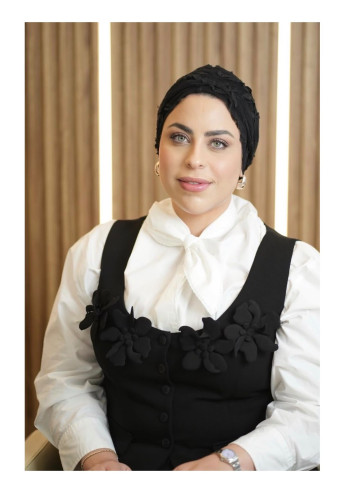
Alya Zoabi
A practicing lawyer and doctoral researcher whose work sits at the intersection of law, society, and lived experience. Trained in law and deeply engaged in community-based inquiry, she navigates both the courtroom and the research field with a shared commitment: examining how legal structures shape everyday realities, particularly within Palestinian communities in Israel.
Alongside her legal practice, Zoabi’s academic work explores questions of representation, voice, and justice, with a focus on the human dimensions often obscured by formal legal discourse. Her approach bridges professional advocacy with critical reflection, drawing on interdisciplinary perspectives that connect law to culture, identity, and social life.
Related Articles