Whose Determination Counts?
When we speak of women’s political determination, we often speak in the language of participation: seats at the table, representation in institutions, inclusion in peace processes. But participation in what, and perhaps more importantly, on whose terms? In contexts where self-determination itself is denied, the question is not only whether women can participate, but whether there is a political space that meaningfully allows for determination at all.
In Palestine, the right to self-determination remains structurally obstructed. Settler colonial expansion, military occupation, fragmented governance, and lack of control over borders, resources, and movement shape every aspect of political and economic life. Within this reality, dominant frameworks of women’s empowerment, particularly those grounded in liberal feminism and liberal legalism, offer an incomplete, and often misleading, account of what it means for women to “decide, lead, and shape public life.”
At the heart of this disconnect lies a conceptual gap. Liberal approaches tend to treat political determination as something that can be achieved through formal inclusion: legal rights, policy frameworks, and institutional access. These mechanisms, including quota systems, can undoubtedly create important opportunities for women’s participation. But representation is not synonymous with influence, and presence within an institution does not necessarily translate into the power to shape its decisions. These approaches also assume the existence of a functioning political and economic system within which such inclusion can be meaningful. In Palestine, this assumption does not hold. The denial of collective self-determination fundamentally reshapes the terrain on which individual and collective agency can be exercised.
This has profound gendered implications. The Palestinian economy, constrained by restrictions on movement, access to land, and control over natural resources, remains structurally dependent on the Israeli economy. Opportunities for employment are limited and precarious, and when they do arise, they are often distributed along traditional gender lines that prioritize men’s access to paid labor. Women, in turn, are disproportionately pushed into unpaid household labor, informal work, or family-based economic activities that remain invisible in formal economic metrics.
Economic marginalization is therefore not only a question of inequality, but of political determination. Access to income can expand women’s capacity to make decisions about livelihoods, household expenditure, and family affairs and resources, while lack of independent income can constrain their bargaining power. Economic participation is thus not merely an outcome of empowerment or a route into formal politics; it can itself be a form of political participation, expanding women’s capacity to decide and influence collective life.
These constraints are compounded by gendered restrictions on mobility. Restricted income can increase women’s vulnerability to domestic violence, while mobility restrictions and the threat of settler violence near settlements and the Apartheid Wall further limit access to education, employment, and public life. Together, these constraints narrow the spaces in which women can exercise decision-making power.
Yet these structural realities are often sidelined in dominant policy frameworks. Liberal legalism, with its emphasis on formal rights and institutional reform, struggles to account for settler colonial contexts where the conditions necessary to realize those rights are absent. Similarly, liberal feminist approaches risk reducing political determination to numbers, how many women are present, rather than asking whether they can exercise meaningful decision-making power.
This critique is not new. Charlesworth, Chinkin and Wright identify three intersecting forms of marginalization: the Global South’s exclusion from Global North–dominated international decision-making; Global South women’s exclusion from decision-making within their own societies; and the marginalization of Global South women’s voices within a feminist discourse dominated by Global North perspectives. Their intervention builds on the critiques of bell hooks, Angela Davis and Kimberlé Crenshaw, which challenge the construction of “woman” as a universal category detached from race, class, geography, and other structures of power.
In Palestine, Islah Jad has similarly shown how gender equality became increasingly channeled through an NGO sector shaped by donor priorities, privileging particular liberal understandings of empowerment while narrowing the political space in which Palestinian women could articulate their own priorities. Lila Abu-Lughod’s critique of Western representations of Muslim women provides another illustration of the dominance of Global North frameworks in shaping how women are represented and conceptualized.
For Palestinian women, these forms of marginalization operate simultaneously: through an international order that denies Palestinian self-determination, through patriarchal structures within Palestinian society, and through frameworks that often define empowerment on terms produced elsewhere. The result is not simply exclusion from decision-making, but exclusion from defining what meaningful decision-making should look like.
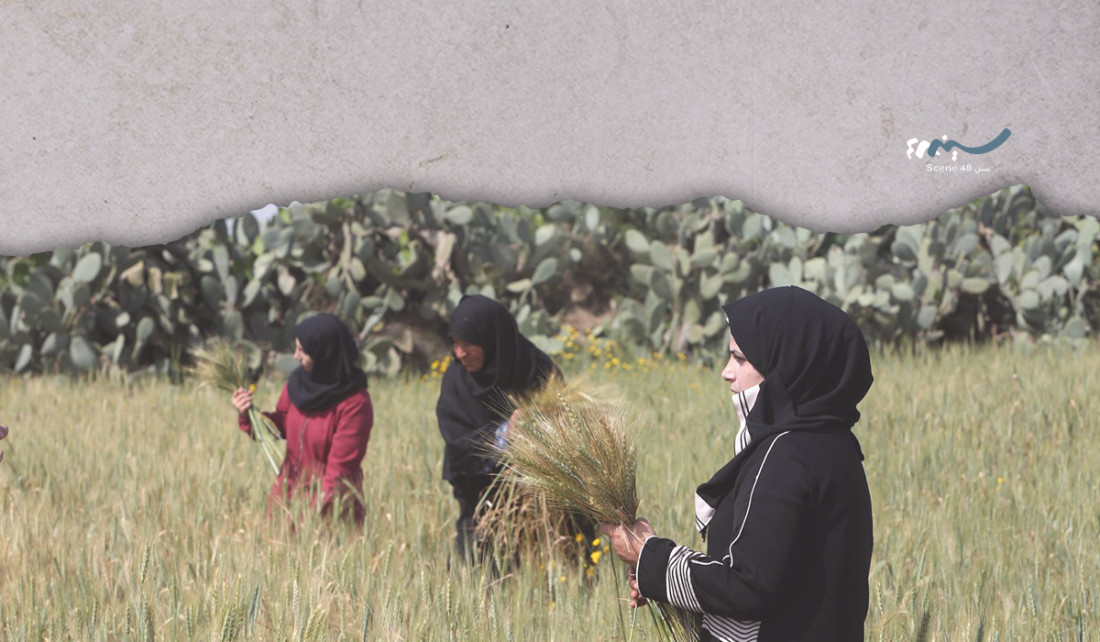
Reframing women’s political determination in Palestine requires moving beyond formal participation without abandoning the importance of formal rights. It requires recognizing that political agency often unfolds outside formal institutions and beyond the metrics typically used to measure it. Palestinian women’s determination is not confined to parliamentary seats or policy processes; it is embedded in everyday practices of economic activity, community organization, resistance, care, and the negotiation of social and material life.
Palestinian Bedouin communities offer one illustration. Women play important roles in sustaining local economies, managing resources, and maintaining community life under conditions of displacement and marginalization. Much of this labor remains invisible in conventional measures of political participation. Yet economic activity can increase women’s influence over household and community decisions, allowing them to share collective priorities and resource distribution. Recognizing this does not mean romanticizing informal work or women’s resilience; it means taking seriously forms of agency that conventional frameworks overlook while challenging the structures that constrain them.
Determination therefore cannot be reduced to whether women have a seat at the table. Formal representation matters, but so does the capacity to influence decisions and the conditions that make participation possible. Quotas may increase women’s presence without guaranteeing influence; legal rights may establish equality in principle without overcoming the material conditions required to exercise them.
Ultimately, reclaiming the “right to decide” in the Palestinian context requires a broader understanding of self-determination, one that connects collective political freedom to the material and social conditions through which individual agency is exercised. It also requires feminism and law to become more attentive to context, power, and the knowledge produced by those whose lives they seek to transform. The question is therefore not simply how Palestinian women can be included in existing structures, but how those structures must be reimagined, and who gets to define that reimagination. In contexts where sovereignty is constrained and political space is fragmented, determination cannot be measured solely by presence and influence within formal institutions; it must also be understood through the capacity to navigate, resist, and reshape the conditions of life itself.
Whose determination counts? In Palestine, the answer cannot be found in policy frameworks alone. It must be sought in the lived experiences of women who continue to decide, lead, and shape their communities, and in their right not only to participate in political futures, but to help define what those futures, and meaningful political agency within them, should look like.
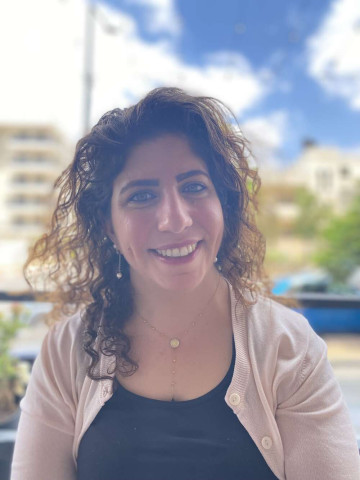
Tamara Tamimi
A Palestinian from Jerusalem. She holds an MA in Human Rights Law from SOAS, University of London, and is completing a PhD at Queen’s University Belfast on international law and the Palestine question. Tamimi has extensive experience in project management, research, communications, political economy analysis, and advocacy across fields including education, contemporary art, gender equality, youth empowerment, governance, and human rights. Her work has been published in peer-reviewed journals and platforms such as including Development in Practice, E-International Relations, Al-Shabaka- Palestinian Policy Network, and Confluences Méditerranée.
Related Articles