The Tale of Stars: The Dream of the Rural Cinema Association in Palestine
“Nothing is harder on the soul than the smell of dreams while they're evaporatingMy freedom is to be what they don’t want me to be.”
— Mahmood Darwish
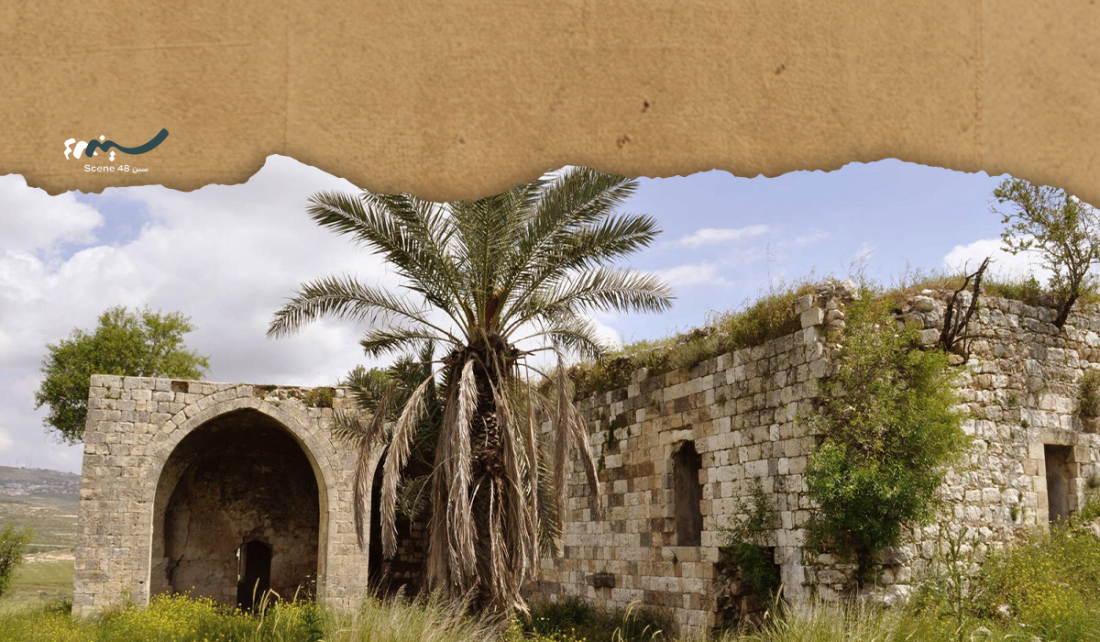
The Rural Cinema Association was founded in 2012 by Awad Hamad as a youth initiative in Ramin village near Tulkarem, as the first Palestinian educational center for cinema in rural areas. More specifically, they followed their passion and eagerness to restore a historic grain mill called Baboor Al Beik on the outskirts of Ramin, in the plain, to serve as the first rural cinema and astronomical observatory station in Palestine. The story began when Awad and his friends were commuting and rediscovering the Ramin valley plain during the COVID lockdown in 2020. They realized how important the agricultural land of the plain was. The calm and absence of urban light at night, except for the stars, can contribute to reclaiming the lost, colonized history, wealth, and sovereignty of Palestine. To enable the younger generation to tell their own stories and the story of Palestine, the project offers a platform for expression through art, cinema, music, and storytelling.
According to an interview with Awad, the idea of restoring Baboor Al Beik was a dream that Riwaq surprisingly believed in. “It was in early 2021 when I sent an email about the idea to Riwaq and, surprisingly, got a quick reply asking for a site visit. In the springtime, Riwaq made its first visit to the site. We worked with Riwaq to restore this grain mill, which is connected to food production and Palestinian sovereignty under occupation, as a sustainable center for cinema, astronomy, and rural education. It was meant to be part of an environmental route that challenges the fragmentation of Palestine, and we wanted to benefit from the valley plain’s calm and darkness to observe the stars and their meanings.” In the dynamics that followed the start of the post-Oslo era, the general direction taken by the Palestinian Authority, and to some extent by the community, neglected land, agriculture, and rural areas in order to chase the goal of building governmental institutions for a Palestinian state, a goal that has been diminished by Israeli occupation measures.
For Riwaq, the project was unique because it reconnects the community, especially the younger generation, with the land, traditional know-how, and sovereignty that face systematic erasure and aggression from Israeli colonial measures. After documenting the historic mill and preparing the designs, drawings, 3D visualizations, presentation for the association and the owners, and tender documents in the summer of 2023, many local residents of Ramin raised concerns about the safety of teams working on site, due to the project’s classification as Area C and escalating measures from Israeli forces and settlers.
The gloom was going to happen, whether then or later. For Awad, the mourning over what remains began in October 2023, when the genocide began. “It was mid-October 2023 when the contractor started restoration work on the historic mill. I received a phone call that strangers were lurking around them. I did not take it seriously. I went to the roof where I was used to watching the stars at night, and suddenly I was shocked to see many armed Israeli settlers arrive. I did not know what to do; if I had jumped from the roof, I would not have survived. Desperately, I went down beside them and walked away quickly. It was the last time I was on the roof of the historic mill.”
That moment halted the dream. Riwaq was forced to stop the project for the safety of workers and the contractor. Later, in 2024, during a phone call with Awad, he told us that it had become almost impossible to visit the site. Armed Israeli settlers had taken over the site and the whole valley plain where villagers used to plant crops and harvest olives. The settlers surrounded the site with garden benches and a “yellow line,” the strip normally used for safety at construction sites, now used to prevent construction and rehabilitation. Over time, the confiscation of the site has become stricter. Recently, Smotrich, the Israeli Zionist minister of finance, visited the site as part of a plan to build new settlements in Tersala near Burqa Al-Masodia in Jenin governorate. Now yellow lines and other markings function as de facto colonial borders in Palestine.
With grief, Awad now looks toward Baboor Al Beik from a high hill in his village. “I look from a distance at my dream, I see it. Day after day I started to see sheep grazing around the historic mill; later I realized they belonged to Israeli settlers. Now, whenever I see sheep there, I know the settlers are present, since it is dangerous for Palestinians to herd sheep there. My problem now is with the sheep; they have become a sign of loss rather than the prosperity and wealth they once symbolized in my village. At least I can still observe my star, the historic mill, but I am afraid the settlers will place caravans or tents in front of the mill and block my view. Nevertheless, I will keep my project alive in other ways.”
The project remains a dream out of reach, though there is hope it may become reality. In Palestine, loss is daily, even of dreams, stars, and the right to exist. What brings hope and joy, like a valley plain and grazing sheep, sometimes becomes a scar on our souls, reminding us that we do not have the luxury of building dreams. Yet dreams still live in our souls. This is Riwaq’s struggle: to work with dreams and try to turn them into reality.
Photo: Baboor Al Beik in April 2021-RIWAQ Photo Archive.
Yousef DarTaha
An architect, restorer, and researcher. He holds a bachelor’s in architecture from Birzeit University and a master’s in Built Heritage from the University of Malta. He has worked at Riwaq since 2011 and now directs its restoration unit. He co-edits the Riwaq monograph on the History of Architecture in Palestine and has trained in stone conservation and archival preservation with ICCROM, the Arab Image Foundation, Getty, and MEPPI.
Related Articles