The War Has Ceased, yet the Tragedy Endures
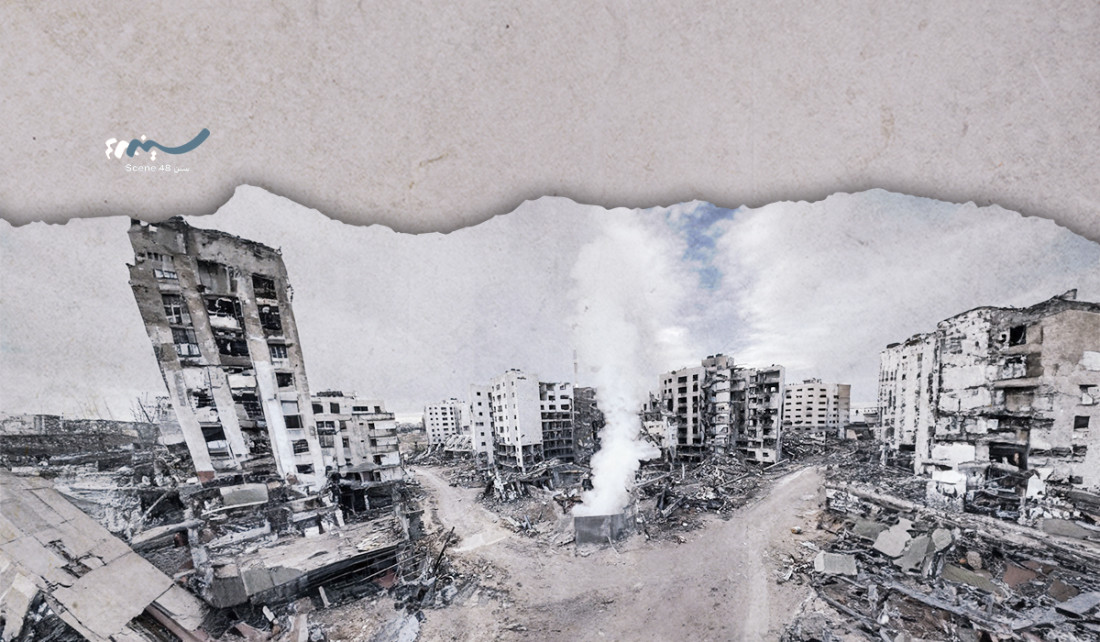
More than two years have passed since Israel’s genocidal war on Gaza began in October 2023, killing and wounding tens of thousands, not sparing medical workers or journalists, and deliberately targeting writers, intellectuals, and artists. Among the first martyrs of this war was the author Omar Fares Abu Shawish. Over 200 archaeological and historical sites were destroyed; most of Gaza’s libraries were wiped out, erasing its intellectual and cultural memory much as Baghdad’s libraries burned under the Mongols. Eighty percent of Gaza’s landmarks were erased, entire areas vanished from Rafah, Beit Lahiya, Beit Hanoun, and the eastern districts; families obliterated, neighborhoods erased.[1]
The war has stopped, yet I sit gathering the messages between me and my daughter, who remains trapped in Gaza, waiting endlessly for the crossing to open. The war burned through our hearts, we are struggling to realize what has happened. Every night brings nightmares and dread. My brother is still missing; we couldn’t find him among the prisoners nor the dead. My surviving relatives search beneath the rubble of our family home in Beit Lahiya, where more than 200 people were killed in one strike. International agencies are still “investigating” with no results.
Feelings are tangled between those who returned to find their homes leveled and those who found only a single surviving room. There is no infrastructure, no water, no electricity: nothing to live on. Mountains of waste threaten an environmental disaster, disease spreads with no known cause, and Israel opens sewage channels to drown what remains of Gaza and its people and opens fire on civilians. Even during the ceasefire, hundreds were killed by Israeli gunfire, while mediators continued their hollow talk about “a stable truce.” Stability has become a corpse; fragility consumes the wounded and the sick.
No reconstruction conference has yet been held, no money has reached Gaza to begin rebuilding, and the first phase of the so-called agreement has not even been completed. Fear grows that Gazans will be displaced once again if these inhuman conditions persist.
The war stopped, but without a future. Aid trickles in drop by drop, never enough. The bodies of thousands of missing people are still unreturned. Israel delays even the first phase until it retrieves the last of its own corpses, while the world says nothing of ours. What bodies do return come charred or disfigured, a reflection of our own mutilated existence.
A few bulldozers race against time to clear roads, but that cannot clear despair. There are no hospitals, no toilets in the city. Some families have returned quietly, pitching tents on the ruins of their homes, waiting for reconstruction that crawls at a turtle’s pace. Gaza needs time to heal, to remove the rubble, but none of this appears in the media stories that speak as if life has returned to normal.
Our people alone remain wounded and defeated. No one tells them the truth, nor tells of the truth about them. Global protests once reached their peak against the genocide in Gaza, yet the ceasefire drained their fire. In Gaza, the fire never stopped. Israel keeps shelling and sniping, having retrieved its captives and corpses but has not withdrawn, has not ended the siege, by land, sea, or air. Gazans breathe just enough to survive the massacres, while “individual assassinations” continue quietly, normalized as if partial killing is an acceptable price for halting total slaughter.
Those returning are stunned: some expected rubble and found it; others expected a home and found nothing. No one can predict war’s outcome. Families mourn their martyrs and celebrate their freed prisoners in the same breath. Politicians rush to television screens to explain the inexplicable, while Gazans rush toward aid trucks, unmoved by all the empty noise. They faced their fate alone. Voices of solidarity faded as soon as Trump announced the war over. The world returned to its life, indifferent to the cries after the fire. Hiroshima needed eighty years to recover; how many will Gaza need, having been struck five times harder?
Outside Gaza, people wait anxiously to return to ruins they have not yet seen; inside, many dream of leaving for life elsewhere. Everywhere in the Strop, people live with the diseases of war. Students lost their classrooms, researchers, their universities, and libraries. They barely find space to set up a tent. Fishermen have not returned to the sea. The birds no longer migrate to the fields. There are no berries in Beit Lahiya, no figs in Beit Hanoun, no olives in ‘Abasan, and al-Mawasi is not for leisure anymore. Life itself has left Gaza.
The old city has lost its soul: Sibaat al-‘Alami[2] has collapsed into dust; the Great ‘Omari Mosque no longer calls the faithful to prayer; St. Porphyrius Church has become a mourning hall after twenty-two of our Christian brothers and sisters were killed; the historic Brown Bath[3] is now earth. Our old photos from the ancient Kodak shop blew away with the bombs. The tailor who kept the city’s memory died, the antique dealer perished, manuscripts lost their ink. The Dome of Happiness became the Dome of Grief, and the Pasha’s Palace, which once withstood Napoleon, collapsed before this barbaric war. It is as if history itself is departing without seeking permission.
The war on Gaza has stopped, and now begins the time for mourning every memory. Mourning houses open; the case is closed against “unknown perpetrators.” There will be no international trial, no justice. Palestinians, shamelessly divided, carry on as if nothing happened, leaving the door open for Western plans to govern Gaza, to penetrate it through new forms of occupation. And while chasing two rabbits, Gaza and the West Bank are both lost.
[1] According to reports from the Palestinian Ministry of Culture, the Journalists’ Syndicate, and the League of Arab Historians.
[2] A historic house from the 17th century, also known as Bayt al-‘Alami.
[3] A hammaam from the Ottoman period known locally as Hammaam al- Sammara.
Hosam Abo Nasser
A Palestinian writer and historian.
Related Articles