Adel Tartir’s Emancipatory Theatrical Compass
“Theater, with all its diverse stages, must always be a space for debate and self-critique, a realm that takes the side of the oppressed, a compass pointing toward liberation and emancipation, and a beacon of hope. Whenever the burdens of the theater and theater-artists accumulate, and their hopes fade and their dreams scatter, we must all know with certainty, as a culture, as a society, and as a cause, that we are not well.”
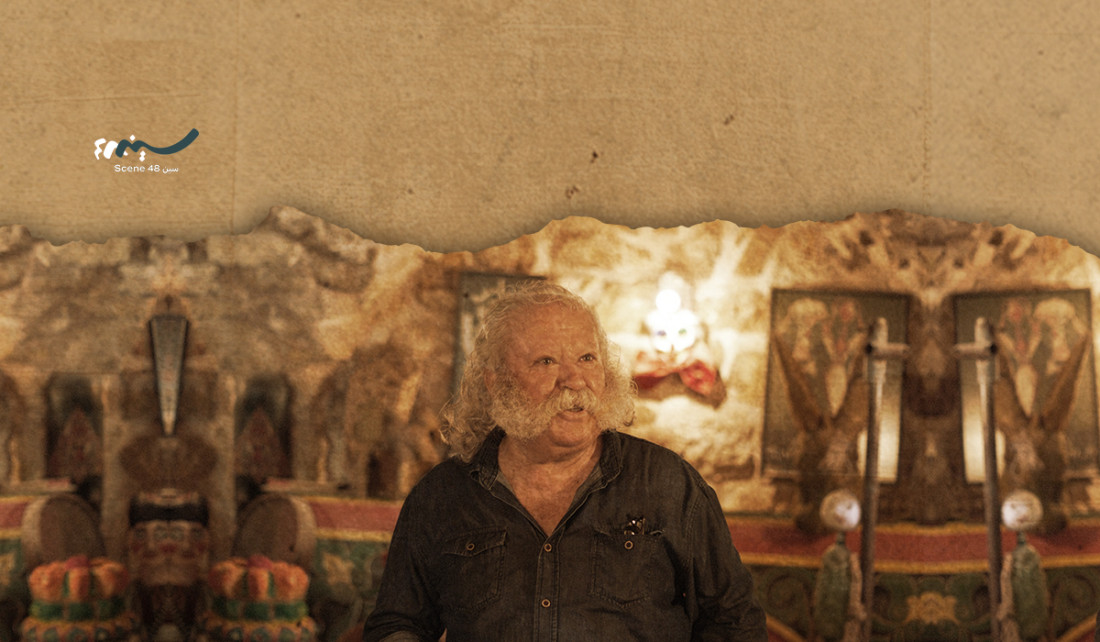
These are the words of Adel Tartir, the theatrical artist, storyteller, guardian of the Wonderbox/Sandouq El-‘Ajab, and the father of the Palestinian theater, who passed away in Ramallah on 10 July 2025.
These words encapsulate the essence of his theatrical philosophy, and illustrate his spirit of resistance and the role he envisaged for theater in liberation. He said repeatedly, “we don't just live theater; we breathe it,” and he always argued that theater is foremost “a space, stage, and arena for confession, revelation, provocation, debate, and creative confrontation.” In his last act on his deathbed, he reminded me that, “our life is theater, and theater is our life.”
He did not only conceptualize all of this and carried ideals and values, but he lived them, practiced them, was principally led by them, and never compromised on them. He was committed to theater’s purity and mission. He was determined to preserve the clarity of the strategic direction of his theater. And he was adamant that the production and creation of any genuine theatrical work is essentially an act of resistance.
He maintained that true theater is an endless act of giving, and genuine theatrical production is not about scenography, stage décor, sponsors, or appearing “Western” to donors to claim “modernity.”
On every Theater Day on 27 March, he practiced his annual rituals, and re-committed to continue shaping the collective vision of the theater he aspired to create. On that day, he consistently called on fellow theater artists to unite in creating a theater capable of giving, enduring, and sustaining; a truthful theater that elevates passion and hope.
He persistently argued for a collective, progressive theatrical vision, one resisting all forms of oppression and injustice. He stubbornly, and over the decades, called to gather and lay the foundation, or at least to dream, of a theater that “embraces us all; a theatrical body representing us, voicing our concerns, and fulfilling our aspirations and ambitions.”
He passionately advocated for a genuine, pure, and sincere theatrical movement organically linked to the ethos of theater as life itself, and to the boundless creativity that resists all forms of oppression and walks the path of liberation and emancipation. Through his work, he transformed theater into a space of collective reflection and defiance, giving voice to the silenced and dignity to the dispossessed.
In essence, this was Adel Tartir and the values, principles, and philosophy he represented. For more than half a century, Adel Tartir devoted his life to the theater, set the foundation for the contemporary Palestinian theater movement, and carried these principles throughout his theatrical journey from Al-Saqifa Theatre to Balaleen Troupe, and since 1975 to the Sandouq El-‘Ajab Theatre, and playing an enlightening, mobilizing, educational, and liberating role; the very role he envisaged for theater.
In the early 1990s, with the major political changes and transformation, he was pushed and forced to innovate further, and he began a journey and a new phase with Sandouq El-‘Ajab, focusing on the seeds of the future: children.
Over thirty years, he never ceased experimenting and continuously developing this theatrical form, and he designed, produced, and developed twelve Sandouq El-‘Ajabs (Wonderboxes) of varying sizes, shapes, and mechanisms, celebrating and telling the Palestinian story. He guarded Palestinian storytelling and cultural heritage, honoring one of the Arab world’s great storytellers.
Those intricate, handcrafted wonderboxes brought to life tales of identity, cultural memory, justice, and resistance. These diverse creations of the Sandouq El-‘Ajab are the fruit of persistence, a living expression of resilience and continuity, and a comprehensive theatrical expression that aimed at resisting and opposing all attempts to strip theater of its pioneering, enlightening, provocative, and liberating role.
The captivating universe of Adel Tartir and his signature creation the Sandouq El-‘Ajab always invited us to tell the Palestinian narrative and story; imagine, remember, narrate, create.
Hikayat Adel: The Theatrical Journey of Adel Tartir, is a short documentary film documenting key milestones in the theatrical journey of Adel Tartir. Directed and filmed by: Nawal Abu Zeid (2022). Watch here: adeltartir.com/film/
Hikayat Abu El-Ajab, Al Jazeera Documentary, 2018. Watch here: www.youtube.com/watch?v=POKle71aQtA&t=100s
Sandouq Elajab - Adel Tartir, YPlus. Watch here: www.youtube.com/watch?v=WAaV2nrH5WM
Archival Collection of renowned theater artist Adel Tartir, The Palestinian Museum Digital Archive. Watch here: www.facebook.com/reel/3162714250706764
The Tribute Exhibition (A Journey through the Worlds of the Wonderbox), a video report by Nadeen Bayadi Photography, 2025. Watch here: www.facebook.com/reel/1485640735945937
Adel Tartir’s official website launched in July 2025, www.Adeltatir.com
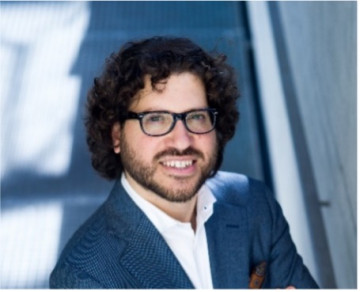
Dr. Alaa Tartir
Son of Palestinian theater artist Adel Tartir, is an academic researcher, lecturer, program advisor to Al-Shabaka: The Palestinian Policy Network, and co-chair of the Board of Trustees of the Arab Reform Initiative. His publications are at www.alaatartir.com. Interested in Palestinian theater and children's stories, he is documenting his father’s theatrical biography, and authored the acclaimed children's book The Sunbird's Nest.
Related Articles