The Whip of Algorithms; Yet a Window of Hope
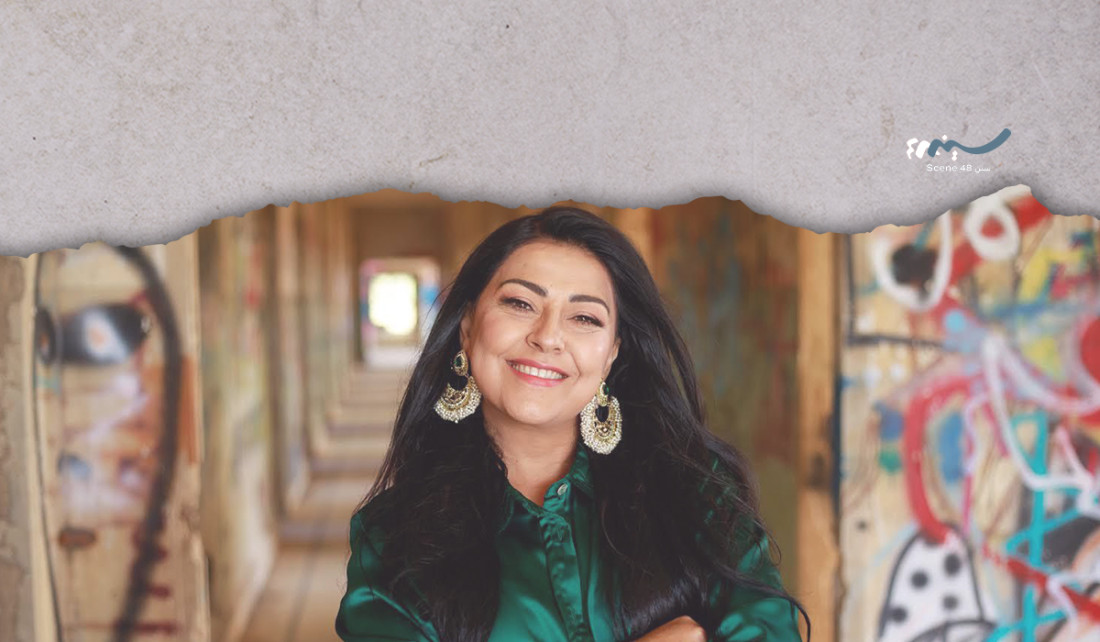
The unique position of Palestinian artists in the digital space takes on exceptional dimensions. Their encounter with technology is not limited to the challenges of the art world’s “platformization” and the dictates of the “Influencer Creep”— term coined by researcher Sophie Bishop (2025) — since these are challenges faced by every contemporary artist, where this system forces the creator to act as an influencer who showcases their personal traits at the expense of their serious artistic message. But in the Palestinian context, this transforms into a struggle and confrontation against a sharp power imbalance and structural algorithmic surveillance, which researcher Sarah Al-Sawah (2024) refers to as “digital apartheid.” While Gaza’s artists live in a “world of algorithmic death,” where their Palestinian bodies are transformed into data in a military laboratory (Fathallah, 2026) and traded on global arms markets, Palestinian artists within Israel, Israeli citizens, face another form of siege. I cannot compare it to the hardships endured by Gazans, yet it is no less complex. They face a “quadruple siege”: an Israeli audience that is hostile or indifferent; an Arab audience that doubts their national “purity”; a condescending Western market that relegates them to the fringes of “world music”; and their own local community, which sometimes exercises social censorship that is no less harsh. This is what the artist Amal Murkus confirms in the interview: “According to a Palestinian, the owner of a production company in the U.S. and an expert in digital marketing, I have to overcome four types of barriers: First, the seven million Israelis; then the Arab world; followed by the barriers of Western culture and art that ignore us; and finally, restrictions from conservative forces within our own community. In other words, there are many barriers we must overcome before algorithms can even see us.”
In an era where artificial intelligence is evolving to reshape social and cultural processes and raise complex questions about the protection of human rights in the digital sphere, social media is no longer merely a window to fame; it has become an indispensable infrastructure for professional survival. These structures subject artists to the “influencer creep,” that is, the necessity of acting according to the rules of influencers, which are dictated by self-promotion and performances that play on emotional strings. As Amal says: “I’ve been pressured to spend more time on social media, sharing my garden, my life, and revealing personal details, and that doesn’t suit me. I’m a person who values my privacy and respects the privacy of others.” Against this backdrop, the experience of Palestinian artist Amal Murkus stands out as a unique example. She is an artist from the inside, with more than four decades of experience in singing, journalism, and media, combining a keen critical awareness of the mechanisms of the new market with a commitment to an independent artistic identity. Amal adds: “I felt compelled to be on social media... survival of the fittest,” but she also notes: “Social media is a double-edged sword.” This artist navigates the tension between the digital world’s demands for “transparency,”, which often entails revealing private details, and her commitment to her dignity and identity, a dynamic I will analyze through three conceptual lenses: digital Orientalism, the political economy of algorithms, and lexical resistance.
Digital Orientalism: “The Algorithm Doesn’t Understand Me”
Amal Murkus suffers from “digital Orientalism,” a Western-biased algorithmic perspective that classifies Arabs as suspicious “others” in need of surveillance, rather than as agents with rights. But in Amal’s case, it is a double digital Orientalism: first, because of the Arabic language, which the algorithm does not deeply understand; and second, because of her geographical location (al-Dakhil, Arabic for the “Inside Israel”), which is automatically classified within political contexts that neither care about nor reflect the artistic content. Major tech companies have not invested enough to develop AI models that deeply understand Arabic and its dialects. This leads to extensive erroneous deletion of non-offensive Arabic content at a rate 70% higher than for other languages, as confirmed by leaked documents from Meta; while it fails to detect hate speech in Hebrew due to the “absence of a Hebrew classifier” (2022 Report, BSR). This is according to figures from the “Hamla” Center, which has documented thousands of violations against Palestinian content, while Hebrew-language incitement goes unchecked. Arabic content thus suffers from “over-enforcement,” while Hebrew content suffers from “under-enforcement.”
This compounds Amal’s suffering due to her location within the Green Line. She says: “When I show that my location is in Israel, even if I haven’t posted anything, it shows that... and even if I write ‘Kfar Yassif,’ (A Palestinian town inside Israel), the location appears as Israel, so this might cause additional blocking and a lack of understanding.” The algorithm treats “location” as a decisive classificatory variable without any consideration for cultural or artistic context. The Palestinian artist from within is automatically classified as part of the Israeli sphere, and this positioning places her between the hammer of Zionist discrimination and the anvil of being an “insider.” This reality constitutes “digital Orientalism” that perpetuates a three-dimensional marginalization without any possibility of challenge or clarification. As Amal explains: “I want people to understand where I’m from, and I want them to know the circumstances we’re living in.” Amal’s identity is not merely a label, but an arena where algorithms, audiences, and politics clash. Yet, despite all this, she defies the circumstances and continues to sing.
Influencer Creep: The Hidden Cost of Digital Presence
Amal Murkus’s predicament transcends geographical boundaries and colonial labels to collide with the internal mechanisms of domination that digital capitalism imposes on the creator’s consciousness and tools of production. This distortion is evident in the sociological concept formulated by Sophie Bishop (2025) titled “Influencer creep” which analyzes how the behaviors of entertainment and marketing content creators have become mandatory conditions for survival and strict rules that professional artists must adhere to in order to maintain their digital presence. Artistic figures are no longer required to produce works of art that carry only authentic intellectual or Aesthetic value. Artists are now required to transform themselves into commodities on display in the marketplace of platforms, to constantly adapt their creative output to satisfy the language of the machine, to feign spontaneity in front of the camera in order to attract followers, and to reveal their intimate behind-the-scenes moments to satisfy the algorithm’s appetite.
Amal’s testimony encapsulates this existential conflict between the logic of serious art and that of consumerist spectacle. She reveals with sincere candor: “We’re now expected to post all the time, and to stream from the studio while we’re rehearsing... This makes me feel constantly pressured and hounded, as if I’ve become a content creator forced to sell my daily life, not just my art.” This admission serves as a condemnation of the “platformization” process, which strips creative work of its quiet, contemplative rituals and reduces it to “consumables” to be rapidly fed into the machine’s algorithms. The obligation to produce an immediate stream of content clashes fundamentally with the nature of the artistic act, which requires patience, inner contemplation, and a long period of time for aesthetic maturation.
This equation takes on a more serious dimension when applied to the artist’s position within the Green Line. While global platforms push Amal and her peers toward self-exposure to secure a certificate of visual visibility, this very transparency is monitored by cyber-surveillance systems and colonial digital entities, which often interpret it as “suspicious data” warranting censorship, labeling, and persecution. We are thus faced with a sharp “existential schism”: the artist must lay bare the innermost recesses of her life to earn the right to virtual visibility, while these worlds are erased and suppressed by the very “erasure algorithms” that fear her human energy and her roots deeply embedded in the soil of her homeland.
The Political Economy of Algorithms: When Money Determines the Architecture of the Algorithm
The challenge Amal faces goes beyond the machine’s geographical manipulation or linguistic blindness to collide with the financial and utilitarian structure that drives the very wheels of the algorithms themselves. Algorithms do not operate in a neutral space; rather, they are digital tools designed to serve commercial interests and large capitalist corporations, where money becomes the sole means of obtaining visibility and monopolizing the public sphere through advertising funding and the injection of paid promotion.
Amal describes this reality in no uncertain terms: “There’s a massive, comprehensive system in the Arab world that employs young men and women whose job is to promote artists nonstop... You wake up and see Kazem Al-Saher, Asala, or Saint Levant right in your face... This is because a big company is pouring a lot of money into it... whoever pays is the one who drives the algorithm.” Amid this monopoly, she raises a fundamental question: “As Amal Murkus, a Palestinian artist from within, can I stand up to Rotana? Can I stand up to Universal?” She answers with the voice of imposed powerlessness: No. The independent artist, especially a Palestinian living under siege, lacks the financial resources and cash flow needed to operate the algorithm and steer it in their favor. This makes the competition unequal. The battle is not about the quality of the artistic product or the uniqueness of talent, but rather about the ability to finance promotion and hire teams of videographers, editors, and marketers to build visual content that satisfies the platforms’ algorithms, and these burdens are compounded for independent creators who lack a production network to protect them.
Amal draws attention to an economic paradox created by the culture of contemporary digital streaming. While a user’s click on platforms like “Spotify” now generates profits, creators have been stripped of the proceeds from their direct output. Amal explains this decline: “Before, when we sold an album, we got the full amount... Now you get a tiny percentage of the profits, while they take the lion’s share”. This traps the independent artist in a cycle of systematic loss across all stages of the industry, from production costs, through distribution mechanisms and algorithmic promotion, all the way to the unfair deduction of their share of the profits.
Lexical Resistance: A Modern Form of Resilience
Despite this four-pronged algorithmic siege, Amal does not give up. Rather, she chooses, in the face of structural oppression, to take matters into her own hands by activating “algorithmic agency” through the creative use of language and symbols. She says that the use of symbols has been very helpful in overcoming the obstacles posed by algorithms, and declares: “We find ways to confront them.” This testimony is a direct application of “Lexical Algorithmic Resistance” (LAR) and the use of “Algospeak” or cultural coding, such as using the watermelon symbol or inserting Latin letters or digital symbols to replace characters in Arabic text. In this way, the artist is able to “circumvent” the mechanisms of surveillance and classification, ensuring her visibility and the dissemination of her Palestinian narrative.
With determination and insight, Amal Murkus chooses a third path, cutting off all avenues of retreat. It is neither withdrawal nor surrender, but pure resistance through a steadfast adherence to identity and human dignity. She sums up this existential struggle with a sincere statement imbued with profound moral weight: “I am in a constant battle; I will not lose myself.” This choice entails a steep cost and tangible consequences: a decline in digital reach, a drop in viewership numbers, and even the loss of commercial opportunities in the consumer platform market. Yet at its core, it represents a genuine existential victory, for through this withdrawal, Amal preserves her authenticity, toward herself, her audience, and her artistic mission that spans decades. She reminds us, just as Gaza’s artists do from the heart of genocide, that art, in its existential essence, has always been an act of resistance in the face of oppression, and that visibility and presence, in a colonized world where its “masters” seek to hide Palestinians and erase their traces, are survival itself, and an authentic modern form of contemporary resilience.
In the context of this existential confrontation between presence and submission, Amal Murkus stands as a witness to the fact that self-awareness is the most enduring weapon. She embodies a model of a creative artist who refuses to be positioned as a mere deaf data point within a consumerist technological machine, and insists on conscious participation in this space as a voice, an identity, and a rooted presence that defies the algorithms of erasure. There is nothing more beautiful than to conclude with, as she puts it with her own simple yet profound words: “I know what I want, and I know what I want to convey.”
Primary Sources
Nimer-Zaatry, Howaida. (2026). An in-depth and exclusive interview with artist Amal Murkus. Unpublished fieldwork, Nazareth.
References in Arabic
حملة – المركز العربيّ لتطوير الإعلام الاجتماعيّ (2 سبتمبر، 2025). دور "ميتا" في تضخيم المحتوى الضارّ أثناء الإبادة الجماعيّة في غزّة. تقرير حقوقيّ، حيفا.
حملة – المركز العربيّ لتطوير الإعلام الاجتماعيّ، (18 فبراير، 2026). هاشتاغ فلسطين 2025: القمع الرقميّ كمنظومة تُدار بالقانون والضغط السياسيّ والخوارزميّات. تقرير سنويّ، حيفا.
Other References
Bishop, S. (2025). Influencer creep: How artists strategically navigate the platformization of art worlds. New Media & Society, 27(4), 2109–2126. https://doi.org/10.1177/14614448231206090
Elswah, M. (2024). Does AI understand Arabic? Evaluating the politics behind the algorithmic Arabic content moderation (Carr Center Discussion Paper Series, 2024-01). Carr Center for Human Rights Policy, Harvard Kennedy School.
Farag, T., Primig, F., & Badr, H. (2026). Algorithmic censorship, power, and resistance in the Arab region: A case study of pro-Palestinian content. Communication, Culture and Critique, 19(1), 74–91. https://doi.org/10.1093/ccc/tcag003
Fathallah, S. (2026). Algorithmic death-world: Artificial intelligence and the case of Palestine. Public Humanities, 2, e7, 1–15. https://doi.org/10.1017/pub2025.10113
Hosny, R., & Nasef, M. A. (2025). Lexical algorithmic resistance: Tactics of deceiving Arabic content moderation algorithms on Facebook. Big Data & Society, 12(2), 1–17. https://doi.org/10.1177/20539517251318277
Matijašević, J., Bećirović Alić, M., Nikšić, J., & Mašović Muratović, I. (2026). Human Rights and Civil Law Risks of Artificial Intelligence: A Systematic Analysis of Surveillance, Algorithmic Bias, Automated Decision-Making, and Restrictions on Freedom of Expression. University of Novi Pazar.
Zajko, M. (2022). Artificial intelligence, algorithms, and social inequality: Sociological contributions to contemporary debates. Sociology Compass, 16(3), e12962. https://doi.org/10.1111/soc4.12962

Howaida Nimer-Zaatry
A Palestinian from Nazareth, engages in a wide range of artistic practices spanning several fields: music (singing, songwriting, and composition), visual art (painting), and poetic, literary, and scholarly writing.
Related Articles