Tal‘at: When Palestinian Women Went Out
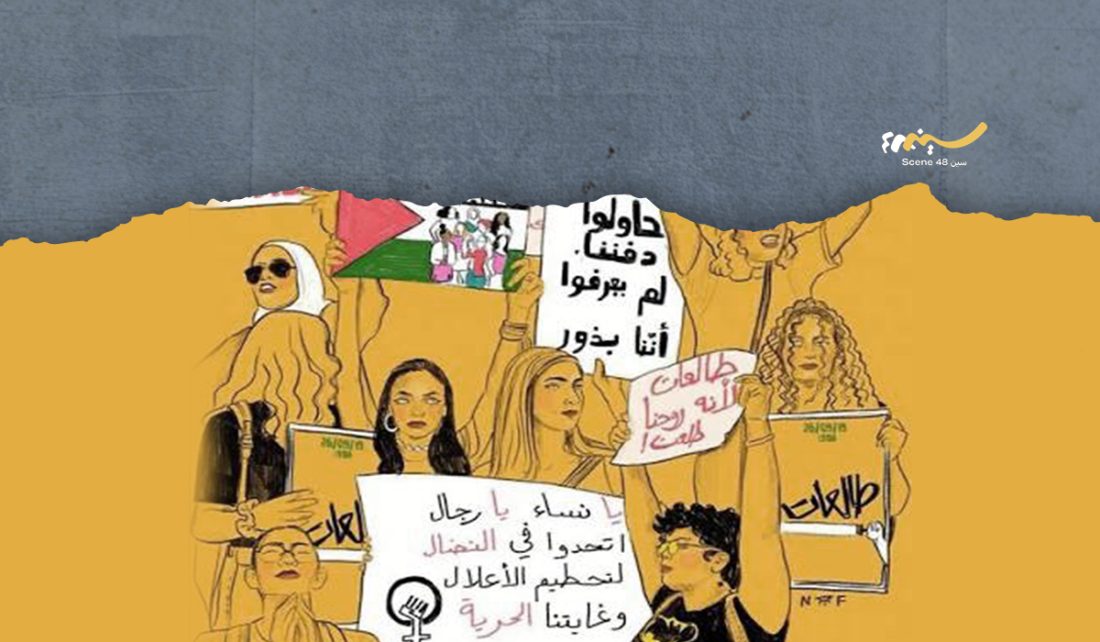
In September 2019, Palestinian women went out into the streets. From Ramallah to Haifa, Jerusalem to Gaza, and from Beirut to Berlin, they gathered under one name: Tal‘at. In Arabic, “Tal‘at” means “they (females) went out,” a simple phrase that became a declaration of movement, presence, and refusal to remain silent.
Tal‘at was never only about one woman. It became a broader feminist movement asking a much bigger question: What does liberation mean if Palestinian women are not free?
At the heart of Tal‘at was a powerful message: “There is no free homeland without free women.” The women behind the movement rejected the idea that Palestinian women’s struggles should be put on hold until the national struggle is resolved. For them, freedom from occupation and freedom from patriarchy were not separate struggles. One could not be complete without the other.
Tal‘at also created something rare: a feminist space that crossed the geographic divisions of Palestinian life. Women mobilized across historic Palestine and in the diaspora, turning streets, squares, universities, and public spaces into places of collective action. For a moment, the borders and divisions that so often separate Palestinians became less important than the shared experience of being Palestinian women.
But perhaps the most powerful part of Tal‘at was its name. Tal‘at. They went out.
They went out into streets where women are often told to be careful, to watch how they dress, where they go, and when they should return home. They went out together, visibly and unapologetically. Walking became a political act. Being seen became a political act. Taking up space became a political act.
Tal‘at was not simply a campaign against violence against women. It was an attempt to imagine a different Palestinian society, one in which women could move freely, speak freely, live without fear, and participate fully in shaping the future of their communities and their homeland.
The movement may have begun with the grief and anger over the killing of women, but it left behind something more enduring: an image of Palestinian women going out, together, and refusing to wait for their freedom.
To read more about the campaign and explore the stories, images, and conversations around it, search for the hashtag #طالعات.
Photo credit: Tal‘at.

Scene48 Editors
Related Articles