From Scheherazade to the First Lady: Women Beyond Official Power
Political decision-making has long been associated with official institutions: the palace, the government, parliament, the military, and political parties. However, the exercise of power is not always limited to those holding official positions; alongside these institutions, other spheres of influence emerge where individuals who do not hold official positions can play a role in shaping decisions or influencing decision-makers. Women are clearly present in some of these spheres, especially in contexts where their formal participation in governance has been limited. Proximity to the ruler, kinship, marriage, networks of relationships, and social and institutional work have provided various means of gaining access to circles of influence.
We can begin with Scheherazade, the central character in One Thousand and One Nights. Scheherazade does not possess direct political authority, yet she succeeds in influencing King Shahryar through storytelling, prompting him to postpone his decision to execute women night after night. As the narrative unfolds, the king’s attitude toward her and toward women changes. From this perspective, Scheherazade can be viewed as a literary model of the idea of influencing a decision-maker from outside the decision-making sphere, rather than as a historical figure who actually exercised political power.
In the history of royal courts, this idea manifests more tangibly in the Ottoman Empire, particularly during the sixteenth and seventeenth centuries. The structure of the imperial harem allowed certain women, including concubines who rose to high standing within the sultan’s household, to draw close to the seat of power and build networks of relationships and correspondence with statesmen. Names such as Khurram Sultan, Nurbanu Sultan, Safiye Sultan, and Kösem Sultan came to the fore, as some of them rose from the position of concubine to positions closer to the sultan, and then to the position of sultan’s mother, which allowed them to influence matters of succession, the upbringing of princes, and diplomacy, and in some cases, they even exercised direct authority through guardianship over minor sultans.
With the emergence of the modern state, the nature of women’s presence near the centers of power changed. As the model of the imperial harem in the Ottoman Empire came to an end, new roles for the wives of rulers emerged in modern republics and monarchies, known in some contexts as the “First Lady.” Although this title does not typically constitute a constitutional office, it has afforded some women a public presence through social, cultural, and institutional work, placing them close to state projects and the state’s public image.
Suzanne Mubarak provides a prominent example of this transformation in Egypt; her public presence was initially associated with issues related to women, children, education, and civil society, and then gradually evolved from ceremonial and social roles to roles linked to public policy and politics itself. With Gamal Mubarak’s rise within the National Democratic Party and increasing talk of his potential succession to his father, Suzanne Mubarak’s name became increasingly linked to the debate over the transfer of power.
In Syria, Asma al-Assad’s public presence took a different form; her public activities, particularly during the early years of Bashar al-Assad’s rule, were linked to issues of development, education, and civil society, and her image became part of how Syria and the regime were presented both domestically and internationally. There are numerous studies that have addressed the phenomenon of the “first lady” in the Arab world, in which Asma al-Assad, alongside Suzanne Mubarak and Queen Rania, has been mentioned and described as figures operating in a sphere that combines a social role, a public presence, and proximity to the seat of power.
As for Sheikha Moza bint Nasser of Qatar, she represents another phase in the evolution of this type of presence; her influence was not limited to her position within the ruling family but extended to institutional work and social development. She co-founded the Qatar Foundation in 1995 and served as its chair, playing a prominent role in developing projects in education, scientific research, and community development, including the Education City complex, while also expanding her activities into the fields of health and human development.
Ultimately, these examples reveal that an official position is not the only means through which power can be exercised or influence exerted. From Scheherazade, who influenced decision-makers through storytelling, to the women of the royal family who gained influence from their position within the palace, to the first lady and the royal wife who utilized public presence, social engagement, and institutional channels, the tools of influence have changed as forms of governance have evolved. Therefore, tracing these models is not so much about searching for women who “ruled from behind the scenes” as it is about understanding the ways in which women were able to gain access to and influence decision-making circles from positions where an official title was not their sole or primary source of power.
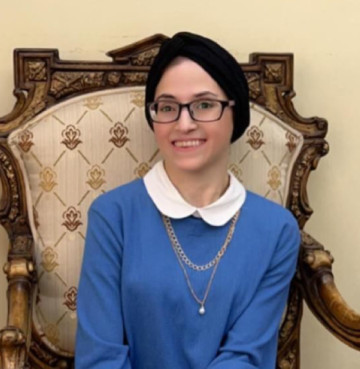
Israa Arafat
A writer and researcher from Nablus. She is a graduate of the Department of Political Science at An-Najah National University and holds a master’s degree in Political Planning and Development from the same university. She is interested in issues of thought and philosophy and writes for a number of Palestinian and Arab publications.
Related Articles