Portraying The 50%
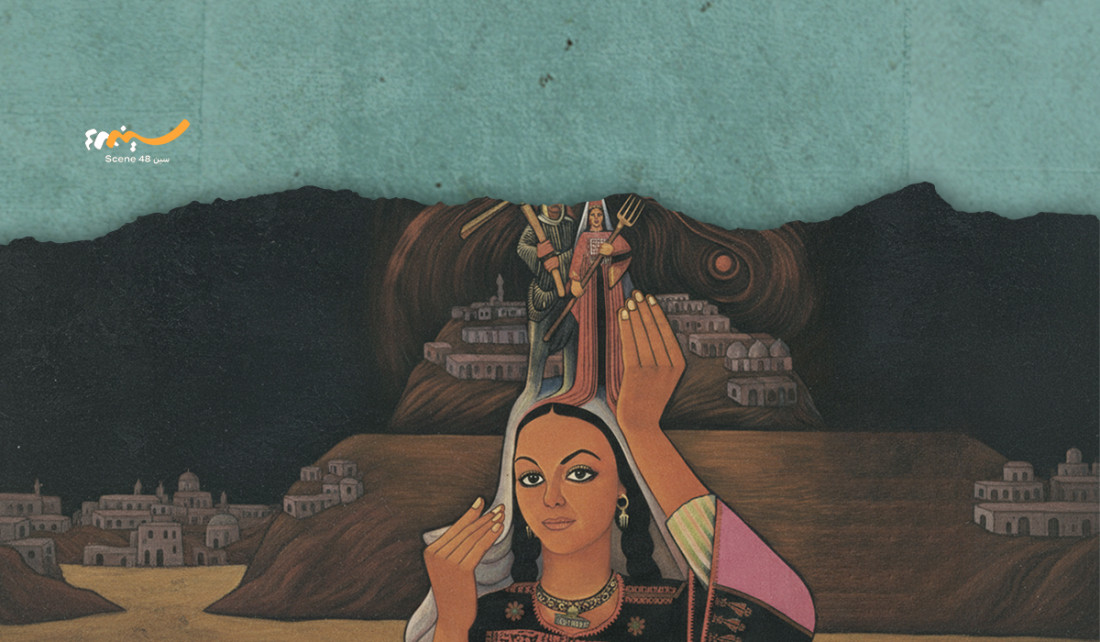
Looking at the posters more closely, I begin to realize that they are not simply artistic expressions. They are mirrors. The mirrors of my grandmother, my mother, your aunt, your sister, your wife.
They do not invent strength in women. They reveal what has always been there. The women in these posters are not frozen symbols of resistance, nor are they decorative figures placed beside the struggle. They stand in its center. They harvest, they march, they mourn, they raise children, they carry keys, they teach, they rebuild. They are not portrayed as waiting for history to move. They are the ones moving it.
Perhaps that is why the question “how do we picture this?” feels both intimate and political. To picture Palestinian women is not to imagine something extraordinary. It is to recognize something familiar. Across our society, in villages, refugee camps, and cities, women have long carried a dual presence: firm yet gentle, visible yet underestimated. They organize households with strategic precision. They sustain communities under pressure. They hold together the social fabric when everything else feels fragile. This is not dependency. This is not the borrowed language of empowerment imported from elsewhere. It is a lived authority.
The posters capture this quiet magnitude. A raised hand is not only a gesture of protest. It is the same hand that kneads dough at dawn, signs school papers, plants olive trees, and shields a child from fear. A face looking forward is not merely symbolic defiance. It is a daily decision to continue. In this way, the visual language of the posters collapses the distance between the private and the public. The home and the homeland become inseparable.
To “picture this,” then, is to shift our lens. It is to stop seeing women at the margins of the frame and begin seeing them as the gravitational force within it. They are not supporting characters in a national story, but authors of it. The posters do not exaggerate their role. They correct our vision.
Picture this: history is not only written in speeches, negotiations, or battlefields. It is written in kitchens, classrooms, fields, and community halls. It is written in patience, endurance, and everyday acts of care that become acts of resilience. When we truly picture this, we do not just see women in posters. We see the architecture of a society sustained by them.
And perhaps that is the most powerful image of all.
To view more posters, please visit: www.palestineposterproject.org
 |
|---|
Tamam Al Akhal, “For the Palestinian Women”, 1985, poster.
Source: Palestine Poster Project Archives.
 |
|---|
Marc Rudin/Jihad Mansour, “General Union of Palestinian Women (Original)”, 1980, poster.
This poster was originally published by the GUPW for its delegation to the UN's conference on the Decade of Women in 1980.
Source: Palestine Poster Project Archives.
 |
|---|
Abdel Rahman AL Muzain, “The Land”, 1979, poster, 13.5" x 20".
Source: Palestine Poster Project Archives.

Ahmed Yasin
Scene 48 Editorial Team.
مقالات متعلقة