What Does It Mean to Be a Palestinian Woman?
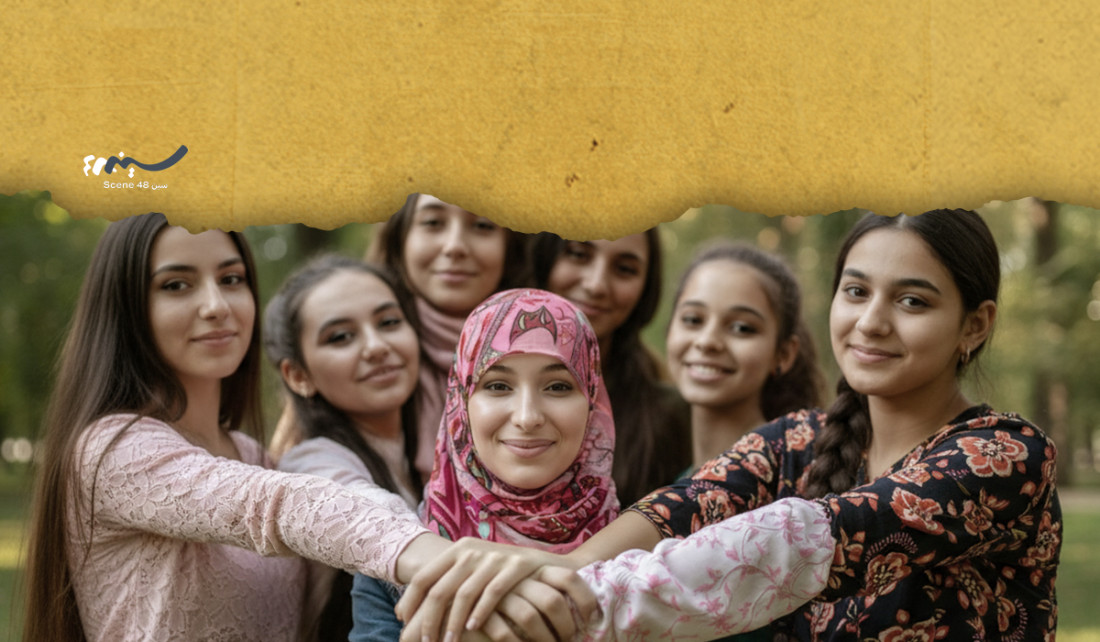
Living as a Palestinian woman in this culture means existing in today’s oppressive environment and carrying the burden of maintaining a sense of identity, culture, and dignity. For many women, the problems are real: movement restrictions, limited access to resources, and the constant need to satisfy a multitude of societal expectations. These are not abstract; they shape every decision, every opportunity, and every interaction.
Palestinian women grow up with a consciousness of the ways their individual decisions are deeply influenced by political and social circumstances. Education, professional aspirations, and community service are all situated in the context of the occupation. But all the while, Palestinian women constantly exert a measure of agency, leading at home, in the community, and in the workplace.
The resilience and engagement I bring are grounded in my personal experiences. I come from Tulkarm, a city where occupation is part of everyday life. I have long been aware of how politics influence both freedom and community life. These experiences inspired me to pursue the study of international law, not merely as an academic discipline, but as a means, I hope, to foster greater awareness of injustice, advocate for the rights of individuals, and hold institutions accountable.
As a lawyer, I advocate for rights and work to create legal frameworks that keep the marginalized shielded. A specific example of this work is my role in drafting a Family Protection Law, submitted to the appropriate authorities via the Palestinian Center for Peace and Democracy (PCPD). In this role, I take the knowledge contained within the law and bring these concerns face to face with practice in order to protect and elevate Palestinian society. I also recognize the potential contributions of professional expertise from Palestinian women to this end.
Outside the legal field, I train and mentor others. I offer workshops on civil peace, social cohesion, and human rights, along with specialized training for local elections of municipal councils. I also work within communities with youth and young people to ensure their rights are known and that they can participate in civic life and build resilience. Knowledge and action become social influence and change; these realms of learning and conversations show how Palestinian women use the tools of knowledge and action to enact change.
A key element of my professional practice has been working with youth. I have seen firsthand the struggles and dreams of Palestinian youth in these relationships. Their creativity, tenacity, and insistence on participating prove that agency develops even in constraint. Support for the participation of youth is not just a civic duty; it’s a long-term investment in the next generation of leaders and the social fabric of Palestine.
A key experience that helped shape my work in this field was attending a MENA regional workshop and meeting the UN Deputy Secretary-General for Youth, Felipe Paullier, who requested to meet me as a representative from the MENA region within the UN Youth Reference Group. During that session, I shared the fears and hopes of Palestinian youth, emphasizing how the occupation limits opportunities and restricts participation. This encounter highlighted a responsibility often expected of people representing a local community from abroad: that narratives be simplified, shared publicly, and presented as representative of all of us.
For me personally, in many ways, being a Palestinian woman also means protecting my identity as a Palestinian woman and preserving a shared heritage. Women are crucial in safeguarding memories, fostering unity, and passing on cultural values to the next generation. This responsibility extends beyond the family and community level to professional and institutional spheres, where women contribute to public policy, advocacy, and social change.
Despite ongoing political and social challenges, Palestinian women are increasingly involved in law, diplomacy, civil society, and community leadership. They question power structures, demonstrate resilience, and take an active role in shaping both international and local discussions. In my view, Palestinian women professionals bring expertise, civic engagement, and global advocacy, all rooted in a commitment to justice, rights, and youth involvement. It’s about using law, training, and leadership opportunities as tools for meaningful social change. It calls for engagement with the wider world, as well as attention to the needs and aspirations of Palestinian communities.
To be a Palestinian woman today is to take your identity and carry it into everything you do: to speak, to engage, to lead, and to persevere despite the odds. Through action, Palestinian women show their strength, influence, and potential for change.
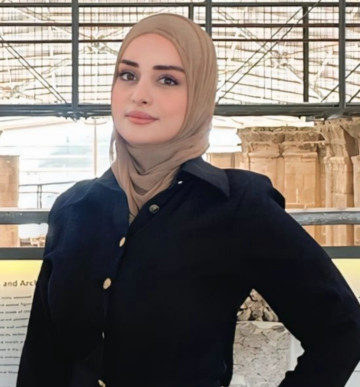
Noor Fwaz Hijazi
A Palestinian lawyer and researcher specializing in international law, diplomacy, human rights, global governance, and multilateral advocacy. She holds a Master’s in International Law and Diplomacy from Arab American University and a Bachelor of Laws from An-Najah National University. Practicing law since 2020, she focuses on legal research, analysis, and drafting memoranda in public and international law matters. A member of the UN Youth Office’s Youth Reference Group, she contributes to policy consultations on youth participation and multilateral cooperation, while advancing civil peace and social cohesion through the Palestinian Center for Peace and Democracy.
مقالات متعلقة