Palestine 4.0
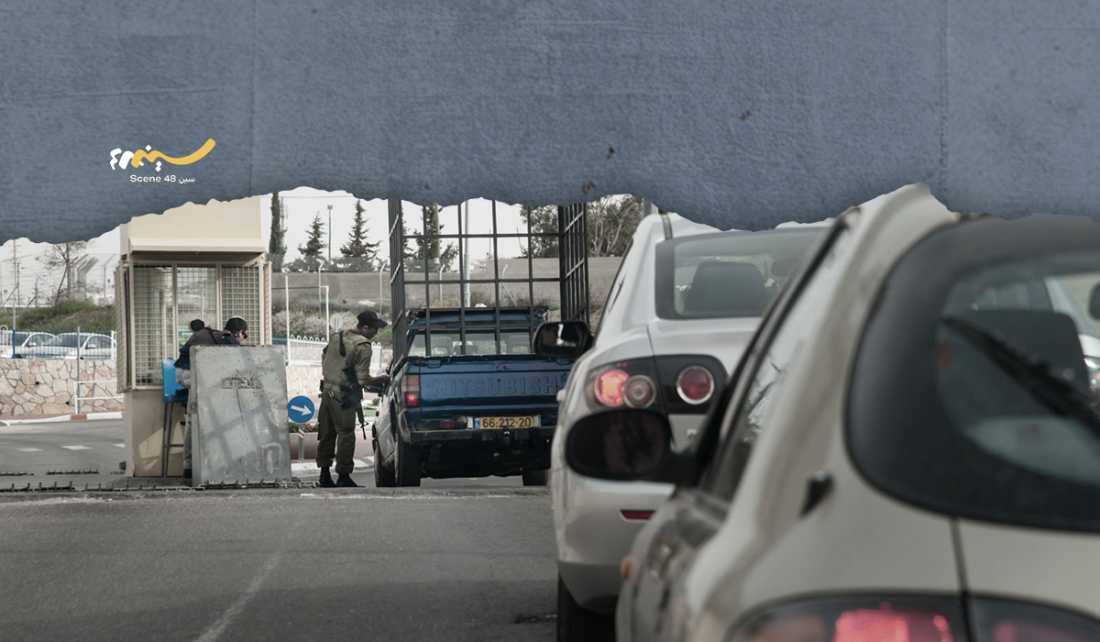
On a random spring day, I stopped at the Atara checkpoint near the town of Birzeit, waiting to be allowed to pass by a young Israeli soldier, clearly of Russian or Eastern European descent. The soldier was waving his hand for each car to come forward. Some cars he would quickly allow to pass, others he chose to inspect thoroughly. As I waited in line for my turn, my gaze focused on the green terraces lining the mountains.
All the surrounding mountains looked like they had been built by people. Over generations, our ancestors built them up. A subtle but monumental mark, and an eternal testament to our people’s continuity. I am generally proud of my heritage, and I am sure most Palestinians around me feel the same. But sometimes I ask myself, can I feel proud of my “ancestors” if I don’t know much about them? We were told that before our time, Palestine was the land of milk, honey and faith. Many nations fought over it because it was holy, something Jews, Christians and Muslims all agree on. My generation did not learn much of that history at school. All we knew of the old Palestine we heard in stories told to us by the elderly.
Our grandparents described a life that was basic and tough, yet authentic and full of meaning. They expressed their intuitive belonging through stories and songs about harvests and the sea. Their metaphors and sayings reflected the plants and animals that lived with them and around them. They also told us about the resistance of peasant families, the Fallahin, to colonial rule. In every way, they were truly indigenous. They lived and died in the land, by the land and for the land.
After the Nakba, most Palestinians became refugees. Abruptly uprooted from their land, they held tight to memories of their orchards and simple rural lives, and many believed they would one day return to Palestine. Palestine was no longer just a land. It became the name of a nation and its cause.
The second generation after the Nakba, my parents’ generation, was formed out of another loss, the Naksa of ’67. With nearly unrestricted mobility between previously separated areas, Palestinians who still lived across historical Palestine managed to maintain and grow an active and righteous civic society and a leadership that eventually led the first Intifada. Others, especially among those trapped in the shatat, accepted that the Palestine their grandparents spoke of was long lost. Many of that generation never knew the sweetness of Jaffa oranges or the growling sea at Acre. To them, the land and the sea were symbols of their shared grief and collective rights. When some sought the “State of Palestine,” they thought it was the only possible way to secure those rights.
With Oslo, the land, once the center of the cause, was gradually reduced to a bargaining chip in pursuit of a state. My generation, the third after the Nakba, went through extreme fluctuations in pursuit of statehood. After Oslo, we were divided among three territories, two of which were administratively ruled by Palestinians. Unrestricted mobility across the land was maintained at first, but it lasted only a few years until the second Intifada broke out. The Israeli crackdown against the Intifada reinstated, in a more extreme form, the separation that existed between 1948 and 1967. A large grey wall was built to segregate Palestinians in the West Bank. Gaza was surrounded by metal fences, and Palestinian citizens in Jerusalem and the rest of historic Palestine, now called Israel, were forgotten in their villages and towns, which began to resemble ghettos.
Out of the Intifada, the West allowed us a brief experience with democracy that only cemented the physical division Israel had already created and enforced during and after the second Intifada. Once Israel secured the political division it had long pursued, it allowed two different experiments in the West Bank and Gaza. In the West Bank, a neoliberal experiment was run with injections of international funding. In the market economy, land transformed from a cause into a commodity. Speculative trade in land and real estate boomed, as clever developers captured Palestinians’ yearning for a home to call their own. Land was built up into apartment buildings or cut into neat, small parcels and sold as “the home of a lifetime” to families forced to take out loans. Indebted and increasingly urbanized, Palestinians in the West Bank gradually left their lands and moved to the cities for what was sold to them as a better life. On those neglected lands, white, modular settlement houses were rapidly installed to be inhabited by Jews. Just like inside what is today called Israel, the urban concentrations where Palestinians sought refuge gradually became ghettos.
A different experiment was run in Gaza, which became one of the most densely populated places on earth. To maintain its separation from the West Bank, Gaza was occupied from the outside. Israel closely monitored and intervened when it saw fit. They called it “mowing the lawn.” The land of Gaza, deemed of less strategic importance to Israel, became “the lawn” in this experiment, an area dedicated to a specific purpose: to serve as a prison for Palestinians in Gaza.
Twenty years later, both experiments failed. Today, Palestinians are living on land that keeps shrinking. In the Gaza Strip, the “monster” that Israel had imprisoned and disciplined finally broke out. The land of Gaza has now halved the space available for the same population, one of the largest and most brutal ghettos in history. In the West Bank, Palestinians woke from a neoliberal dream to an apartheid nightmare. Daily life has become unbearable with checkpoints, gates, night raids, arrests by the Israeli army and street executions by settlers. Palestinians in Israel are fighting a different fight alone. The war has put a target on their heads. In their ghettos, many young people have fallen into despair and resorted to murderous crime. With the slow and painful death of its previous forms, Palestine transforms once more, this time into a common experience for all Palestinians living on its land: the reality of the ghetto.
By uprooting us, choking our movement and pushing us into ghettos for generations, our colonizers have gradually forced an alienation from the land upon us. Over the years, the land, the sea and the mountains appeared less and less in our songs, stories and daily life. The sounds, images, tastes and smells from our grandparents faded a little with every new generation. At the same time, our colonizers gradually, actively and systematically appropriated our authenticity. Fragments of our food, music and even lifestyle have been neatly curated and placed into a new identity. Their endgame is to make us strangers to the land, as they were, and to assume our role as the indigenous population.
As our wounds in Gaza and across the land deepen, with no end to the suffering in sight, the land has become an afterthought. Our profound loss of the land, both physically and symbolically, has already severely disrupted our language, traditional knowledge and social structures. Yet despite years of attempts to erase us, our colonizers have so far failed. Palestinians today are half the population between the river and the sea. We continue to love our homeland and feel proud of our heritage. Our shatat, along with hundreds of millions around the world, recognize our pain and our rights. Our symbols, many inherited from our grandparents, have become global icons of resistance to injustice.
With every metamorphosis, Palestine kept figments of its previous forms. The land, the nation, the cause, the revolution, the state and the ghetto now all coexist in one epistemological space. This new generation, the fourth after the Nakba, faces the challenge of using all these concepts, despite their chaos and contradictions, to weave a renewed identity and lore. While doing so, I hope they learn from our generation’s mistakes and remember our ancestors’ essence: a land cannot belong to a people, but a people can belong to a land. Only by actively belonging to our land can we reclaim our indigeneity and live in authenticity and harmony.
While I gazed into the distance, I suddenly heard the honks of the cars behind me. I looked immediately at the soldier; he was waving his hand for me to come forward. When I parked the car beside him and opened my window,
“Where are you coming from?” he said in Hebrew.
“Ramallah, going to Ajjul,” I replied in Arabic.
“OK, yalla,” he said as he waved his hand.
I drove off slowly, murmuring curse words carefully and quietly. One day, all of this will be over, I thought to myself.
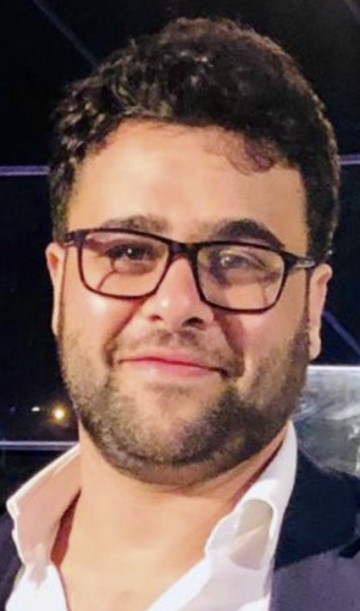
Zayne Abudaka
A co-founder and the director of research at Momentum Labs and a co-founder and CEO at Quazelle, a data collection and analysis platform. He is also a co-founder and senior fellow at the Institute for Social and Economic Progress and a co-founder of the Arabic-language media channel Masa7a.
مقالات متعلقة