Reframing Subjectivity: When Research Looks Back at the Palestinian Researcher

Objectivity, in its traditional white, Western definition, is imagined as distance: emotional, political, and personal separation between the researcher and the researched. The closer one is to the field, the logic goes, the less “reliable” the knowledge produced becomes.
The question, then, is how much logic does one need to write about the injustice faced by Palestinian women? At what point does logic exhaust itself, leaving behind not clarity but silence? There are moments when legal reasoning, statistics, and international reports fail to capture the depth and persistence of harm, when numbers flatten lives and frameworks collapse under the weight of lived reality. In those moments, what remains is personal experience, not as anecdote but as data: embodied, cumulative, and relentlessly consistent. This form of knowledge is not less reliable than statistics or world records; it is often more so, because it cannot be abstracted away from the conditions that produce it. When injustice is repetitive, normalized, and legally sanctioned, lived experience becomes the most accurate archive we have, one that records what “logic” alone cannot explain and what neutrality refuses to see.
What is conventionally framed as “observing from a distance,” a foundational demand placed on researchers, has, in my case, transformed into observing from within. As a PhD student and a Palestinian lawyer subjected to unlawful and discriminatory practices by a state that claims to grant citizenship with full and equal rights, I do not approach my field from the outside. I inhabit it. I share the same legal structure, the same conditional citizenship, and often the same forms of violence, as the women I interview. Doing research is therefore inseparable from writing about myself, though this was not immediately apparent to me.
That realization emerged unexpectedly during a university conference panel, when a question exposed what had long been present but unnamed: I was asked a question that did not require improvisation. The answer was already embedded in me. The question was simple, yet unsaid and unfamiliar: How objective can you be, given that you are one of the women you are researching? My response was equally simple: Who said I want to be objective?
This was not a rejection of rigor, nor an admission of bias. It was a refusal of a framework that mistakes distance for truth. Traditional research paradigms assume that emotional implication clouds judgment. Yet in my case, emotional implication is not incidental, it is structural. I am emotionally implicated in the cases I represent as a lawyer, just as I am implicated in the narratives I document as a researcher. This implication does not distort reality; it reveals it. The women I interview do not describe abstract injustices. They describe legal practices, bureaucratic obstacles, and institutional discrimination that I navigate myself. Our shared condition does not erase difference, but it creates a shared grammar of harm.
In colonial contexts, claims of neutrality are never innocent. Neutrality itself is political. To insist on detachment in a space marked by asymmetric power relations is to align, often unconsciously, with the dominant structure. What does neutrality cost in colonial zones? It costs the naming of violence. It costs accountability. It costs the possibility of solidarity. When the law itself is a site of discrimination, neutrality becomes a mechanism of preservation rather than critique.
As a Palestinian lawyer, I am expected to operate within a legal system that proclaims equality while practicing differentiation. As a researcher, I am expected to translate that lived contradiction into academically acceptable language, stripped of affect. Yet affect is not surplus here, it is data. Anger, exhaustion, fear, and resilience are not personal anecdotes; they are patterned responses to systemic conditions. Treating subjectivity as contamination erases precisely what allows us to understand how power operates on bodies and lives.
Reframing subjectivity as exposure means acknowledging that being implicated offers a particular kind of access. It exposes the violence that normalized frameworks obscure. It reveals how laws are felt, not only how they are written. This does not mean abandoning reflexivity; it demands more of it. I am constantly interrogating my position, my assumptions, and my responsibilities. But reflexivity is not the same as self-erasure. On the contrary, it requires making one’s position visible rather than pretending it does not exist.
In settler-colonial settings, knowledge production has often relied on extracting stories from marginalized communities while maintaining the researcher’s imagined innocence. It is simply impossible for me not to reject that model. I am not outside the field; I am within it.
The refusal to separate knowledge from pain should be key in every Palestinian researcher’s life. Our work should not be written about Palestinian women as an object of study; it should be written with them. If research “unsettles,” it is because injustice is unsettling. If it is emotional, it is because violence is intimate. I do not seek the comfort of neutrality or the safety of detachment. I write from exposure, from implication, from a place where truth is not clean or distant, but urgent and alive. And if this is called subjective, then let it be known: it is subjective because it refuses erasure, because it insists on being seen, and because for us, telling the truth has never been an academic exercise, it has always been an act of survival.
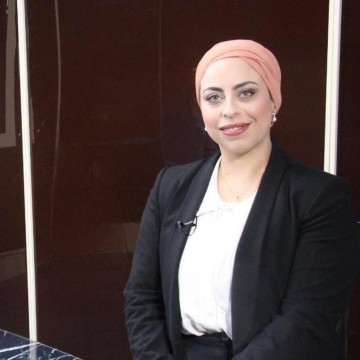
Alya Zoubi
A practicing lawyer and doctoral researcher examining how legal structures shape everyday life in Palestinian communities in Israel. Her interdisciplinary work bridges courtroom advocacy and community inquiry, focusing on representation, voice, justice, culture, and identity.
مقالات متعلقة