Beyond Victimhood
I’ve spent my life asking a simple yet complex question: Who am I? Growing up Palestinian in the United States post-9/11, the answer was never straightforward. To understand myself, I had to untangle layers of heritage, nationality, and experience; a journey that began in my childhood as a Palestinian with Israeli citizenship living in the United States. Some hard choices I faced required me to hide my identity, sometimes even denying it and burying it deep as a safety measure. As I grew older and became more confident in my identity at university, I joined many clubs that highlighted Arab culture. For culture days, many of the Arabs would bring various foods, special words, and traditional clothing, while the Palestinians … Well … We reenacted an everyday scene of a wall and checkpoints and created a scenario where a Palestinian woman came to the checkpoint in an embroidered thobe and was stopped and harassed by the Israeli military.
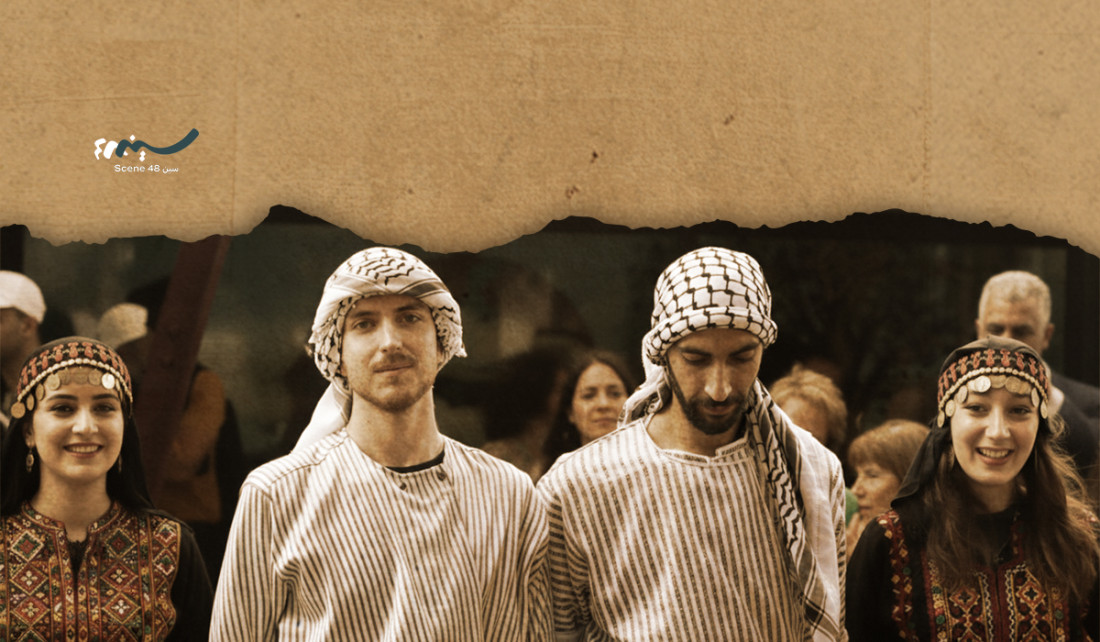
That moment sparked my critical thinking process of “why are we identifying as victims of the occupation when we have so much more richness in our culture?” Even though the occupation controls our daily lives, it should not define our identity and how we express ourselves. So, I began the initiative to have a dabke troupe. As a young man, this was my way of celebrating us. Our team was comprised of people from around the Arab world, such as Sudan, Egypt, the Levant, and even the Peninsula, to learn how to dabke as a Palestinian. We performed during Arab culture nights dabke from various regions, like Palestine, Lebanon, and even the Iraqi Chobi without any mention of the Israeli occupation. It was freeing! A way to celebrate culture rather than be defined by victimhood.
I noticed the trend of victimizing the Palestinians rising again on an international level during the Great March of Return protests in Gaza in 2018–2019. I was back in Palestine then and it was crushing to see our cultural power being stripped away, but then it happened again! I saw young children at the protests dancing dabke in front of the thick smoke of the tires burning and I saw it as an act of non-violent resistance by inter-generational culture preservation.
The victimization trend continued internationally throughout the May 2021 protests against the injustice imposed on us by the Israeli system and continued throughout the genocide and man-made starvation of Gaza post-October 7th, 2023. An influencer by the name of @2jomaa shared, via Instagram, that Gaza is not starving because it is poor; Gaza is being starved by the occupation due to capital punishment. He shared the statement with a picture of him at the distribution center in a full suit. Yet another powerful form of resistance that did not directly tie itself with the occupation.
Palestinian resistance also emerges out of the diaspora. My sister, Rima, and I have recently learned that our great-grandfather was a Palestinian importer of straw from China used to make reed mats (hasira) and small chairs. My great-grandfather and his brothers lost significant land to the state of Israel in Haifa, where he was the only one that remained, while the rest were displaced to Egypt. The family eventually reconciled, realizing the land had been stolen rather than sold. To pay him homage, Rima incorporated the chairs into her modern furniture line in her North Carolina interior design business. She created a coffee table that celebrates heritage and remembers the struggle that our great-grandfather experienced post Nakba, but again without the need to mention of the occupation as part of our identity.
Throughout history, Palestinians were known as the best educators, innovators, and pioneers in many fields throughout the Middle East. After recently becoming a father, the reality of passing on the knowledge of who we truly are to future generations hit harder than ever. I began scouring resources of our past, which Israel has been trying to erase for so long. We must continue raising our children to be proud of who they are and the ancestors that they come from. We were not conquered because we were weak, we were conquered because we have been fighting world powers for the past century with little resources.
Today however, Palestinians have been fractioned into five main communities; Jerusalemites, West Bankers, Gazans, ’48, and diaspora, each with their own set of struggles dictated by the occupying power. As a collective, Palestinians have been indeed victims to settler colonialism for many generations. However, our identity is not defined by our victimhood. We have resistance folklore songs dating back to the British mandate, yet we also choose to sing about olive picking, drinking ‘Arak, and celebrating our pride in the cities and villages we come from. We celebrate through henna, embroidery, dabke, wedding customs where we shave the groom before the big day! Some dance as they protest, others make music and preserve culture in unique ways.
That is who we are and that is who will always be. I refuse to be my colonizers’ victim, I am strong, resilient, and brave.
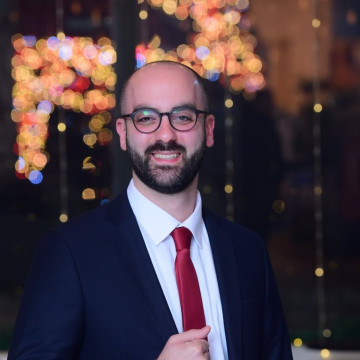
Wasim Nasser
The Programs Director at Musalaha in Jerusalem. He has an extensive professional background, having been Head of International Advocacy and Resource Development at the Mossawa Center, The Advocacy Center for Arab Citizens in Israel, and (Educational) Programs Manager at various private and public institutions. He has an academic background in psychology, and international studies from Virginia Commonwealth University and Master’s degree in Peace and Conflict Management from the University of Haifa.
Related Articles